“
Have you learned the alphabet of heaven and can count three? Do you know the number of God's family? Can you put mysteries into words? Do you presume to fable of the ineffable? Pray, what geographer are you, that speak of heaven's topography? Whose friend are you that speak of God's personality? ... Tell me of the height of the mountains of the moon, or of the diameter of space, and I may believe you, but of the secret history of the Almighty, and I shall pronounce thee mad.
— Henry David Thoreau
What It Means
This is a placeholder explanation generated by the low-overhead model. It interprets "Have you learned the alphabet of heaven and can count three? Do you know the number of God's family? Can you put mysteries into words? Do you presume to fable of the ineffable? Pray, what geographer are you, that speak of heaven's topography? Whose friend are you that speak of God's personality? ... Tell me of the height of the mountains of the moon, or of the diameter of space, and I may believe you, but of the secret history of the Almighty, and I shall pronounce thee mad." in the context of "" to mean that wisdom is timeless.

Source:
The 'What it means' explanation text was generated by Google Gemini Flash (accessed January 18, 2026). https://gemini.google.com/app
Tags
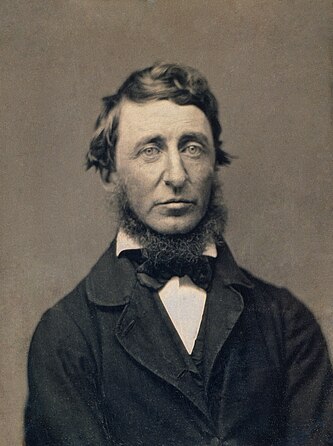
About Henry David Thoreau
Henry David Thoreau (12 July 1817 – 6 May 1862) was an American essayist, poet, philosopher, abolitionist, naturalist, tax resister, development critic, surveyor, and historian. A leading transcendentalist, Thoreau is best known for his book Walden, a reflection upon simple living in natural surroundings, and his essay Resistance to Civil Government (also known as Civil Disobedience), an argument for disobedience to an unjust state.
View all quotes →