The schoolmen saw their duty in one direction; Francis saw his in another; and [...] the two paths seem to be the only roads that can exist, if man starts by taking for granted that there is an object to be reached at the end of his journey. The Church embracing all mankind, had no choice but to march with caution, seeking God by every possible means of intellect and study. Francis, acting only for himself, could throw caution aside and trust implicitly in God [....] He carried to its last point the mystical Union wth God, and its necessary consequence of contempt and hatred of human intellectual processes. Even Saint Bernard would have thought his ideas wanting in that mesure which the French mind so much prizes. At the same time we had best try, as innocently as may be, to realise that no final judgement has yet been pronounced, either by the Church or by Society or by Science, on either or any of these points; and until mankind finally settles to a certainty where it means to go, or whether it means to go anywhere,— what its object is, or whether it has an object,— Saint Francis may still prove to have been its ultimate expression. In that case, his famous Chant,— the Cantico del Sole,— will be the last word of religion, as it was probably its first.
What It Means
This is a placeholder explanation generated by the low-overhead model. It interprets "The schoolmen saw their duty in one direction; Francis saw his in another; and [...] the two paths seem to be the only roads that can exist, if man starts by taking for granted that there is an object to be reached at the end of his journey. The Church embracing all mankind, had no choice but to march with caution, seeking God by every possible means of intellect and study. Francis, acting only for himself, could throw caution aside and trust implicitly in God [....] He carried to its last point the mystical Union wth God, and its necessary consequence of contempt and hatred of human intellectual processes. Even Saint Bernard would have thought his ideas wanting in that mesure which the French mind so much prizes. At the same time we had best try, as innocently as may be, to realise that no final judgement has yet been pronounced, either by the Church or by Society or by Science, on either or any of these points; and until mankind finally settles to a certainty where it means to go, or whether it means to go anywhere,— what its object is, or whether it has an object,— Saint Francis may still prove to have been its ultimate expression. In that case, his famous Chant,— the Cantico del Sole,— will be the last word of religion, as it was probably its first." in the context of "" to mean that wisdom is timeless.
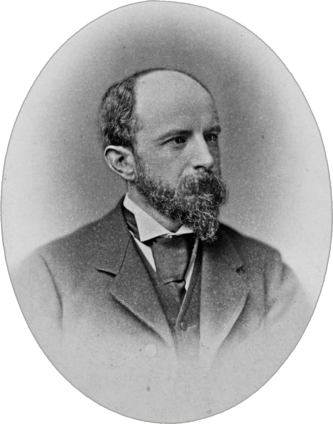
About Henry Adams