Adams specifies that he refers "only to the Roman of William of Lorris, which dates from the death of Queen Blanche and of all good things, about 1250". He describes the rather cynical continuation by Jean de Meung, about 1300, as "beyond our horizon".
“
The Roman de la Rose is the end of true mediæval poetry [...] Our age calls it false taste, and no doubt our age is right;— every age is right by its own standards as long as its standards amuse it.
— Henry Adams
What It Means
This is a placeholder explanation generated by the low-overhead model. It interprets "The Roman de la Rose is the end of true mediæval poetry [...] Our age calls it false taste, and no doubt our age is right;— every age is right by its own standards as long as its standards amuse it." in the context of "Adams specifies that he refers "only to the Roman of William of Lorris, which dates from the death of Queen Blanche and of all good things, about 1250". He describes the rather cynical continuation by Jean de Meung, about 1300, as "beyond our horizon"." to mean that wisdom is timeless.
Source: Wikiquote: "Henry Adams" (Quotes, Mont Saint Michel and Chartres (1904): ;Chapter I Saint Michiel de la Mer del Peril, Chapter XII Nicolette and Marion)
The 'What it means' explanation text was generated by Google Gemini Flash (accessed January 18, 2026). https://gemini.google.com/app
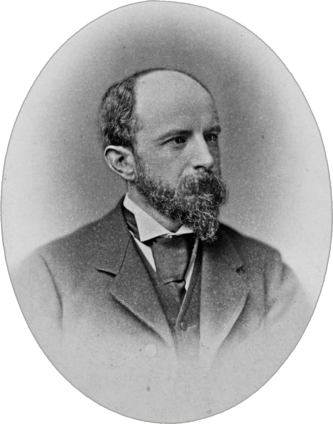
About Henry Adams
Henry Brooks Adams (16 February 1838 – 27 March 1918) was a U.S. historian, journalist, novelist and educator. He was the great-grandson of John Adams, grandson of John Quincy Adams and son of Charles Francis Adams, Sr.
About Henry Adams
Henry Brooks Adams (16 February 1838 – 27 March 1918) was a U.S. historian, journalist, novelist and educator. He was the great-grandson of John Adams, grandson of John Quincy Adams and son of Charles Francis Adams, Sr.
View all quotes →