Studied in the dry light of conservative Christian anarchy, Russia became luminous like the salt of radium; but with a negative luminosity as though she were a substance whose energies had been sucked out — an inert residuum — with movement of pure inertia. From the car window one seemed to float past undulations of nomad life — herders deserted by their leaders and herds — wandering waves stopped in their wanderings — waiting for their winds or warriors to return and lead them westward; tribes that had camped, like Khirgis, for the season, and had lost the means of motion without acquiring the habit of permanence. They waited and suffered. As they stood they were out of place, and could never have been normal. Their country acted as a sink of energy like the Caspian Sea, and its surface kept the uniformity of ice and snow. One Russian peasant kissing an ikon on a saint's day, in the Kremlin, served for a hundred million. The student had no need to study Wallace, or re-read Tolstoy or Tourguenieff or Dostoiewski to refresh his memory of the most poignant analysis of human inertia ever put in words; Gorky was more than enough: Kropotkine answered every purpose. ;Chapter XXVIII The Height of Knowledge
What It Means
This is a placeholder explanation generated by the low-overhead model. It interprets "Studied in the dry light of conservative Christian anarchy, Russia became luminous like the salt of radium; but with a negative luminosity as though she were a substance whose energies had been sucked out — an inert residuum — with movement of pure inertia. From the car window one seemed to float past undulations of nomad life — herders deserted by their leaders and herds — wandering waves stopped in their wanderings — waiting for their winds or warriors to return and lead them westward; tribes that had camped, like Khirgis, for the season, and had lost the means of motion without acquiring the habit of permanence. They waited and suffered. As they stood they were out of place, and could never have been normal. Their country acted as a sink of energy like the Caspian Sea, and its surface kept the uniformity of ice and snow. One Russian peasant kissing an ikon on a saint's day, in the Kremlin, served for a hundred million. The student had no need to study Wallace, or re-read Tolstoy or Tourguenieff or Dostoiewski to refresh his memory of the most poignant analysis of human inertia ever put in words; Gorky was more than enough: Kropotkine answered every purpose. ;Chapter XXVIII The Height of Knowledge" in the context of "" to mean that wisdom is timeless.
Tags
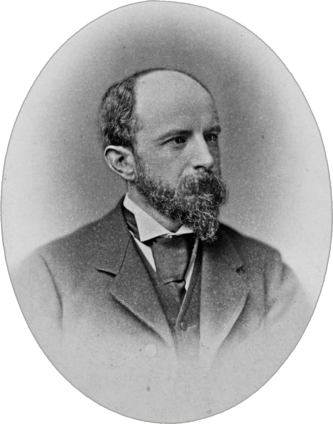
About Henry Adams