...we must go to the poets to see what they all meant by it; but the sum is an emotion — clear and strong as love and much clearer than logic,— whose charm lies in its unstable balance. The Transition is the equilibrium between the Love of God,— which is Faith, and the Logic of God,— which is Reason; between the round arch and the pointed. One may not be sure which pleases most, but one need not be harsh towards people who think that the moment of balance is exquisite. The last and highest moment is seen at Chartres where, in 1200, the charm depends on the constant doubt whether emotion or science is uppermost.
What It Means
This is a placeholder explanation generated by the low-overhead model. It interprets "...we must go to the poets to see what they all meant by it; but the sum is an emotion — clear and strong as love and much clearer than logic,— whose charm lies in its unstable balance. The Transition is the equilibrium between the Love of God,— which is Faith, and the Logic of God,— which is Reason; between the round arch and the pointed. One may not be sure which pleases most, but one need not be harsh towards people who think that the moment of balance is exquisite. The last and highest moment is seen at Chartres where, in 1200, the charm depends on the constant doubt whether emotion or science is uppermost." in the context of "Henry Adams, Mont Saint Michel and Chartres (1904) Chapter XV The Mystics" to mean that wisdom is timeless.
Tags
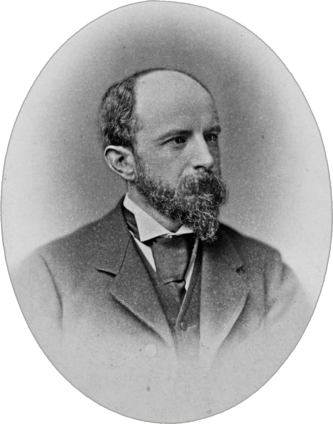
About Henry Adams