Creation was not successive; it was one instantaneous thought and act, identical with the will, and was complete and unchangeabble from end to end, including time as one of its functions. Thomas was as clear as possible on that point:— "Supposing God wills anything in effect, he cannot will not to will it, because his will cannot change." He wills that some things shall be contingent and others necessary, but he wills in the same act that the contingency shall be necessary. "They are contingent because God has willed them to be so, and with this object has subjected them to causes which are so." In the same way he wills that his creation shall develop itself in time and space and sequence, but he creates these conditions as well as the events. He creates the whole, in one act, complete, unchangeable, and it is then unfolded like a rolling panorama with its predetermined contingencies.
Man's free choice — liberum arbitrium — falls easily into place as a predetermined contingency. God is the First Cause, and acts in all Secondary Causes directly; but while he acts mechanically on the rest of creation,— as far as is known,— he acts freely at one point, and this free action remains free as far as it extends on that line. Man's freedom derives from this source, but it is simply apparent, as far as he is a cause; it is a [...] Reflex Action of the complicated mirror [...] called Mind, and [...] an illusion arising from the extreme delicacy of the machine.
What It Means
This is a placeholder explanation generated by the low-overhead model. It interprets "
Creation was not successive; it was one instantaneous thought and act, identical with the will, and was complete and unchangeabble from end to end, including time as one of its functions. Thomas was as clear as possible on that point:— "Supposing God wills anything in effect, he cannot will not to will it, because his will cannot change." He wills that some things shall be contingent and others necessary, but he wills in the same act that the contingency shall be necessary. "They are contingent because God has willed them to be so, and with this object has subjected them to causes which are so." In the same way he wills that his creation shall develop itself in time and space and sequence, but he creates these conditions as well as the events. He creates the whole, in one act, complete, unchangeable, and it is then unfolded like a rolling panorama with its predetermined contingencies.
Man's free choice — liberum arbitrium — falls easily into place as a predetermined contingency. God is the First Cause, and acts in all Secondary Causes directly; but while he acts mechanically on the rest of creation,— as far as is known,— he acts freely at one point, and this free action remains free as far as it extends on that line. Man's freedom derives from this source, but it is simply apparent, as far as he is a cause; it is a [...] Reflex Action of the complicated mirror [...] called Mind, and [...] an illusion arising from the extreme delicacy of the machine.
" in the context of "" to mean that wisdom is timeless.
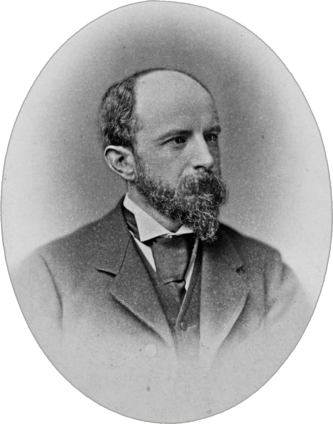
About Henry Adams