Henry Adams on Arch
← Back to Henry Adams Profile
“...we must go to the poets to see what they all meant by it; but the sum is an emotion — clear and strong as love and much clearer than logic,— whose charm lies in its unstable balance. The Transition is the equilibrium between the Love of God,— which is Faith, and the Logic of God,— which is Reason; between the round arch and the pointed. One may not be sure which pleases most, but one need not be harsh towards people who think that the moment of balance is exquisite. The last and highest moment is seen at Chartres where, in 1200, the charm depends on the constant doubt whether emotion or science is uppermost.”
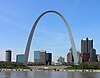
“Like all great churches, that are not mere store-houses of theology, Chartres expressed, besides whatever else it meant, an emotion, the deepest man ever felt,— the struggle of his own littleness to grasp the infinite. You may, if you like, figure in it a mathematic formula of infinity,— the broken arch, our finite idea of space; the spire, pointing, with its converging lines, to Unity beyond space; the sleepless, restless thrust of the vaults, telling the unsatisfied, incomplete, overstrained effort of man to rival the energy, intelligence and purpose of God. Thomas Aquinas and the schoolmen tried to put it in words, but their church is another chapter. In act, all man's work ends there;— mathematics, physics, chemistry, dynamics, optics, every sort of machinery science may invent,— to this favor come at last, as religion and philosophy did before science was born.”
“Granted a Church, Saint Thomas's Church was the most expressive that man has made, and the great gothic Cathedrals were its most complete expression. Perhaps the best proof of it is their apparent instability. Of all the elaborate symbolism which has been suggested for the gothic Cathedral, the most vital and most perfect may be that the slender nervure, the springing motion of the broken arch, the leap downwards of the flying buttress,— the visible effort to throw off a visible strain,— never let us forget that Faith alone supports it, and that, if Faith fails, Heaven is lost. The equilibrium is visibly delicate beyond the line of safety; danger lurks in every stone. The peril of the heavy tower, of the restless vault, of the vagrant buttress; the uncertainty of logic, the inequalities of the syllogism, the irregularities of the mental mirror,— all these haunting nightmares of the Church are expressed as strongly by the gothic Cathedral as though it had been the cry of human suffering, and as no emotion had ever been expressed before or is likely to find expression again. The delight of its aspirations is flung up to the sky. The pathos of its self-distrust and anguish of doubt, is buried in the earth as its last secret. You can read out of it whatever else pleases your youth and confidence; to me, this is all.”