• Part II. Ch. 2 : Mathematical Definitions and Education, p. 130
La logique nous apprend que sur tel ou tel chemin nous sommes sûrs de ne pas rencontrer d'obstacle ; elle ne nous dit pas quel est celui qui mène au but. Pour cela il faut voir le but de loin, et la faculté qui nous apprend à voir, c'est l'intuition. Sans elle, le géomètre serait comme un écrivain qui serait ferré sur la grammaire, mais qui n'aurait pas d'idées.
What It Means
This is a placeholder explanation generated by the low-overhead model. It interprets "La logique nous apprend que sur tel ou tel chemin nous sommes sûrs de ne pas rencontrer d'obstacle ; elle ne nous dit pas quel est celui qui mène au but. Pour cela il faut voir le but de loin, et la faculté qui nous apprend à voir, c'est l'intuition. Sans elle, le géomètre serait comme un écrivain qui serait ferré sur la grammaire, mais qui n'aurait pas d'idées." in the context of "Logic teaches us that on such and such a road we are sure of not meeting an obstacle; it does not tell us which is the road that leads to the desired end. For this, it is necessary to see the end from afar, and the faculty which teaches us to see is intuition. Without it, the geometrician would be like a writer well up in grammar but destitute of ideas.
• Part II. Ch. 2 : Mathematical Definitions and Education, p. 130" to mean that wisdom is timeless.
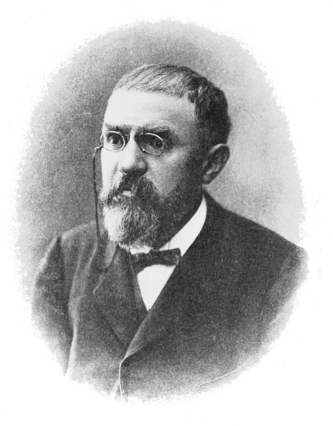
About Henri Poincaré