Helen Frankenthaler (1968), in the interview with Barbara Rose, for the Archives of American Art, Smithsonian Institution
“
I've always thought that with de Kooning you could assimilate and copy. And that Pollock instead opened up what one's own inventiveness could take off from. In other words, given one's own talent for curiosity that you could explore, originate, discover from Pollock as one might, say, Picasso, or [Arshile] Gorky or [Wassily] Kandinsky in a way that de Kooning was a closed oeuvre.
— Helen Frankenthaler on Willem de Kooning
What It Means
This is a placeholder explanation generated by the low-overhead model. It interprets "I've always thought that with de Kooning you could assimilate and copy. And that Pollock instead opened up what one's own inventiveness could take off from. In other words, given one's own talent for curiosity that you could explore, originate, discover from Pollock as one might, say, Picasso, or [Arshile] Gorky or [Wassily] Kandinsky in a way that de Kooning was a closed oeuvre." in the context of "Helen Frankenthaler (1968), in the interview with Barbara Rose, for the Archives of American Art, Smithsonian Institution" to mean that wisdom is timeless.
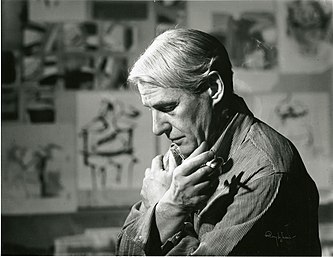
Source: Wikiquote: "Willem de Kooning" (Quotes about Willem de Kooning)
The 'What it means' explanation text was generated by Google Gemini Flash (accessed January 18, 2026). https://gemini.google.com/app
Tags

About Helen Frankenthaler
Helen Frankenthaler (12 December 1928 – 28 December 2011) was an American post-painterly abstraction artist. Born in New York City, her work was influenced by Jackson Pollock, with whom she also was involved in the 1946–1960 abstract art movement.
About Helen Frankenthaler
Helen Frankenthaler (12 December 1928 – 28 December 2011) was an American post-painterly abstraction artist. Born in New York City, her work was influenced by Jackson Pollock, with whom she also was involved in the 1946–1960 abstract art movement.
View all quotes →