I know the PM personally (he has been my publisher for twenty years) and think that I know his character. I know him as a gay, cavalier figure, ready for battle, fond of life and an occasional skirmish, and, above all, a rebel: a rebel against the Establishment. He was a rebel in the Tory party in the 1930s, and, in a sense, he is a rebel still. In this sense he is very like Winston Churchill, whom he greatly admires. Throughout his career, as throughout Winston's, the official Tory party has been against him, or at least (even when, ultimately, accepting him as its leader) has distrusted him. This is one reason why I admire him. He is in the great tradition of Disraeli and Winston as opposed to that other tradition of Bonar Law and Baldwin – men who, by their mediocrity, really represented instead of commanding the dull, impersonal, conventional, respectable forces of the Establishment.
What It Means
This is a placeholder explanation generated by the low-overhead model. It interprets "I know the PM personally (he has been my publisher for twenty years) and think that I know his character. I know him as a gay, cavalier figure, ready for battle, fond of life and an occasional skirmish, and, above all, a rebel: a rebel against the Establishment. He was a rebel in the Tory party in the 1930s, and, in a sense, he is a rebel still. In this sense he is very like Winston Churchill, whom he greatly admires. Throughout his career, as throughout Winston's, the official Tory party has been against him, or at least (even when, ultimately, accepting him as its leader) has distrusted him. This is one reason why I admire him. He is in the great tradition of Disraeli and Winston as opposed to that other tradition of Bonar Law and Baldwin – men who, by their mediocrity, really represented instead of commanding the dull, impersonal, conventional, respectable forces of the Establishment." in the context of "Hugh Trevor-Roper to Wallace Notestein (23 March 1960), quoted in Letters from Oxford: Hugh Trevor-Roper to Bernard Berenson, ed. Richard Davenport-Hines (2006; 2007), p. 297" to mean that wisdom is timeless.
Tags

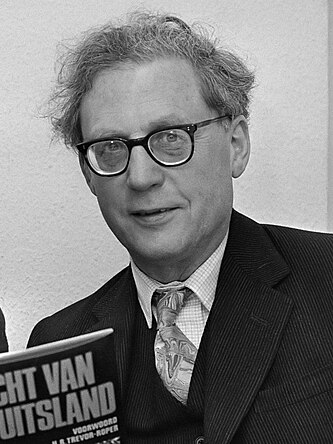
About Harold Macmillan