Politically, I suppose he was very far from me, and some of his Gods I hope never to revere. But he always talked from a full mind and a full heart. He liked the men who really count and the lamp of reason burned the more brightly for his presence. Some of his work seems to me very first rate — in literary criticism the essays on Macaulay and Carlyle, in political criticism those on Maine and Condorcet; the biographies of Voltaire and Diderot, the essays on Machiavelli and Robespierre. I have always liked the life of Cobden as a great picture of that era, and disliked the Gladstone as a tombstone rather than a book, though it has great occasions. As I look back the striking thing about the long hours I used to spend there was his wide and generous attitude to life. And many of his heroes were mine — especially Cromwell, Voltaire and Mill. And I think he did some great political work — Ireland, India and South Africa are all tributes to his insight.
What It Means
This is a placeholder explanation generated by the low-overhead model. It interprets "Politically, I suppose he was very far from me, and some of his Gods I hope never to revere. But he always talked from a full mind and a full heart. He liked the men who really count and the lamp of reason burned the more brightly for his presence. Some of his work seems to me very first rate — in literary criticism the essays on Macaulay and Carlyle, in political criticism those on Maine and Condorcet; the biographies of Voltaire and Diderot, the essays on Machiavelli and Robespierre. I have always liked the life of Cobden as a great picture of that era, and disliked the Gladstone as a tombstone rather than a book, though it has great occasions. As I look back the striking thing about the long hours I used to spend there was his wide and generous attitude to life. And many of his heroes were mine — especially Cromwell, Voltaire and Mill. And I think he did some great political work — Ireland, India and South Africa are all tributes to his insight." in the context of "Harold Laski to Oliver Wendell Holmes Jr. (26 September 1923), quoted in Holmes–Laski Letters: The Correspondence of Mr. Justice Holmes and Harold J. Laski. I: 1916–1935, ed. Mark DeWolfe Howe (1953), pp. 542-543" to mean that wisdom is timeless.
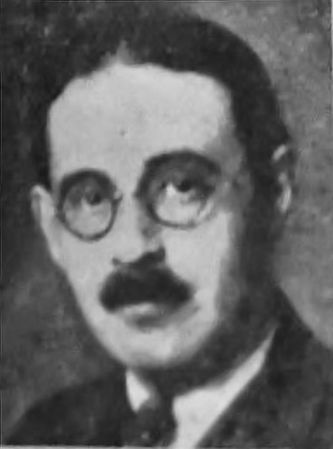
About Harold Laski