Link Copied!
Harold Keith Quotes (1903-1998)
Author, King


About Harold Keith
Harold Verne Keith (April 8, 1903 – February 24, 1998) was a Newbery Medal-winning American author. Keith was born and raised in Oklahoma, where he also lived and died. The state was his abiding passion and he used Oklahoma as the setting for most of his books.
Best Harold Keith Quotes
Shortest
Earliest
Explore our curated collection of the most famous and impactful Harold Keith quotes.
“Never hurry. Do everything quietly.”


“The starting players are the ones the fans and sportswriters talk about. Nobody pays any attention to a sub.”

“All the human characters in the story are fictitious, but most of the coyotes and hounds are not and this is no coincidence.”

“Boys should not be afraid that running will give them a weak heart or shorten their lives. Statistics prove that longevity has favored the athlete.”
“Boys everywhere are quick to recognize and respect any kind of talent in each other, and one of Will Rogers' best talents was talking.”

“And he had to face something else, too, his own paralyzing fear of being hit in the scrimmages. The whole squad had seen it. There was no way a boy could hide cowardice in football.”
“When one of the surgeons motioned him outside, Jeff was glad to leave. "So long, kid," the sandy-haired man called after him. Then noticing Jeff's stricken face, he added apologetically, "I don't care, kid. I never could dance worth a darn anyhow."”
“Reddy, crouching in the corn, was saddened by the loss of his friend. He dropped his head between his front paws, his green eyes darting vigilantly at all his enemies- dogs and men- standing triumphantly around the pickups. They wouldn't catch him. Nothing on four feet could catch him.”
“A glad look came into the old man's eyes. "Throw yore gear right thar in thet south bedroom," he invited, pointing to its door. "It's all yores," he added. "Purty cool in thar. You can look out the west window into the pony pasture an' see yore hoss. Then come on in the dinin' room. Tonia's gittin' supper ready."”
“Later, while I was picking up wet towels, Red Rafferty came busting out of the shower, naked as a jaybird and wet as a hell-diver. His freckles glistened in the eerie glow of the gymnasium lights. The first thing he did, even before he toweled himself, was reach inside his locker for that big hat and jam it on his head.”
“Track and field events get you outdoors, improve health, are not as dangerous or as expensive as other sports, require very little equipment, and can be indulged in any time of the year one wishes. Moreover, running is the basis for nearly every other sport on the calendar and therefore part of the training routine for each.”
“Few Americans know how savagely the Civil War raged or how strange and varied were its issues in what is now Oklahoma and the neighboring states of Kansas, Missouri and Arkansas. Rifles for Watie was faithfully written against the historical backdrop of the conflict in this seldom-publicized, Far-Western theater.”
“Fritz Romberg relaxed his grip on the bridle reins and squinted into the sun. Beneath his blond hair that spiraled in tiny curls and ringlets, beads of sweat ran off his tan face and down inside his cotton shirt that smelled old and stale. A gentle, docile boy, he was small for his thirteen years, but strong, wiry, and not afraid of anyone.”
“Bud Wilkinson was a big, blond, articulate man with a soft, modulated voice and a smile that would charm the birds out of the trees. When he was standing talking with somebody, he would sometimes shuffle his feet, bob his head, and, clasping his hands in front of him, rub them softly together. You felt comfortable in his presence and drawn to him even before you were introduced.”
“Jeff smiled to himself and went on eating. He had heard his father discuss the issues so often that he knew them forward and backward. But he saw no need for injecting himself into the conversation here. Besides, he was too busy with his supper. The food was good, and there was lots of it. In bed that night in the barracks, Jeff turned on his stomach and sighed with satisfaction. At last he was in the Army.”
“Those were stirring times out on that wild frontier- rough, dangerous times in many ways. But to young Will Rogers, growing up on his father's range, that frontier was the garden spot of the world. He had a comfortable home, kind parents, jolly playmates, and the whole country-side for a playground. But above all, he was happy because he was learning to rope and ride, the two things he cared for most in all the world.”
“I admired Red's honesty. He was human. He was thinking about getting to dribble out into the spotlight with the other four starters in the introduction ceremony. And he was thinking about playing the full twenty-four minutes with his team instead of only the last five. Pop nodded and his blue eyes gleamed queerly. "I thought you'd feel that way," he said. "Know what? I'm going to start you against Bancroft Friday. You've earned it."”
“Jeff rode north up the military road. It was a cloudy morning in June, 1865. The war was over, and they were going home. It was hard to get used to being out of the army. He had traveled so widely, learned so much, and had so many things happen to him that it seemed he had been gone fifteen years instead of nearly four. He wanted very much to see his family. And he wanted very much to see Kansas, now that peace had finally come.”
“His full name was Terence F. Rafferty, and I guess the "F" stood for fiery because that's the kind of fellow he was. Fiery and speedy and tiny and tough. And emotional. When the coach wouldn't start him, his freckled face would go under a cloud and he'd start blinking, and big tears would come rolling out of his eyes until it would get so wet in our dressing room that everybody wished they had fins instead of feet. We called him Red. You couldn't have called him anything else.”
“The boy felt happy and excited. He liked the sweet air and the delightful chill of it at night no matter what the daytime heat had been. He would never forget his feeling of enchantment the previous afternoon when, seated on the prairie with a plate of food, he kept seeing the sky in all directions beneath his horse's belly no matter where the animal grazed around him. He was exhilarated by the lonely magnificence of the country, and the sense of freedom it inspired. It was like being in a boat on the ocean with no land in sight.”

“Will's early years were much like those of other children in ranch houses or on farms. He rarely went to town because there were no towns near. Vinita, thirty miles east, was a straggling Indian village on the prairie, Old Claremore was a tiny cluster of stores on the stage route from Vinita to Albuquerque, and Tulsa was then only a switch. But Will was not interested in towns, and cared only for ranch life. There were so many fascinating things to do on his father's farm that the days were not long enough to get all of them done.”
Harold Keith Quotes by Topic
Find exactly what you are looking for by browsing this categorized list of Harold Keith quotes by topic.
Harold Keith on Boy 5 quotes
“Boys everywhere are quick to recognize and respect any kind of talent in each other, and one of Will Rogers' best talents was talking.”

Harold Keith on Baseball 4 quotes
“Given good eyes and average physical strength, any boy can learn to bat.”

Harold Keith on Cross country running 4 quotes
“Crosscountry is a team sport, too, and many a meet has been won by what the English call "packing," whereby one team sticks together and the good runners encourage the poorer ones, until the final dash home.”

Harold Keith on Kansas 4 quotes
“Few Americans know how savagely the Civil War raged or how strange and varied were its issues in what is now Oklahoma and the neighboring states of Kansas, Missouri and Arkansas. Rifles for Watie was faithfully written against the historical backdrop of the conflict in this seldom-publicized, Far-Western theater.”

Harold Keith on Running 4 quotes
“Track and field events get you outdoors, improve health, are not as dangerous or as expensive as other sports, require very little equipment, and can be indulged in any time of the year one wishes. Moreover, running is the basis for nearly every other sport on the calendar and therefore part of the training routine for each.”

Harold Keith on Kemper Military School 4 quotes
“And so one night Will Rogers ran away from Kemper. He was through with schools forever. For years he had been irked by their routine to which he could not adapt himself, and now he was determined to lead the free life he loved so well. Back at Kemper the janitor brought Will's trunk down to his room and John Payne silently packed Will's things so that they could be shipped home. They had all liked Will Rogers and were sorry to see him go.”

Harold Keith on Volleyball 4 quotes
“Volleyball is perhaps the best sport ever devised for correcting the "student stoop" since, if the net is kept high and the two-handed return used, it compels players to keep the head and shoulders up and back, the spine straight and the chest thrust out. It is a good game for the spectator, too, since he can sit close to the small court and keep the ball in constant view, and yet it is hard for a spectator to watch it very long without acquiring a strong impulse to pull off his coat and join the players.”

Harold Keith on Wrestling 4 quotes
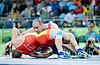
“Wrestling is healthy. No other sport so brings into play the vital organs of the body. The constant stretching and twisting of the body tends to strengthen the muscles needed for good digestion. Likewise wrestling is an effective blood circulator and body builder. Wrestling is not dangerous. Ed "Strangler" Lewis, a former heavyweight champion who wrestled nearly a quarter of a century, declares that only two wrestlers have ever been killed in an American ring. What other American contact sport can show such immunity?”
Harold Keith on Swimming 3 quotes
“Literature is filled with allusions to swimming. Longfellow's Kwasind, in Hiawatha, caught a beaver after a long underwater cruise; Beowulf and Breca swam seven nights in the swollen seas, carrying their swords with them to fight off whale fishes; Dumas' hero Edmond Dantes escaped by swimming from the Chateau to the Isle of Tiboulen; and Leander swam across the Hellespont, the narrow strait that divided Europe and Asia. Perhaps the most poignant tale ever written about a swimmer occurs in that charming short story, The Tale of James Carabine by Donn Byrne, the Irish author. The swimmer was not successful and paid with his life. His name was Bartley McGeehan, known as Swimmer McGeehan, the Swan of Ireland or the Marine Marvel, as he was billed in the circus. He had once swum between Ireland and Scotland over the stormy waters of Moyle.”

Harold Keith on Medal of Honor 2 quotes
“Then the general stepped so close that Jeff could smell the pomade on his thick black hair. Leaning forward, he passed a ribbon around Jeff's neck and underneath his collar. Suspended from the ribbon was a tiny piece of red, white and blue fabric. And dangling from the fabric was a shiny bronze star and eagle that flashed more brilliantly in the sunshine than even the general's gold shoulder bars. Noah got one, too. Just as Jeff began to realize that he and Noah were being decorated, the general was shaking hands stiffly with each of them. Jeff couldn't hide the embarrassment and the unbelief in his face. Somebody had made a mistake. He hadn't done anything in the battle but follow Noah. If this was the way the army handed out decorations, then something was wrong with the system. "Shoot, General," Jeff blurted in protest, "all we did was load her and swab her."”

Harold Keith on Winning
Harold Keith on Artillery
“Suddenly the fresh booming of cannon was heard. A two-story red brick building half a block down the street began to twist and buckle. With a shivering roar, it toppled and collapsed. Bricks flew in every direction. A rebel shell had made a direct hit. A lieutenant sprinted down the middle of the street, one hand on his clanking sword to keep it from tripping him. As he ran, he muttered, "That crazy, dumb Hindman! Shelling his own town!"”

What Harold Keith Said About Others
Discover personal opinions Harold Keith shared regarding contemporaries.
Harold Keith on Will Rogers 4 quotes
“He helped steady millions of drifting people, not only financially through his charity campaigns and his own large personal gifts which he always tried to hide from public knowledge, but mentally and morally as well through the ability to lift people, guide them, make them laugh, and then make them think. Presidents, cowboys, financiers, kings, show people, children- he knew and liked them all and all were genuinely sorry when he died. I think- because of this personal trait which Lincoln had- that Will Rogers is one of the very greatest men who ever lived.”

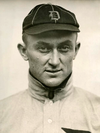
Harold Keith on Ty Cobb 3 quotes
“The incident illustrates a batting skill that every boy can acquire with practice- place-hitting. Place-hitters, also called choke hitters because they choke their grip on the bat, snap the stick with their forearms and punch the ball through any opening in the diamond which the infield may leave them. Cobb was probably the greatest place-hitter of them all with the possible exception of Willie Keeler, diminutive marvel of the old Baltimore Orioles, a star of an earlier era. I am going to refer frequently to Ty Cobb in this chapter because he was the greatest baseball player who ever lived.”
Quotes About Harold Keith
Gain deeper perspective through quotes about Harold Keith from others.
Will Rogers on Harold Keith 2 quotes
“My father would have loved this book as Mr. Keith interviewed every person who was important in Dad's life and then wove their memories of him into a story that is timeless and easily read.”
About Harold Keith
Harold Verne Keith (April 8, 1903 – February 24, 1998) was a Newbery Medal-winning American author. Keith was born and raised in Oklahoma, where he also lived and died. The state was his abiding passion and he used Oklahoma as the setting for most of his books.