Link Copied!
Harold Bloom Quotes (1930-2019)
Author, Writer





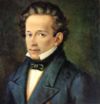
About Harold Bloom
Harold Bloom (July 11, 1930 – October 14, 2019) was an American literary critic and writer. He was Sterling Professor of Humanities at Yale University, a former Professor of English at New York University, and the author of over twenty-five books.
Best Harold Bloom Quotes
Shortest
Earliest
Explore our curated collection of the most famous and impactful Harold Bloom quotes.
“The outward limit of human achievement.”

“Hamlet, Kiekegaard, Kafka are ironists in the wake of Jesus. All Western irony is a repetition of Jesus' enigmas/riddles, in amalgam with the ironies of Socrates.”

“I must say these Oxfordians are very virulent and, forgive me for saying it, very crazy people indeed.”
“I realized early on that the academy and the literary world alike — and I don't think there really is a distinction between the two — are always dominated by fools, knaves, charlatans and bureaucrats.”
“Shelley, who in Prometheus Unbound had observed that the wise lack love and those who have love lack wisdom, went to his end in The Triumph of Life asking why good and the means of good were irreconcilable.”

Harold Bloom Quotes by Topic
Find exactly what you are looking for by browsing this categorized list of Harold Bloom quotes by topic.
Harold Bloom on Oxymoron
“Successful therapy is an oxymoron.”

Harold Bloom on Books
Harold Bloom on Map
“In fact, it is Shakespeare who gives us the map of the mind. It is Shakespeare who invents Freudian Psychology. Freud finds ways of translating it into supposedly analytical vocabulary.”

Harold Bloom on Prometheus
“Shelley, who in Prometheus Unbound had observed that the wise lack love and those who have love lack wisdom, went to his end in The Triumph of Life asking why good and the means of good were irreconcilable.”
Harold Bloom on Love's Labour's Lost
“I take more unmixed pleasure from Love’s Labour’s Lost than from any other Shakespearean play. ... [It] is a festival of language, an exuberant fireworks display in which Shakespeare seems to seek the limits of his verbal resources, and discovers that there are none.”
What Harold Bloom Said About Others
Discover personal opinions Harold Bloom shared regarding contemporaries.
Harold Bloom on Baruch Spinoza 5 quotes
“He flew through the nets of Judaism, Calvinism, Aristotelianism and the Cartesian dualism, but nevertheless Descartes was his starting point. Could he have become Spinoza without Descartes? Did he beget himself, as Socrates did, or even as Hobbes largely was self-generated? Spinoza's "Nature or God" is not one of the Cartesian formulations, but Spinoza relies upon a number of Cartesian concepts.”
Harold Bloom on Percy Bysshe Shelley 3 quotes
“Lucretius and his tradition taught Shelley that freedom came from understanding causation.”

Harold Bloom on José Saramago 3 quotes
“The most gifted novelist alive in the world today ... one of the last titans of an expiring literary genre.”

Harold Bloom on Machado de Assis 2 quotes
View all 2 quotes on Machado de Assis →Harold Bloom on William Shakespeare 2 quotes
“I love that moment in Joyce when his friend, the painter, asks him the desert-island question about which of the two greatest Western writers to keep: "I should like to answer Dante, but I would have to take the Englishman, because he is richer!" He is, it's the truth. He is richer than Homer, which is astonishing. Everybody in The Divine Comedy, except Dante the Pilgrim, has achieved their final form. But Shakespeare is change. In that sense, he always remains an Ovidian poet, and in the same sense, anti-Platonic.”

Harold Bloom on John Ashbery
“John Ashbrey, incontrovertibly a great poet, remains both difficult and underread, even by his readers.”
Quotes About Harold Bloom
Gain deeper perspective through quotes about Harold Bloom from others.
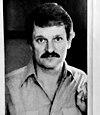
Peter Ackroyd on Harold Bloom
“Bloom is very interested in the powerful "characters" which are thrown up in the process. He celebrates Goethe's "unique and overwhelming personality", Montaigne's "highly original personality" and various critics' "vehement and colorful personalities". In this he takes his cue from Johnson, who reinvested the art of biographical criticism. For Bloom lacks Johnson's restraint; instead he is imbued with a strain of neo-romantic fervour which allows him to speak continually of the "sublime" and to invoke the principles of "strangeness" and "originality" as the canonical qualities of great writing. He is also preoccupied by the actual characters within various fictions and imagines, for example, Falstaff and the Wife of Bath in some titanic confrontation. He is not very far here from Hazlitt or Lamb, but he is a Romantic essayist who has also been touched by Pater's aestheticism. It is hard, however, to think of a better tradition for any literary critic.”
Angélica Gorodischer on Harold Bloom
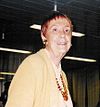
Ben Macintyre on Harold Bloom
“Like a literary Lear, Harold Bloom stands amid the storm, lamenting and fulminating as he fights to protect the kingdom of letters against what he calls the "rabblement of lemmings", the multicultural ideologues and political doctrinaires who assail it from all sides... His primary target is what he calls "The School of Resentment", the "rabblement" of "feminists, Afro-centrists, Marxists, Foucault-inspired New Historicists or Deconstructors" who would bend literature to ideology or pull it apart in the name of social justice. But he has equal scorn for right-leaning critics who defend the Western canon on the basis of its moral authority.”
Alicia Ostriker on Harold Bloom

About Harold Bloom
Harold Bloom (July 11, 1930 – October 14, 2019) was an American literary critic and writer. He was Sterling Professor of Humanities at Yale University, a former Professor of English at New York University, and the author of over twenty-five books.