A line cannot control pictorial space absolutely. A line may flow freely in and out space, but cannot independently create the phenomenon of push and pull necessary to plastic creation. Push and pull are expanding and contracting forces which are activated by carriers in visual motion. Planes are the most important carriers, lines and points less so.. .the picture plane reacts automatically in the opposite direction to the stimulus received; thus action continues as long as it receives stimulus in the creative process. Push answers with pull and pull with push. ... At the end of his life and the height of his capacity Cézanne understood color as a force of push and pull. In his pictures he created an enormous sense of volume, breathing, pulsating, expanding, contracting through his use of colors.
What It Means
This is a placeholder explanation generated by the low-overhead model. It interprets "A line cannot control pictorial space absolutely. A line may flow freely in and out space, but cannot independently create the phenomenon of push and pull necessary to plastic creation. Push and pull are expanding and contracting forces which are activated by carriers in visual motion. Planes are the most important carriers, lines and points less so.. .the picture plane reacts automatically in the opposite direction to the stimulus received; thus action continues as long as it receives stimulus in the creative process. Push answers with pull and pull with push. ... At the end of his life and the height of his capacity Cézanne understood color as a force of push and pull. In his pictures he created an enormous sense of volume, breathing, pulsating, expanding, contracting through his use of colors." in the context of "'Search for the Real in the Visual Arts', p. 44" to mean that wisdom is timeless.
Tags
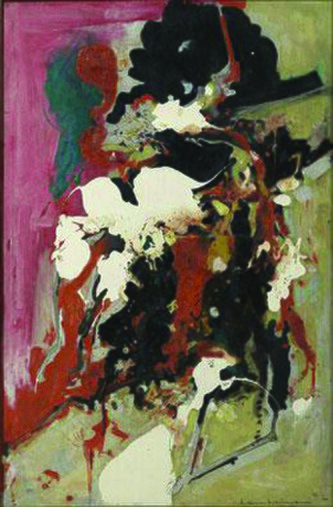
About Hans Hofmann