Link Copied!
Ha-Joon Chang Quotes (1963-)
Author, King


About Ha-Joon Chang
Ha-Joon Chang (Hangul: 장하준; hanja: 張夏准; born 7 October 1963) is a South Korean institutional economist specialising in development economics. Currently a reader in the Political Economy of Development at the University of Cambridge, Chang is the author of several widely discussed policy books, most notably Kicking Away the Ladder: Development Strategy in Historical Perspective (2002). In 2013 Prospect magazine ranked Chang as one of the top 20 World Thinkers.
Best Ha-Joon Chang Quotes
Shortest
Earliest
Explore our curated collection of the most famous and impactful Ha-Joon Chang quotes.
“History is on the side of the regulators.”

“Manufacturing is the most important...route to prosperity.”

“95% of Economics is common sense deliberately made complicated.”
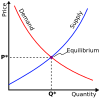
“Corruption exists because there is too much, not too little, market.”

“Corruption often exists because there are too many market forces, not too few.”
“Democracy is acceptable to neo-liberals only in so far as it does not contradict the free market.”

“The foundation of economic development is the acquisition of more productive knowledge.”


“I... tell... how numbers in economics are defined and put together... not as... objective as... weight or... temperature...”
“When Becker titled... The Economic Approach to Human Behaviour, he was... declaring... economics is about everything.”
“It's not just about the current economic environment. History shows that slashing budgets always leads to recession.”

“I try to reveal the assumptions underlying... theories so... readers can make... judgements about their realism and plausibility.”

“The Korean economic miracle was the result of a clever and pragmatic mixture of market incentives and state direction.”
“Being told by the IMF to go easy on austerity is like being told by the Spanish Inquisition to be more tolerant of heretics.”
“There is a big logical jump between acknowledging the destructive nature of hyperinflation and arguing that the lower the rate of inflation, the better.”
“Democracy and markets are both fundamental building blocks for a decent society. But they clash at a fundamental level. We need to balance them.”

“[J]argons that facilitate communication within the profession makes its communication with outsiders more difficult. ...[A]ll technical professions have an incentive to make themselves look more complicated... so they can justify the high fees... for their services.”

“[E]very responsible citizen needs to learn some economics... such... that one becomes aware of the different types of... arguments... and... judge which... makes most sense in a given... circumstance... in light of... moral values and political goals...”
“There is no hard and fast rule as to what makes a successful state-owned enterprise. Therefore, when it comes to SOE management, we need a pragmatic attitude in the spirit of the famous remark by China’s former leader Deng Xiao-ping: 'it does not matter whether the cat is white or black as long as it catches mice.'”
Ha-Joon Chang Quotes by Topic
Find exactly what you are looking for by browsing this categorized list of Ha-Joon Chang quotes by topic.
Ha-Joon Chang on Free trade 6 quotes
“The history of capitalism has been so totally re-written that many people in the rich world do not perceive the historical double standards involved in recommending free trade and free market to developing countries.”

Ha-Joon Chang on Trade 3 quotes
“The history of capitalism has been so totally re-written that many people in the rich world do not perceive the historical double standards involved in recommending free trade and free market to developing countries.”

Ha-Joon Chang on Corruption 2 quotes
“Corruption exists because there is too much, not too little, market.”
Ha-Joon Chang on Inflation 2 quotes
“Low inflation and government prudence may be harmful for economic development.”
Ha-Joon Chang on International Monetary Fund 2 quotes
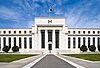
“Being told by the IMF to go easy on austerity is like being told by the Spanish Inquisition to be more tolerant of heretics.”

Ha-Joon Chang on Macroeconomics 2 quotes
“Gore Vidal, the American writer, once described the American economic system as 'free enterprise for the poor and socialism for the rich'. Macroeconomic policy on the global scale is a bit like that. It is Keynesianism for the rich countries and monetarism for the poor.”

Ha-Joon Chang on Money
“Money is a symbol of what others in your society owe you, or your claim on particular amounts of the society's resources.”

Ha-Joon Chang on Economics
“95 per cent of economics is common sense made complicated, and even for the remaining 5 per cent, the essential reasoning, if not all the technical details, can be explained in plain terms.”
Ha-Joon Chang on Keynesian economics
Ha-Joon Chang on Monetarism
“Gore Vidal, the American writer, once described the American economic system as 'free enterprise for the poor and socialism for the rich'. Macroeconomic policy on the global scale is a bit like that. It is Keynesianism for the rich countries and monetarism for the poor.”
Ha-Joon Chang on Patent
“The days are over when technology can be advanced in laboratories by individual scientists alone. Now you need an army of lawyers to negotiate the hazardous terrain of interlocking patents. Unless we find a solution to the problem of interlocking patents, the patent system may actually impede the very innovation it was designed to encourage.”
Ha-Joon Chang on 1980s
“Throughout the 1980s and 90s, when many developing countries were in crisis and borrowing money from the International Monetary Fund, waves of protests in those countries became known as the "IMF riots". They were so called because they were sparked by the fund's structural adjustment programmes, which imposed austerity, privatisation and deregulation.”

What Ha-Joon Chang Said About Others
Discover personal opinions Ha-Joon Chang shared regarding contemporaries.
Ha-Joon Chang on David Ricardo
“Ricardo's theory is absolutely right—within its narrow confines. His theory correctly says that, accepting their current levels of technology as given, it is better for countries to specialize in things that they are relatively better at. One cannot argue with that. His theory fails when a country wants to acquire more advanced technologies so that it can do more difficult things that few others can do—that is, when it wants to develop its economy. It takes time and experience to absorb new technologies, so technologically backward producers need a period of protection from international competition during this period of learning. Such protection is costly, because the country is giving up the chance to import better and cheaper products. However, it is a price that has to be paid if it wants to develop advanced industries. Ricardo's theory is, thus seen, for those who accept the status quo but not for those who want to change it.”

Quotes About Ha-Joon Chang
Gain deeper perspective through quotes about Ha-Joon Chang from others.
Thing 13 on Ha-Joon Chang
Thing 16 on Ha-Joon Chang
Thing 22 on Ha-Joon Chang
Stanley Engerman on Ha-Joon Chang
“Ha-Joon Chang has examined a large body of historical material to reach some very interesting and important conclusions about institutions and economic development. Not only is the historical picture re-examined, but Chang uses this to argue the need for a changing attitude to the institutions desired in today's developing nations. Both as historical reinterpretation and policy advocacy, "Kicking Away the Ladder?" deserves a wide audience among economists, historians, and members of the policy establishment.”
Douglas A. Irwin on Ha-Joon Chang
“Chang only looks at countries that developed during the nineteenth century and a small number of the policies they pursued. He did not examine countries that failed to develop in the nineteenth century and see if they pursued the same heterodox policies only more intensively. This is a poor scientific and historical method. Suppose a doctor studied people with long lives and found that some smoked tobacco, but did not study people with shorter lives to see if smoking was even more prevalent. Any conclusions drawn only from the observed relationship would be quite misleading.”
About Ha-Joon Chang
Ha-Joon Chang (Hangul: 장하준; hanja: 張夏准; born 7 October 1963) is a South Korean institutional economist specialising in development economics. Currently a reader in the Political Economy of Development at the University of Cambridge, Chang is the author of several widely discussed policy books, most notably Kicking Away the Ladder: Development Strategy in Historical Perspective (2002). In 2013 Prospect magazine ranked Chang as one of the top 20 World Thinkers.