Contrary to what you may assume, I am not a pessimist but an indifferentist—that is, I don't make the mistake of thinking that the resultant of the natural forces surrounding and governing organic life will have any connexion with the wishes or tastes of any part of that organic life-process. Pessimists are just as illogical as optimists; insomuch as both envisage the aims of mankind as unified, and as having a direct relationship (either of frustration or of fulfilment) to the inevitable flow of terrestrial motivation and events. That is—both schools retain in a vestigial way the primitive concept of a conscious teleology—of a cosmos which gives a damn one way or the other about the especial wants and ultimate welfare of mosquitos, rats, lice, dogs, men, horses, pterodactyls, trees, fungi, dodos, or other forms of biological energy.
What It Means
This is a placeholder explanation generated by the low-overhead model. It interprets "Contrary to what you may assume, I am not a pessimist but an indifferentist—that is, I don't make the mistake of thinking that the resultant of the natural forces surrounding and governing organic life will have any connexion with the wishes or tastes of any part of that organic life-process. Pessimists are just as illogical as optimists; insomuch as both envisage the aims of mankind as unified, and as having a direct relationship (either of frustration or of fulfilment) to the inevitable flow of terrestrial motivation and events. That is—both schools retain in a vestigial way the primitive concept of a conscious teleology—of a cosmos which gives a damn one way or the other about the especial wants and ultimate welfare of mosquitos, rats, lice, dogs, men, horses, pterodactyls, trees, fungi, dodos, or other forms of biological energy." in the context of "Letter to James F. Morton (1929), quoted in "H.P. Lovecraft, a Life" by S.T. Joshi, p. 483" to mean that wisdom is timeless.
Tags
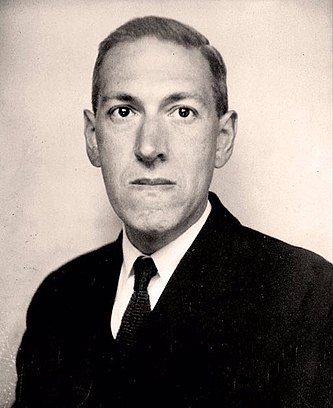
About H. P. Lovecraft