Upon the low value of "constructive" criticism I can offer testimony out of my own experience. My books have been commonly reviewed at length, and many critics have devoted themselves to pointing out what they conceive to be my errors, both of fact and of taste. Well, I cannot recall a case in which any suggestion offered by a "constructive" critic has helped me in the slightest, or even actively interested me. Every such wet-nurse of letters has sought fatuously to make me write in a way differing from that in which the Lord God Almighty, in His infinite wisdom, impels me to write — that is, to make me write stuff which, coming from me, would be as false as an appearance of decency in a Congressman. All the benefits I have ever got from the critics of my work have come from the destructive variety. A hearty slating always does me good, particularly if it be well written. It begins by enlisting my professional respect; it ends by making me examine my ideas coldly in the privacy of my chamber. Not, of course, that I usually revise them, but I at least examine them. If I decide to hold fast to them, they are all the dearer to me thereafter, and I expound them with a new passion and plausibility. If, on the contrary, I discern holes in them, I shelve them in a pianissimo manner, and set about hatching new ones to take their place. But "constructive" criticism irritates me. I do not object to being denounced, but I can't abide being schoolmastered, especially by men I regard as imbeciles.
What It Means
This is a placeholder explanation generated by the low-overhead model. It interprets "Upon the low value of "constructive" criticism I can offer testimony out of my own experience. My books have been commonly reviewed at length, and many critics have devoted themselves to pointing out what they conceive to be my errors, both of fact and of taste. Well, I cannot recall a case in which any suggestion offered by a "constructive" critic has helped me in the slightest, or even actively interested me. Every such wet-nurse of letters has sought fatuously to make me write in a way differing from that in which the Lord God Almighty, in His infinite wisdom, impels me to write — that is, to make me write stuff which, coming from me, would be as false as an appearance of decency in a Congressman. All the benefits I have ever got from the critics of my work have come from the destructive variety. A hearty slating always does me good, particularly if it be well written. It begins by enlisting my professional respect; it ends by making me examine my ideas coldly in the privacy of my chamber. Not, of course, that I usually revise them, but I at least examine them. If I decide to hold fast to them, they are all the dearer to me thereafter, and I expound them with a new passion and plausibility. If, on the contrary, I discern holes in them, I shelve them in a pianissimo manner, and set about hatching new ones to take their place. But "constructive" criticism irritates me. I do not object to being denounced, but I can't abide being schoolmastered, especially by men I regard as imbeciles." in the context of "Ch. 3 "Footnote on Criticism", pp. 85-104" to mean that wisdom is timeless.

Tags
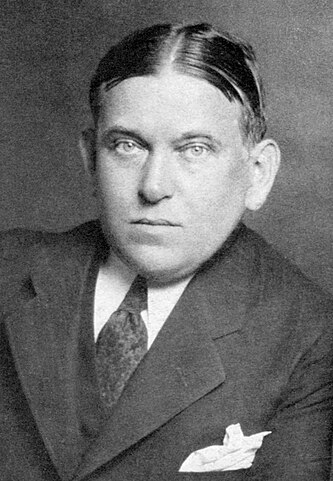
About H. L. Mencken