Ch. 16
“
The great artists of the world are never Puritans, and seldom even ordinarily respectable. No virtuous man — that is, virtuous in the Y.M.C.A. sense — has ever painted a picture worth looking at, or written a symphony worth hearing, or a book worth reading.
— H. L. Mencken
What It Means
This is a placeholder explanation generated by the low-overhead model. It interprets "The great artists of the world are never Puritans, and seldom even ordinarily respectable. No virtuous man — that is, virtuous in the Y.M.C.A. sense — has ever painted a picture worth looking at, or written a symphony worth hearing, or a book worth reading." in the context of "Ch. 16" to mean that wisdom is timeless.
Source: Wikiquote: "H. L. Mencken" (Quotes, 1910s, Prejudices, First Series (1919))
The 'What it means' explanation text was generated by Google Gemini Flash (accessed January 18, 2026). https://gemini.google.com/app
Tags
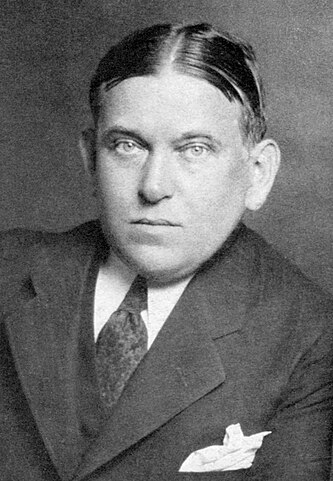
About H. L. Mencken
Henry Louis Mencken (12 September 1880 – 29 January 1956), known as H. L. Mencken, was a twentieth-century journalist, satirist, social critic, cynic, and freethinker, known as the "Sage of Baltimore" and the "American Nietzsche". He is often regarded as one of the most influential American writers of the early 20th century.
View all quotes →