Link Copied!
Gordon L. Kane Quotes (1937-)
Physicist


About Gordon L. Kane
Gordon Leon Kane (born 19 January 1937) is an American theoretical physicist and winner of the 2017 J. J. Sakurai Prize for Theoretical Particle Physics.
Best Gordon L. Kane Quotes
Shortest
Earliest
Explore our curated collection of the most famous and impactful Gordon L. Kane quotes.
“For our next colliders the goal is to provide data for a more comprehensive theory, hopefully one that incorporates dark matter, quantum gravity, and neutrino masses and solves the hierarchy problem.”
“Actually, the situation today is surprising to many because almost all the data are in, so to speak. ... The two big gaps are what particle(s) make up the dark matter, and whether there is electroweak-scale supersymmetry.”
“There are strong reasons to expect that low energy supersymmetry is the probable outcome of experimental and theoretical progress, and that it will soon be directly experimentally confirmed. By low energy, we mean (softly) broken supersymmetry with an effective soft Lagrangian whose mass parameters are typically of order the electroweak scale but otherwise not special or constrained.”
Gordon L. Kane Quotes by Topic
Find exactly what you are looking for by browsing this categorized list of Gordon L. Kane quotes by topic.
Gordon L. Kane on Science 2 quotes
“Science makes progress by combining imagination with experimental results—by insisting on evidence.”
Gordon L. Kane on Calabi–Yau manifold
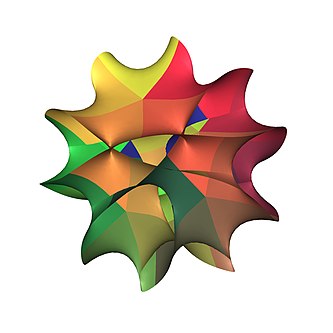
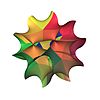
“... when non-perturbative phenomena are included, there is no problem from the string theory point of view in effecting continuous transitions between Calabi-Yau spaces of different topology. This shows that stringy ideas about geometry are really more general than those found in classical Riemannian geometry. The moduli space of Calabi-Yau manifolds should thus be regarded as a continuously connected whole, rather than a series of different ones individually associated with different topological objects ... Thus, questions about the topology of Calabi-Yau spaces must be treated on the same footing as questions about the metric on the spaces. That is, the issue of topology is another aspect of the the moduli fields. These considerations are relevant to understanding the ground state of the universe.”
Gordon L. Kane on Anthropic principle
“... when non-perturbative phenomena are included, there is no problem from the string theory point of view in effecting continuous transitions between Calabi-Yau spaces of different topology. This shows that stringy ideas about geometry are really more general than those found in classical Riemannian geometry. The moduli space of Calabi-Yau manifolds should thus be regarded as a continuously connected whole, rather than a series of different ones individually associated with different topological objects ... Thus, questions about the topology of Calabi-Yau spaces must be treated on the same footing as questions about the metric on the spaces. That is, the issue of topology is another aspect of the the moduli fields. These considerations are relevant to understanding the ground state of the universe.”

Gordon L. Kane on Antimatter
“If the Standard Model describes the world successfully, how can there be physics beyond it, such as supersymmetry? There are two reasons. First, the Standard Model does not explain aspects of the study of the large-scale universe, cosmology. For example, the Standard Model cannot explain why the universe is made of matter and not antimatter, nor can it explain what constitutes the dark matter of the universe. Supersymmetry suggests explanations for both of these mysteries. Second, the boundaries of physics have been changing. Now scientists ask not only how the world works (which the Standard Model answers) but why it works that way (which the Standard Model cannot answer). Einstein asked "why" earlier in the twentieth century, but only in the past decade or so have the "why" questions become normal scientific research in particle physics rather than philosophical afterthoughts.”
About Gordon L. Kane
Gordon Leon Kane (born 19 January 1937) is an American theoretical physicist and winner of the 2017 J. J. Sakurai Prize for Theoretical Particle Physics.