Link Copied!
Gloria E. Anzaldúa Quotes (1942-2004)
King



About Gloria E. Anzaldúa
Gloria Evangelina Anzaldúa (September 26, 1942 – May 15, 2004) was a Chicana lesbian feminist scholar of Chicana cultural theory, feminist theory, and queer theory. She loosely based her best-known book, Borderlands/La Frontera: The New Mestiza, on her life growing up on the Mexico–Texas border and incorporated her lifelong experiences of social and cultural marginalization into her work.
Best Gloria E. Anzaldúa Quotes
Shortest
Earliest
Explore our curated collection of the most famous and impactful Gloria E. Anzaldúa quotes.
“A misinformed people is a subjugated people.”

“I preferred the world of imagination to the death of sleep”


“Our images/feelings/thoughts have to be conflicted before we see the need for change.”
“We are not reconciled to the oppressors who whet their howl on our grief. We are not reconciled. (p. 171)”

“The solution to your depression lies en esa cueva oscura [in this dark cave] and a deeper integration of your psyche.”
“Those who are pushed out of the tribe for being different are likely to become more sensitized (when not brutalized into insensitivity).”
“Among the ashes traces of our roots glow like live coals illuminating our past, giving us sustenance for the present and guidance for the future.”
“Like a stone thrown into a pool, this book's ripples have touched people on numerous shores, affecting scholars and activists throughout the world.”
“For positive social change to happen we need to envision a different reality, dream new blueprints for it, formulate new strategies for coping in it.”

“Basta de gritar contra el viento-toda palabra es ruido si no está acompañada de acción (enough of shouting against the wind-all words are noise if not accompanied with action).”
“Write with your eyes like painters, with your ears like musicians, with your feet like dancers. You are the truthsayer with quill and torch. Write with your tongues of fire. Don't let the pen banish you from yourself. (p. 171)”
“Later I taught a course in Chicano Studies titled La Mujer Chicana. Having difficulty finding material that reflected my students' experiences I vowed to one day put Chicanas' and other women's voices between the covers of a book.”
“only through the body, through the pulling of flesh, can the human soul be transformed. And for images, words, stories to have this transformative power, they must arise from the human body--flesh and bone--and from the Earth's body--stone, sky, liquid, soil.”
“When everybody says "lesbian," a word connected with Sappho and the island of Lesbos, that automatically means that your forefathers and foremothers are European, that George Washington is the father of our country and Columbus discovered America-all false assumptions.”
“Alienated from her mother culture, ‘alien' in the dominant culture, the woman of color does not feel safe within the inner life of her Self. Petrified, she can’t respond, her face caught between los intersticios, the spaces between the different worlds she inhabits.”

“My whole struggle is to change the disciplines, to change the genres, to change how people look at a poem, at theory or at children's books. So I have to struggle between how many of these rules I can break and how I still can have readers read the book without getting frustrated.”

“(Q: Did people in your family tell stories about their own lives?) A: Some of the stories had to do with animals. My father told about black ghost dogs, espantos, and Mamágrande Ramona told rabid coyote stories and stories of Pancho Villa coming across the border and raiding the pueblos.”
“Though modern therapies exhort you to act against your passions (compulsions), claiming health and integration lies in that direction, you've learned that delving more fully into your pain, anger, despair, depression will move you through them to the other side, where you can use their energy to heal.”
Gloria E. Anzaldúa Quotes by Topic
Find exactly what you are looking for by browsing this categorized list of Gloria E. Anzaldúa quotes by topic.
Gloria E. Anzaldúa on Melting pot 2 quotes
“They'd like to think I have melted in the pot. But I haven't. We haven't.”
Gloria E. Anzaldúa on Change
“Our images/feelings/thoughts have to be conflicted before we see the need for change.”
Gloria E. Anzaldúa on MEChA
“I did participate in the Chicano Movement. Actually, I started out with MECHA, a Mexican American youth organization. Also I was involved with different farm worker activities in South Texas and later in Indiana.”

Gloria E. Anzaldúa on Mestizo
“That focal point or fulcrum, that juncture where the mestiza stands, is where phenomena tend to collide. It is where the possibility of uniting all that is separate occurs. This assembly is not one where severed or separated pieces merely come together. Nor is it a balancing of opposing powers. In attempting to work out a synthesis, the self has added a third element which is greater than the sum of its severed parts. That third element is a new consciousness—a mestiza consciousness.”

Gloria E. Anzaldúa on Basic Instinct
“the lesbian community is under siege, we always try to present to the heterosexual community the idealized version, but I do not think that's a good way to do it, even though I can understand where it's coming from. ("Valerie Miner talked about the kinds of self-censorship she finds in her work when she starts thinking she should present only positive images of lesbians or working-class people.") Yes. In that poem and also in the poem "Night Voice" I do that. There's this whole controversy now over media images of lesbians and gays and bisexuals. It's brought out in movies like Basic Instinct and Silence of the Lambs where they are presented as killers. It comes up in the novels of P. D. James, where she has these criminals who are lesbians or gay men. And I hate that. But, at the same time, I want the dirty laundry to be out there, whether it's on the Mexican culture or the lesbian culture or the bisexual. And I'm not sure how you do that.”

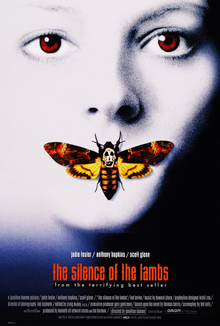
Gloria E. Anzaldúa on The Silence of the Lambs (film)
“The lesbian community is under siege, we always try to present to the heterosexual community the idealized version, but I do not think that's a good way to do it, even though I can understand where it's coming from. ("Valerie Miner talked about the kinds of self-censorship she finds in her work when she starts thinking she should present only positive images of lesbians or working-class people.") Yes. In that poem and also in the poem "Night Voice" I do that. There's this whole controversy now over media images of lesbians and gays and bisexuals. It's brought out in movies like Basic Instinct and Silence of the Lambs where they are presented as killers. It comes up in the novels of P. D. James, where she has these criminals who are lesbians or gay men. And I hate that. But, at the same time, I want the dirty laundry to be out there, whether it's on the Mexican culture or the lesbian culture or the bisexual. And I'm not sure how you do that.”
What Gloria E. Anzaldúa Said About Others
Discover personal opinions Gloria E. Anzaldúa shared regarding contemporaries.
Gloria E. Anzaldúa on This Bridge Called My Back 2 quotes
“Haciendo Caras is more of a bridge to other racial and ethnic groups and does not address white people or try to educate them as much as Bridge does.”

Gloria E. Anzaldúa on Juana Inés de la Cruz
Gloria E. Anzaldúa on Charlotte Perkins Gilman
Gloria E. Anzaldúa on Sappho
“When everybody says "lesbian," a word connected with Sappho and the island of Lesbos, that automatically means that your forefathers and foremothers are European, that George Washington is the father of our country and Columbus discovered America-all false assumptions.”

Gloria E. Anzaldúa on Christopher Columbus
“When everybody says "lesbian," a word connected with Sappho and the island of Lesbos, that automatically means that your forefathers and foremothers are European, that George Washington is the father of our country and Columbus discovered America-all false assumptions.”

Gloria E. Anzaldúa on George Washington
“When everybody says "lesbian," a word connected with Sappho and the island of Lesbos, that automatically means that your forefathers and foremothers are European, that George Washington is the father of our country and Columbus discovered America-all false assumptions.”

Gloria E. Anzaldúa on Pancho Villa
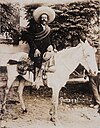
“(Q: Did people in your family tell stories about their own lives?) Some of the stories had to do with animals. My father told about black ghost dogs, espantos, and Mamágrande Ramona told rabid coyote stories and stories of Pancho Villa coming across the border and raiding the pueblos.”
Gloria E. Anzaldúa on Norma Alarcón
“The (Chicano) movement to me is now like a mosaic with all these little pieces. The little pieces are the ones that are now being activated so that a poet like Lorna Dee Cervantes is her own little miniature movement. Francisco Alarcón, Norma Alarcón, José Limón, all the people who are writing are carrying out the struggle against domination and subordination in the kinds of things they focus on-language, folklore, just anything.”
Gloria E. Anzaldúa on Francisco X. Alarcón
“The (Chicano) movement to me is now like a mosaic with all these little pieces. The little pieces are the ones that are now being activated so that a poet like Lorna Dee Cervantes is her own little miniature movement. Francisco Alarcón, Norma Alarcón, José Limón, all the people who are writing are carrying out the struggle against domination and subordination in the kinds of things they focus on-language, folklore, just anything.”
Gloria E. Anzaldúa on Lorna Dee Cervantes
“The (Chicano) movement to me is now like a mosaic with all these little pieces. The little pieces are the ones that are now being activated so that a poet like Lorna Dee Cervantes is her own little miniature movement. Francisco Alarcón, Norma Alarcón, José Limón, all the people who are writing are carrying out the struggle against domination and subordination in the kinds of things they focus on-language, folklore, just anything.”
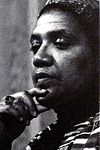
Gloria E. Anzaldúa on Audre Lorde
“I'm using the word nos/otras. Otras means other and nos means us, we. We don't have to keep using the oppositional language of the fathers. We were taught to write and think like these theorists. It's complicitous for somebody who is an "other" to be using "their" terms and "their" styles all the time. It's like fighting them with their own language. Audre Lorde said it very succinctly: "You cannot use the master's tools to dismantle the master's house.”
Gloria E. Anzaldúa on Judy Grahn
“I found out that Santa Teresa was sent to the convent by her father because they caught her kissing a woman cousin. I had been reading Judy Grahn's poem "I Have Come to Claim Marilyn Monroe's Body," and at the same time I was reading about what happened to Teresa's body: how they dug her up, how people had taken different pieces of her, and how her body did not really belong to her but to the Church. I started making the connection with what happens to women's bodies now.”
Quotes About Gloria E. Anzaldúa
Gain deeper perspective through quotes about Gloria E. Anzaldúa from others.
Bettina Aptheker on Gloria E. Anzaldúa
“Her work is an exemplar of how to interpret from experience, and it also directs our attention to a process of connection between ourselves as women, and across the many boundaries of difference.”

Cristina Beltrán on Gloria E. Anzaldúa
“Gloria Anzaldúa declares: "I will not glorify those aspects of my culture which have injured me and which have injured me in the name of protecting me. So don't give me your tenets and your laws. Don't give me your lukewarm gods. What I want is an accounting with all three cultures-white, Mexican, Indian." In her demand for "an accounting" with the many cultures and communities that define her identity, Anzaldúa articulates una cultura mestiza, an agonistic and innovative feminism whose democratic receptivity is characterized by its emphasis on contentious encounters that cut across multiple axes of difference.”
Ellen DuBois on Gloria E. Anzaldúa
“she was instrumental in revisioning feminism to embrace the concerns of lesbians and women of color.”
Melanie Kaye/Kantrowitz on Gloria E. Anzaldúa
“Gloria Anzaldúa has consistently modelled commitment to writing as a life-organizing principle; in addition, Gloria, an old friend, and Chrystos, a new one, gave me courage to write honestly about violence.”
Melanie Kaye/Kantrowitz "Crossover Dreams" on Gloria E. Anzaldúa
“Shame is a knife that carves out a culture's heart. To name, describe and defy shame is thus a profoundly rebellious, strengthening act, and nobody writes about shame like Gloria Anzaldúa-the shame of the other, the minority, the one whose face, hair, eyes, skin, speech, sexuality is different, not right...Those familiar with Anzaldúa's writing from This Bridge Called My Back, the groundbreaking collection she co-edited with Cherrie Moraga, know her as one of the most important and original voices of Third World feminism. In the borderlands new creatures come into being, including the "new mestiza" Anzaldúa celebrates in some of the boldest experimental writing to come out of the women's movement. Monique Wittig comes to mind, experimenting with language as well as form, or June Arnold, or the innovative English/Yiddish poetry of Irena Klepfisz, cited several times by Anzaldúa...the dominant note in the book is neither scolding nor grim. Anzaldúa loves her culture, language, people. Many of the poems are wildly humorous or optimistic simply by dint of their inventiveness ("Interface" or "Holy Relics," for example). She invokes new human possibility in the name of the new mestiza charged with pulling the human race into a future free from destruction, exploitation or oppression.”
Irena Klepfisz on Gloria E. Anzaldúa
“In the '80s, when I -- I've written about this -- I was rooming with Gloria Anzaldúa, who was a Chicana lesbian writer from Texas. And we were teaching in a program in Santa Cruz -- a summer three-week -- I think it was a three-week program. It was called Women's Voices, and it was about -- it was a writing program,...We sort of introduced ourselves to each other, and -- she did ask me how come I never used Yiddish, and I thought that was sort of an interesting question, since it had never even occurred to me. I mean, I think I used two Yiddish words up until then.”
Elizabeth Martinez on Gloria E. Anzaldúa 2 quotes
“The most striking change during the past 20 years can be seen in attitudes toward homophobia. In the late 1960s and early 1970s, an almost total silence hung over gay and lesbian advocacy. No openly gay person could be a movement leader. Today homophobia persists; most progressive, straight Chicanos as well as Chicanas still fail to see gay and lesbian rights as another struggle of other oppressed people. Too many still fail to see homophobia as a sometimes murderous force of discrimination. But the situation has improved, especially in some major cities, in academia and among youth...The work of Chicana lesbian artists and intellectuals such as Gloria Anzaldúa and Cherríe Moraga has been crucial to this liberation, with benefits going beyond las lesbianas. Wherever one finds strong voices for women among Chicanas, they often come from Lesbians.”

Donna Marie Perry on Gloria E. Anzaldúa
“I saw Anzaldúa in action at a workshop on the creative process. "How's that for drama?" she asked us, having covered a portable blackboard with drawings. "I lecture with pictures," she explained, going on to trace the significance of these personal hieroglyphics. After she read us one of her poems in Spanish: "I know that was frustrating for many of you, but I wanted you to see what it feels like to be locked out of the language because you don't know it. I was punished for speaking Spanish in school."”
Mary Helen Ponce interview on Gloria E. Anzaldúa
Adrienne Rich on Gloria E. Anzaldúa
“Gloria Anzaldúa, disentangling the heavy hanging strands fringing the cave of mestiza consciousness, finds speechlessness compounded by femaleness, and both by the fact of being alien, "queer," not a woman in her culture's eyes. Her sense of identity is more complicated than Baca's because she's forced to transform many layers of negativity surrounding femaleness itself-images of Malintzin, the Indian woman as betrayer, of la chingada, the Indian woman as the fucked-one, of la Llorona, eternally mourning, long-suffering mother-and to confront the despot duality of simplistic masculine/feminine: I, like other queer people, am two in one body, both male and female. I am the embodiment of the hieros gamos: the coming together of opposite qualities within."”

Jonathan Rosa on Gloria E. Anzaldúa
“What W. E. B. Du Bois described as the "veil" that barred African Americans from the White American world can be productively understood in relation to Latinx subjectivities by drawing on Anzaldúa's theorization of exclusion in Borderlands/La Frontera (1987). For Anzaldúa, borders are recursive structures that can be reproduced on a number of scales, such that the "color line" (in Du Bois' terms) is just one of many possible sites for the production of exclusion and double-consciousness. In her formulation of a New Mestiza Consciousness, the racial and economic exclusion caused by colonialism must always be understood in relation to the sexual and gender domination of patriarchy. Anzaldúa's Chicana feminism involves the experience of multiple forms of double-consciousness in response to the multiplicity of power. In some places, Anzaldúa characterizes her lesbian Chicana feminist consciousness as a "Shadow-Beast... that refuses to take orders from outside authorities... that hates constraints of any kind, even those self-imposed" (1987:38)...What Du Bois' navigates as transcendence around and above the exclusionary veil, allowing him to access both the Black and White worlds, Anzaldúa approaches with a hopeful ambivalence: she is without country as a Mestiza, yet possesses all countries through the potential for feminine kinship: she is without race as a lesbian, yet identifies with all races as part of a queer diaspora; and she is without culture as a staunch critic of patriarchal beliefs and practices, yet fully cultural as a creative participant in the production of an emergent reality (1987:102-103).”
Vicki L. Ruiz on Gloria E. Anzaldúa
“The works of Chicana lesbian writers Gloria Anzaldúa, Cherrie Moraga, Emma Pérez, Ana Castillo, Alicia Gaspar de Alba, Carla Trujillo, and many others bring out the pain and isolation, but, as important, their joys, self-respect, courage, and dignity.”
Cecilia Vicuña The Oxford Book of Latin American Poetry on Gloria E. Anzaldúa
“The migrants' plight has transformed border crossings into a key image in contemporary Latin American art and poetry. José Martí, who lived in exile in New York, said that shame of the indigenous mother culture is at the core of Latin America's dependency, fueling the sell-out of natural resources and the cycle of poverty. Gamaliel Churata concurs. It is no coincidence that the main theorization on this issue has come from the work of Gloria Anzaldúa, a mestiza born and raised on the border. She writes: "The U.S. Mexican border is an open wound where the Third World grates against the first and bleeds. . . . We, indias y mestizas, police the Indian in us, brutalize and condemn her." In her work, the negative space that defines women by what they "are not" (nonwhite, non-male), is transformed into creative space, by a will "to fashion my own gods out of my entrails. " Her work indicates the difficult edge all mestizos navigate, the hidden rage and complex paradoxes that women poets often acknowledge.”
About Gloria E. Anzaldúa
Gloria Evangelina Anzaldúa (September 26, 1942 – May 15, 2004) was a Chicana lesbian feminist scholar of Chicana cultural theory, feminist theory, and queer theory. She loosely based her best-known book, Borderlands/La Frontera: The New Mestiza, on her life growing up on the Mexico–Texas border and incorporated her lifelong experiences of social and cultural marginalization into her work.