• pp. 32+33, - letter to Johannes Kneppelhout, from Amsterdam, November 1859
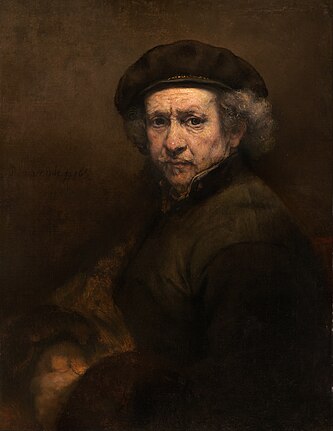
If you ever want to see the 'Nightwatch' [by Rembrandt ] at its best, visit it at two o'clock, half past three afternoon.. ..that time a warm light falls on the painting [then located in the Trippenhuis in Amsterdam]; another world opens, a world of glow, light and inimitable power. I think Rembrandt is not only beautiful, but – were we still in the Age of the old Gods, I would worship him. You can lose yourself in that painting; it is a complete abyss, deep and sky-high.. ..then suddenly I think of my own paintings - poor cow, dairy, and sheep compositions, and I doubt, will I ever become something..
What It Means
This is a placeholder explanation generated by the low-overhead model. It interprets "If you ever want to see the 'Nightwatch' [by Rembrandt ] at its best, visit it at two o'clock, half past three afternoon.. ..that time a warm light falls on the painting [then located in the Trippenhuis in Amsterdam]; another world opens, a world of glow, light and inimitable power. I think Rembrandt is not only beautiful, but – were we still in the Age of the old Gods, I would worship him. You can lose yourself in that painting; it is a complete abyss, deep and sky-high.. ..then suddenly I think of my own paintings - poor cow, dairy, and sheep compositions, and I doubt, will I ever become something.." in the context of "version in original Dutch / citaat van Bilders' brief, in het Nederlands: Indien u ooit de 'Nachtwacht' op zijn mooist wil zien [toen nog in het Trippenhuis in Amsterdam], doe dat dan tegen twee uur, half drie.. ..een warm licht valt dan op het schilderij, een andere wereld opent zich, een wereld van gloed, licht en onnavolgbare kracht. Ik vind Rembrandt niet alleen schoon, maar, was het nog in de Godentijd, ik zou hem aanbidden.. .Men kan zich in dat schilderij verliezen; het is al afgrond, diep en hemelhoog.. ..dan denk ik ineens aan mijn schilderijen, arme koeien-, melkerijen, en schapen-composities, en twijfel of ik ooit wel iets zal worden..
• pp. 32+33, - letter to Johannes Kneppelhout, from Amsterdam, November 1859" to mean that wisdom is timeless.
Tags

About Gerard Bilders