Link Copied!
George William Curtis Quotes (1824-1892)
Writer, Activist




About George William Curtis
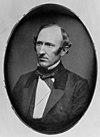
George William Curtis (24 February 1824 – 31 August 1892) was an American writer, reformer, public speaker, and political activist. He was an abolitionist and supporter of civil rights for African Americans and Native Americans. He also advocated women's suffrage, civil service reform, and public education.
Best George William Curtis Quotes
Shortest
Earliest
Explore our curated collection of the most famous and impactful George William Curtis quotes.

“Government is, unquestionably, a science of compromises, but only of policies and interests, not of essential rights; and if of them, then the sacrifice must fall equally on all.”


“While we read history we make history ... Every great crisis of human history is a pass of Thermopylae, and there is always a Leonidas and his three hundred to die in it, if they can not conquer.”

“The debate forced upon the mind of the country this question. Does the Constitution, made at the time we know, by the men we know, holding the views we know, for the distinct intention it declares, stultify itself by securing the destruction of its expressed purposes?”

“So vast has been the change in the claim and position of slavery! So entirely has it reversed the classic story, and the blind, begging Belisarius has become the imperial general! So proudly, in such long and dazzling and magnificent array, stands Xerxes at the fiery pass of war! And where is Leonidas? Where is liberty?”
“The war has revealed an overpowering national instinct. The conflicting theories of the exact nature and limitations of our government had blinded the shrewdest minds to the fact that we were a nation, with all the feelings and instincts of a nation, and that our quarrels must be settled inside and not outside of the Union.”
“Never fear, true hearts! A people which has shown the quality of its genius as this nation has in the last four years will finish its work. It will go forward and not backward. For our America shall be the Sinai of the nations, and from the terrible thunders and lightnings of its great struggle shall proceed the divine law of liberty that shall subdue and harmonize the world.”
“There was a time indeed when it was not so, when the bold mariner, Roger Williams, sailed beyond the Boston Light of two centuries ago, and asked of the wilds of the Seekonk and the Mawshawsuc, 'What cheer? What cheer?' And the friendly solitudes answered, 'A truer liberty than you left behind'. And if Boston Light cheers the world to-day it is because the spirit of Roger Williams feeds the flame.”

“And, on the other hand, the Greek Leonidas choking the pass against the Persian torrent, the Italian Galileo holding fast his scientific faith in the teeth of the Church of Rome, Robert Small steering his bold boat under the guns of slavery straight towards the flag of freedom, Abraham Lincoln patiently saving civil liberty, are all, in their times and countries, soldiers of the true cross, heroes and martyrs of the Good Fight.”

“In 1850 Mr. Calhoun said, 'Let us be done with compromises. Let us go back and stand upon the Constitution'. Four years afterwards, the most Christian and most democratic statesman we have had in our history since Washington, Mr. Seward, accepted the challenge thrown out by Mr. Calhoun, solemnly saying, 'The sands of compromise are sliding from beneath my feet, and they are taking hold once more of the rock of the Constitution'.”
“Still, slavery professes only to wish its rights. It only wants to be let alone. Of course, what else could it want? And what else is the secret of the present state of the country? Under the plea of being let alone — that it was a dreadful thing and only wanted to mind its own business — it has quietly possessed itself, one after another, of all the outworks of the Constitution, and now seeks to intrench itself finally in the citadel.”
“Mister Gladstone is an Englishman and a scholar. Had he walked by the side of that soldier, remembering Cromwell's Ironsides who trusted in God and kept their powder dry, and the old Continental militia, I think he would not have declared as he did that 'Jefferson Davis had created a nation', but he would rather have said, 'If Bunker Hill sends the first soldiers to this war, it is already decided. My lords and gentlemen, John Bull had better touch no American bonds which Bunker Hill does not endorse'.”
“[Human]] history is the story of that 'Good Fight', of the effort of man to attain that universal liberty to which, he feels himself born. All wars are but battles in this war. It is fought by the tongue and pen as earnestly as with the sword and shell. It is called by various names. The combatants rally under various banners. Whatever in human nature is hopeful, generous, aspiring, the love of God and trust in man, is arrayed on one side. The meaner passions, the baser purpose, stand upon the other.”

“And the clergy said, 'Certainly, you're quite right; the disease is awful. Therefore, the only way is to let it alone. Amen. A contribution will now be taken up to extend Gospel privileges to the Philippine Islands'. The abolitionists retorted by declaring that you might as well let fire alone, by telling the free States that they were bound to thrust back fugitives, and were, therefore, themselves the mere bloodhounds and slaves of slavery, which could only live by expansion, and only wanted to be let alone to become impregnable.”
“The foreboding statesman who knew how Greece had fallen asunder and perished, who knew the mean tenure of European leagues, who knew the absolute necessity of union and the jarring jealousies of sections, saw in the Constitution but a shadowy bond which foretold early separation and disaster. It was not strange when the Union was scarcely ten years old, still in the gristle, he heard the serpent of State sovereignty angrily hissing in the Virginia and Kentucky resolutions of '98.”
“With the sure sagacity of a leader of men, Washington at once selected, for the highest and most responsible stations, the three chief Americans who represented the three forces in the nation which alone could command success in the institution of the government. Hamilton was the head, Jefferson was the heart, and John Jay was the conscience. Washington's just and serene ascendancy was the lambent flame in which these beneficent powers were fused, and nothing less than that ascendancy could have ridden the whirlwind and directed the storm that burst around him.”
“The party which is humorously called the Douglas Democracy no more recognizes the rights declared by the Declaration of Independence to be inalienable than does the party of the administration. Its leader repudiates the theory that the Constitution establishes slavery, but he does not perceive in it, or in the circumstances of its adoption, or in the expressed sentiments and actions of its framers, any reason to suppose that it favors liberty more than slavery. He leaves all human rights at the mercy of a majority, and insists that the Constitution does the same.”

“It is not yet the Millennium. We have not yet reached these pure heights of civilization, the ascent to which is the Good Fight. But are we no nearer the summit because we do not stand upon it? Has the Good Fight gained nothing by the war? If you sail from Boston to Calcutta, when you are off Madagascar you are not yet in India, but you have rounded the Cape of Good Hope, you are not yet in India, but at least you are outside Boston Light. I do not say the country is yet beyond Boston Light, but if not, it is only because Boston Light is the sun of liberty that shines all over the world.”
“If the slave-power could now in good faith stand where the fathers stood, with the added lights of experience shining upon the question, asking sympathy and co-operation in a system of emancipation, pleading that it was unfair to ask them to make greater sacrifices than other men are willing to make, allowing that it was a common evil, the cost and trouble of whose removal should be cheerfully borne by all, or if the laws of any slave state looked towards the gradual relief of the difficulty, there is not an honest man in the North or the South whose heart would not tremble with joy as he contemplated the destiny of his country.”

“Up to this time the argument of the abolitionists, who since 1833 had been storming the national conscience — for they knew the real citadel of a nation — with the assertion that slavery was an absolute wrong, had been met by the reply, 'Yes, yes; we know all about that. Of course it's a great wrong. The South agrees to that. It's dreadful sorry about it — but it's got the nasty thing, and it says if we'll only let it alone it will settle itself. Slavery is one of those things that work out themselves. The more you talk the worse it is. Besides, it's their own affair; we've nothing to do with it. Let 'em alone ! Let 'em alone !'.”
“I will not weary you with the proof of this. James Madison, who knew perhaps as well as any one what the makers of the Constitution meant, said, 'We intend this Constitution to be the great charter of Human Liberty to the unborn millions who shall enjoy its protection, and who should never see that such an institution as slavery was ever known in our midst'. And the Congress of 1787, in resigning its functions, echoed the meaning of his words in saying, 'Let it never be forgotten that the cause of the United States is the cause of human nature — not of white men nor black men nor red men nor brown men — but of man, of mankind.”
“Inferior race? Was it they who carved the skulls of our boys into drinking-cups and their bones into trinkets? Was it they who starved and froze our brothers into idiocy and madness at Andersonville and Belle-Isle? Was it they who hunted our darlings with bloodhounds, or hung faithful Union men before the very eyes of their wives and children? Come! Come! Brothers of my race, whether at the north or south, these things which we all execrate and abhor were the work of men of our own color. Let us clasp hands in speechless shame, and confess that manhood in America is to be measured not by the color of the skin, but by the quality of the soul.”
“This attempt to usurp the government by subverting the Constitution of the United States was the policy of the greatest leader the system of slavery has ever had in this country — that pagan of our politics, Mr. Calhoun. While other statesmen merely saw, he foresaw. His mind, of large forecast and comprehensive grasp, perceived that the logic of history, of civilization, of our national idea, of the universal conscience, was against slavery. But he had seen the conscience of the country, roused for a moment in the Missouri debate, drop asleep again. And with the audacity of genius he resolved to stun the country into acquiescence by claiming that slavery was the fundamental law of the land.”
George William Curtis Quotes by Topic
Find exactly what you are looking for by browsing this categorized list of George William Curtis quotes by topic.
George William Curtis on United States 7 quotes
“Let it never be forgotten that the cause of the United States is the cause of human nature, not of white men nor black men nor red men nor brown men, but of man, of mankind... The Constitution of the United States, in its essential spirit and intention, recognizes the essential manhood of Dred Scott as absolutely as it does that of the President, of the Chief Justice, or of any Senator of the United States.”

George William Curtis on Slavery 4 quotes
“The Democratic Party then, as now, was in open alliance with slavery, in a conspiracy against the Constitution and the peace of the country.”
George William Curtis on American Civil War 2 quotes
“Inferior race? Was it they who carved the skulls of our boys into drinking, cups and their bones into trinkets? Was it they who starved and froze our brothers into idiocy and madness at Andersonville and Belle-Isle? Was it they who hunted our darlings with bloodhounds, or hung faithful Union men before the very eyes of their wives and children? Come! Come! Brothers of my race, whether at the north or south, these things which we all execrate and abhor were the work of men of our own color. Let us clasp hands in speechless shame, and confess that manhood in America is to be measured not by the color of the skin, but by the quality of the soul.”

George William Curtis on American Revolution 2 quotes
“The Declaration of Independence was the passionate manifesto of a revolutionary war, and its doctrine of equal human rights a glittering generality... It would have been perfectly easy to say, We hold these truths to be self-evident, that all white men of the European race upon this continent are created equal — to their brethren across the water; that they are endowed by their Creator with certain unalienable rights; but that yellow, blacky brown, and red men have no such rights. It would have been very easy to say this. Our fathers did not say it, because they did not mean it. They were men who meant what they said, and who said what they meant, and meaning all men, they said all men. They were patriots asserting a principle and ready to die for it, not politicians pettifogging for the presidency.”

George William Curtis on Republican Party (United States) 2 quotes
“And as I understand the Republican party, while it steadily holds that slavery is in itself a wrong, it does not forget human conditions and the actual state of things, and, therefore, that the questions of planting slavery in fresh territory and of removing it where it is in wrought in a system of society are very different, as different as the prevention and the cure of disease. The question of the moment, then, is simply whether the most unrelenting and permanent despotism can be justified by the Constitution of the United States. That is, whether the makers of the government meant that the democratic-republican principle should gradually, but surely, disappear from that government. There are, therefore, but two parties, one holding that a system of free society, the other that one of slave society, is the real intention of the government. These parties are sectionally divided in situation, but they both aim to have their idea become the national policy. The party of slavery, indeed, is divided in its own camp, but only upon a minor question.”

George William Curtis on Legal positivism
“[A]ll men have original equal rights which government did not give and cannot justly take away.”
George William Curtis on New York City
“I am no more a child, but a man; no longer a confederacy, but a nation. I am no more Virginia, New York, Carolina, or Massachusetts, but the United States of America.”

George William Curtis on Virginia
“I am no more a child, but a man; no longer a confederacy, but a nation. I am no more Virginia, New York, Carolina, or Massachusetts, but the United States of America.”

George William Curtis on South Carolina
“I am no more a child, but a man; no longer a confederacy, but a nation. I am no more Virginia, New York, Carolina, or Massachusetts, but the United States of America.”

George William Curtis on History
“While we read history we make history... Every great crisis of human history is a pass of Thermopylae, and there is always a Leonidas and his three hundred to die in it, if they can not conquer.”
George William Curtis on War
“War has revealed an overpowering national instinct. The conflicting theories of the exact nature and limitations of our government had blinded the shrewdest minds to the fact that we were a nation, with all the feelings and instincts of a nation, and that our quarrels must be settled inside and not outside.”
George William Curtis on United States Constitution
“The Constitution of the United States, in its essential spirit and intention, recognizes the essential manhood of Dred Scott as absolutely as it does that of the President, of the Chief Justice, or of any Senator of the United States... The Democratic Party then, as now, was in open alliance with slavery, in a conspiracy against the Constitution and the peace of the country.”

What George William Curtis Said About Others
Discover personal opinions George William Curtis shared regarding contemporaries.
George William Curtis on Thomas Jefferson 3 quotes
“With the sure sagacity of a leader of men, Washington at once selected, for the highest and most responsible stations, the three chief Americans who represented the three forces in the nation which alone could command success in the institution of the government. Hamilton was the head, Jefferson was the heart, and John Jay was the conscience. Washington's just and serene ascendancy was the lambent flame in which these beneficent powers were fused, and nothing less than that ascendancy could have ridden the whirlwind and directed the storm that burst around him.”

George William Curtis on George Washington 2 quotes
“With the sure sagacity of a leader of men, Washington at once selected, for the highest and most responsible stations, the three chief Americans who represented the three forces in the nation which alone could command success in the institution of the government. Hamilton was the head, Jefferson was the heart, and John Jay was the conscience. Washington's just and serene ascendancy was the lambent flame in which these beneficent powers were fused, and nothing less than that ascendancy could have ridden the whirlwind and directed the storm that burst around him.”

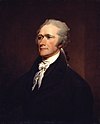
George William Curtis on Alexander Hamilton
“With the sure sagacity of a leader of men, Washington at once selected, for the highest and most responsible stations, the three chief Americans who represented the three forces in the nation which alone could command success in the institution of the government. Hamilton was the head, Jefferson was the heart, and John Jay was the conscience. Washington's just and serene ascendancy was the lambent flame in which these beneficent powers were fused, and nothing less than that ascendancy could have ridden the whirlwind and directed the storm that burst around him.”
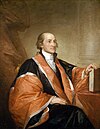
George William Curtis on John Jay
“With the sure sagacity of a leader of men, Washington at once selected, for the highest and most responsible stations, the three chief Americans who represented the three forces in the nation which alone could command success in the institution of the government. Hamilton was the head, Jefferson was the heart, and John Jay was the conscience. Washington's just and serene ascendancy was the lambent flame in which these beneficent powers were fused, and nothing less than that ascendancy could have ridden the whirlwind and directed the storm that burst around him.”
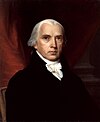
George William Curtis on James Madison
“If Washington or Jefferson or Madison should utter upon his native soil today the opinions he entertained and expressed upon this question, he would be denounced as a fanatical abolitionist. To declare the right of all men to liberty is sectional, because slavery is afraid of liberty and strikes the mouth that speaks the word. To preach slavery is not sectional — no: because freedom respects itself and believes in itself enough to give an enemy fair play. Thus Boston asked Senator Toombs to come and say what he could for slavery. I think Boston did a good thing, but I think Senator Toombs is not a wise man, for he went. He went all the way from Georgia to show Massachusetts how slavery looks, and to let it learn what it has to say. When will Georgia ask Wendell Phillips or Charles Sumner to come down and show her how liberty looks and speaks?”
George William Curtis on Abraham Lincoln
“Abraham Lincoln, President of the United States, walked through the streets of Richmond and respectfully lifted his hat to the men who blacked Louis Wigfall's boots and curried his horse. What did it mean? It meant that the truest American president we have ever had, the companion of Washington in our love and honor, recognized that the poorest man, however outraged, however ignorant, however despised, however black, was, as a man, his equal. The child of the American people was their most prophetic man, because, whether as small shop-keeper, as flat-boatman, as volunteer captain, as honest lawyer, as defender of the Declaration, as President of the United States, he knew by the profoundest instinct and the widest experience and reflection, that in the most vital faith of this country it is just as honorable for an honest man to curry a horse and black a boot as it is to raise cotton or corn, to sell molasses or cloth, to practice medicine or law, to gamble in stocks or speculate in petroleum. He knew the European doctrine that the king makes the gentleman; but he believed with his whole soul the doctrine, the American doctrine, that worth makes the man.”

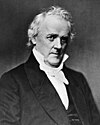
George William Curtis on James Buchanan
“Mister Toombs was willing to dissolve the Union to save slavery, Mister Phillips, to save liberty; while Mister Seward, denounced and derided by both, declared that the deepest instinct of the American people was for union. Reserved rights. State rights, limited powers, the advantages of union and disunion, were the cucumbers from which we were busily engaged in distilling light, overlooking the fact of nationality in discussing the conditions of union. We were speculating upon costume. We gravely proved that the clothes were the clothes of a woman, or of a child, without seeing that whatever the clothes might be there was a full-grown man inside of them. "The Constitution is a contract between sovereign States", shouted Mister Toombs, "let Georgia tear it and separate". "The Constitution is a league with hell", calmly replied Mister Phillips, "let New York cut off New Orleans to rot alone". "Oh, dear! it"s a dreadful dilemma", whimpered President Buchanan. "States have no right to secede, and the United States have no right to coerce. Oh, dear me! it"s perfectly awful! I"m the most patriotic of men, but what shall I do? what shall I do?" Separate! Cut off! Secede! It was of a living body they spoke, which, pierced anywhere, quivered everywhere.”
George William Curtis on Wendell Phillips
“Mister Toombs was willing to dissolve the Union to save slavery, Mister Phillips, to save liberty; while Mister Seward, denounced and derided by both, declared that the deepest instinct of the American people was for union. Reserved rights. State rights, limited powers, the advantages of union and disunion, were the cucumbers from which we were busily engaged in distilling light, overlooking the fact of nationality in discussing the conditions of union. We were speculating upon costume. We gravely proved that the clothes were the clothes of a woman, or of a child, without seeing that whatever the clothes might be there was a full-grown man inside of them. "The Constitution is a contract between sovereign States", shouted Mister Toombs, "let Georgia tear it and separate". "The Constitution is a league with hell", calmly replied Mister Phillips, "let New York cut off New Orleans to rot alone". "Oh, dear! it"s a dreadful dilemma", whimpered President Buchanan. "States have no right to secede, and the United States have no right to coerce. Oh, dear me! it"s perfectly awful! I"m the most patriotic of men, but what shall I do? what shall I do?" Separate! Cut off! Secede! It was of a living body they spoke, which, pierced anywhere, quivered everywhere.”
George William Curtis on Andrew Johnson
“I know how subtle, elusive, apparently ineradicable, is the spirit of caste. But I remember that the English lords six centuries ago tore out the teeth of the Jew Isaac of York in the dungeon under the castle; and today he lives proudly in the castle, and the same lords come respectfully to his daughter's marriage, while the most brilliant Tory in the British Parliament proposes her health, and the Lord Chief Justice of England leads the hip-hip-hurrah at the wedding breakfast. Caste is very strong, but I remember that five years ago there were good men among us who said. If white hands can't win this fight let it be lost. I have seen the same men agreeing that black hands had even more at stake in it than we, giving them muskets, bidding them Godspeed in the Good Fight, and welcoming them with honor as they returned. Caste is very strong, but I remember that six years ago there was a Tennessee slave-holder, born in North Carolina, who had always acted with the slave interest, and was then earnestly endeavoring to elect John C. Breckenridge President of the United States. We have all seen that same man four years afterwards, while Tennessee quivered with civil war, standing beneath the autumn stars and saying, 'Colored men of Tennessee, humble and unworthy as I am, if no better shall be found I will indeed be your Moses and lead you through the Red Sea of war and bondage to a fairer future of liberty and peace. I speak now as one who feels the world his country and all who love equal rights his friends'. So said Andrew Johnson, God and his country listening. God and his country watching, Andrew Johnson will keep his word.”

George William Curtis on Ulysses S. Grant
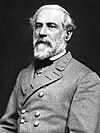
“On Palm Sunday, at Appomattox Court House, the spirit of feudalism, of aristocracy, of injustice in this country, surrendered, in the person of Robert E. Lee, the Virginian slave-holder, to the spirit of the Declaration of Independence and of equal rights, in the person of Ulysses S. Grant, the Illinois tanner. So closed this great campaign in the 'Good Fight of Liberty'. So the Army of the Potomac, often baffled, struck an immortal blow, and gave the right hand of heroic fellowship to their brethren of the west. So the silent captain, when all his lieutenants had secured their separate fame, put on the crown of victory and ended civil war. As fought the Lieutenant-General of the United States, so fight the United States themselves, in the 'Good Fight of Man'. With Grant's tenacity, his patience, his promptness, his tranquil faith, let us assault the new front of the old enemy. We, too, must push through the enemy's Wilderness, holding every point we gain. We, too, must charge at daybreak upon his Spottsylvania Heights. We, too, must flank his angry lines and push them steadily back. We, too, must fling ourselves against the baffling flames of Cold Harbor. We, too, outwitting him by night, must throw our whole force across swamp and river, and stand entrenched before his capital. And we, too, at last, on some soft, auspicious day of spring, loosening all our shining lines, and bursting with wild battle music and universal shout of victory over the last desperate defense, must occupy the very citadel of caste, force the old enemy to final and unconditional surrender, and bring Boston and Charleston to sing Te Deum together for the triumphant equal rights of man.”

George William Curtis on Robert E. Lee
“On Palm Sunday, at Appomattox Court House, the spirit of feudalism, of aristocracy, of injustice in this country, surrendered, in the person of Robert E. Lee, the Virginian slave-holder, to the spirit of the Declaration of Independence and of equal rights, in the person of Ulysses S. Grant, the Illinois tanner. So closed this great campaign in the 'Good Fight of Liberty'. So the Army of the Potomac, often baffled, struck an immortal blow, and gave the right hand of heroic fellowship to their brethren of the west. So the silent captain, when all his lieutenants had secured their separate fame, put on the crown of victory and ended civil war. As fought the Lieutenant-General of the United States, so fight the United States themselves, in the 'Good Fight of Man'. With Grant's tenacity, his patience, his promptness, his tranquil faith, let us assault the new front of the old enemy. We, too, must push through the enemy's Wilderness, holding every point we gain. We, too, must charge at daybreak upon his Spottsylvania Heights. We, too, must flank his angry lines and push them steadily back. We, too, must fling ourselves against the baffling flames of Cold Harbor. We, too, outwitting him by night, must throw our whole force across swamp and river, and stand entrenched before his capital. And we, too, at last, on some soft, auspicious day of spring, loosening all our shining lines, and bursting with wild battle music and universal shout of victory over the last desperate defense, must occupy the very citadel of caste, force the old enemy to final and unconditional surrender, and bring Boston and Charleston to sing Te Deum together for the triumphant equal rights of man.”
Quotes About George William Curtis
Gain deeper perspective through quotes about George William Curtis from others.
Eric Foner on George William Curtis
“Congress incorporated birthright citizenship and legal equality into the Constitution via the Fourteenth Amendment. In recent decades, the courts have used this amendment to expand the legal rights of numerous groups, most recently, gay men and women. As the Republican editor George William Curtis wrote, the Fourteenth Amendment changed a Constitution 'for white men' to one 'for mankind'. It also marked a significant change in the federal balance of power, empowering the national government to protect the rights of citizens against violations by the states. In 1867 Congress passed the Reconstruction Acts, again over Johnson’s veto. These set in motion the establishment of new governments in the South, empowered Southern black men to vote and temporarily barred several thousand leading Confederates from the ballot. Soon after, the 15th Amendment extended black male suffrage to the entire nation. The Reconstruction Acts inaugurated the period of Radical Reconstruction, when a politically mobilized black community, with its white allies, brought the Republican Party to power throughout the South. For the first time, African-Americans voted in large numbers and held public office at every level of government. It was a remarkable, unprecedented effort to build an interracial democracy on the ashes of slavery. Most offices remained in the hands of white Republicans. But the advent of African-Americans in positions of political power aroused bitter hostility from Reconstruction's opponents.”

Michael Zak on George William Curtis
“Early in his career, he clerked for a New York City merchant and worked a farm. The young intellectual was a member of a study club along with Henry Thoreau, Ralph Waldo Emerson, Nathaniel Hawthorne and Amos Alcott. After four years traveling in Europe and the Middle East, Curtis joined the editorial staff of the New York Tribune. Harper's Weekly later made him its chief editorial writer. He married the sister of Robert Gould Shaw, who would command the 54th Massachusetts. His entry into politics was making campaign speeches for Republican presidential nominee John Fremont... Curtis was delegate to the GOP's 1860, 1864 and 1876 national conventions. He declined a diplomatic post in Egypt. During the year of President Lincoln's re-election he lost an election for the U.S. House of Representatives in a very Democrat district. In 1868, he cast an electoral vote for Ulysses Grant, who named him to a commission on civil service reform. President Rutherford Hayes offered him a choice of any ambassadorship, but the busy writer preferred to remain at home... In his final years, he served as regent and then vice chancellor of New York University.”
About George William Curtis
George William Curtis (24 February 1824 – 31 August 1892) was an American writer, reformer, public speaker, and political activist. He was an abolitionist and supporter of civil rights for African Americans and Native Americans. He also advocated women's suffrage, civil service reform, and public education.