George Steiner (1989) Real Presences. p. 174-175.
“
The negations of post-structuralism and of certain varieties of deconstruction are precisely as dogmatic, as political as were the positivist equations of archival historicism. The "emptiness of meaning" postulate is no less a priori, no less a case of despotic reductionism than were, say, the axioms of economic and psycho-sociological causality in regard to the generation of meaning in literature and the arts in turn-of-the-century pragmatism and scientism.
— George Steiner on Post-structuralism
What It Means
This is a placeholder explanation generated by the low-overhead model. It interprets "The negations of post-structuralism and of certain varieties of deconstruction are precisely as dogmatic, as political as were the positivist equations of archival historicism. The "emptiness of meaning" postulate is no less a priori, no less a case of despotic reductionism than were, say, the axioms of economic and psycho-sociological causality in regard to the generation of meaning in literature and the arts in turn-of-the-century pragmatism and scientism." in the context of "George Steiner (1989) Real Presences. p. 174-175." to mean that wisdom is timeless.
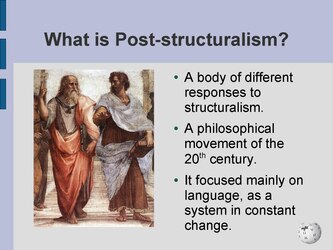
Source: Wikiquote: "Post-structuralism" (Quotes)
The 'What it means' explanation text was generated by Google Gemini Flash (accessed January 18, 2026). https://gemini.google.com/app
Tags

About George Steiner
Francis George Steiner (April 23, 1929 – February 3, 2020) was a French-born American literary critic, essayist, philosopher, novelist, translator, and educator, who wrote extensively about the relationship between language, literature and society, and the impact of the Holocaust.
View all quotes →