Link Copied!
George Perle Quotes (1915-2009)
Revolutionary, Composer

Best George Perle Quotes
Shortest
Earliest
Explore our curated collection of the most famous and impactful George Perle quotes.
“His partitioning of the octave in the first ten bars places Varèse with Scriabin and the Schoenberg circle among the revolutionary composers whose work initiates the beginning of a new mainstream tradition in the music of our century.”
“Every bit of theorizing I’ve ever done, including my interest in Berg, has come as a consequence of discoveries I made as a composer and interests that I developed as a composer. I never thought of my theory as being a kind of irrelevant activity to my composing.”
“This intersecting of inherently non-symmetrical diatonic elements with inherently non-diatonic symmetrical elements seems to me the defining principle of the musical language of Le Sacre and the source of the unparalleled tension and conflicted energy of the work.”
“I would not want you to suppose that my rejection of Allen Forte's theory of pitch-class sets implies a rejection of the notion that there can be such a thing as a pitch-class set. It is only when one defines everything in terms of pitch-class sets that the concept becomes meaningless.”
“If...[Alban] Berg departs so radically from tradition, through his substitution of a symmetrical partitioning of the octave for the asymmetrical partitionings of the major/minor system, he departs just as radically from the twelve-tone tradition that is represented in the music of Schoenberg and Webern, for whom the twelve-tone series was always an integral structure that could be transposed only as a unit, and for whom twelve-tone music always implied a constant and equivalent circulation of the totality of pitch classes.”

“Z-relation, or rather, "that certain pitch-class collections share the same 'interval vector' even though they are neither transpositionally nor inversionally equivalent was first pointed out by Howard Hanson in Harmonic Materials of Modern Music (New York: Appleton-Century-Crofts, 1960), p. 22, and by David Lewin in "Re: The Intervallic Content of a Collection of Notes," Journal of Music Theory 4:1 (1960). For a general criticism of Forte's concepts of pitch-class set equivalence see Perle, "Pitch-Class Set Analysis: An Evaluation," Journal of Musicology 8:2 (1990).”

“By the time of his Fourth String Quartet, inversional symmetry had become as fundamental a premise of Bartók's harmonic language as it is of the twelve-tone music of Schoenberg, Berg, and Webern. Neither he nor they ever realized that this connection establishes a profound affinity between them in spite of the stylistic features that so obviously distinguish his music from theirs...Nowhere does he [Bartók] recognize the communality of his harmonic language with that of the twelve-tone composers that is implied in their shared premise of the harmonic equivalence of inversionally symmetrical pitch-class relations.”

“Collections of all twelve pitch classes can be differentiated from one another only by assigning an order to the pitch classes or by partitioning them into mutually exclusive sub-collections. The ordering principle is the basis of the twelve-tone system formulated by Schoenberg, the partitioning principle the basis of the system formulated around the same time by Hauer. In Schoenberg's compositional practice, however, the concept of a segmental pitch-class content is represented as well, as a basis for the association of paired inversionally related set forms. On the relation between Schoenberg and Hauer see Bryan R. Simms, "Who First Composed Twelve-Tone Music, Schoenberg or Hauer?" Journal of the Arnold Schoenberg Institute X/2 (November 1987).”
“Do we really have to look these chords up in Forte's catalog in order to find a name for them? Another theorist [Christopher Hasty] assures us that, 'Allen Forte's perceptive interpretation...accounts for an essential quality of this mysteriously pulsating music. The eighth-note chords of the flute and clarinets form alternately, with the sustaining oboes and horns, the six-tone sonorities labeled A and B. The sonorities A and B are both representatives of the same set class (6-Z19) and are thus made up of precisely the same intervals. As Forte points out, "There is a flucuation of pitch-class content while interval content remains constant."' 'A fluctuation of pitch-class content while interval content remains constant' is what the rest of us have always known as 'a transposition.'”
“The achievement of such a change of register through a sequential progression is a familiar procedure in the music of the "common practice." The significant distinction is that where Berg subdivides the registral span into equal, i.e., cyclic, intervals, his tonal predecessors subdivide it, in changing register through sequential transference, into the unequal intervals of the diatonic scale. As I pointed out in my last lecture, however, the qualitative transformation in the language of music which we have experienced in our century has a long prehistory. Beginning with Schubert, we occasionally find normal diatonic functions questioned in changes of key that progress along the intervals of the whole-tone scale, or the diminished-7th chord, or the augmented triad. An even more radical example of a cyclic progression in a tonal composition is...from Wagner (Die Walkure, Act III).”
“The crucial and monumental development in the art music of our century has been the qualitative change in the foundational premises of our musical language--the change from a highly chromaticized tonality whose principle functions and operations are still based on a limited selection, the seven notes of the diatonic scale, from the universal set of twelve pitch classes to a scale that comprehends the total pitch-class content of that universal set. We can point to the moment of that change with some precision. It occurs most obviously in the music of Scriabin and the Vienna circle, Schoenberg, Webern, and Berg, in 1909-1910, and very soon afterwards, though less obviously, in the music of Bartok and Stravinsky. I think it is safe to say that nothing of comparable significance for music has ever occurred, because the closing of the circle of fifths gives us a symmetrical collection of all twelve pitch classes that eliminates the special structural function of the perfect fifth itself, which has been the basis of every real musical system that we have hitherto known.”
George Perle Quotes by Topic
Find exactly what you are looking for by browsing this categorized list of George Perle quotes by topic.
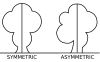
George Perle on Symmetry
“By the time of his String Quartet No. 4 (Bartók)Fourth String Quartet, inversional symmetry had become as fundamental a premise of Bartok's harmonic language as it is of the twelve-tone music of Schoenberg, Berg, and Webern.”
George Perle on Twelve-tone technique
“"Collections of all twelve pitch classes can be differentiated from one another only by assigning an order to the pitch classes or by partitioning them into mutually exclusive sub-collections. The ordering principle is the basis of the twelve-tone system formulated by Schoenberg, the partitioning principle the basis of the system formulated around the same time by Hauer. In Schoenberg's compositional practice, however, the concept of a segmental pitch-class content is represented as well, as a basis for the association of paired inversionally related set forms. On the relation between Schoenberg and Hauer, see Bryan R. Simms, "Who First Composed Twelve-Tone Music, Schoenberg or Hauer?" Journal of the Arnold Schoenberg Institute X/2 (November 1987)."”
What George Perle Said About Others
Discover personal opinions George Perle shared regarding contemporaries.
George Perle on Igor Stravinsky 2 quotes
“This intersecting of inherently non-symmetrical diatonic elements with inherently non-diatonic symmetrical elements seems to me the defining principle of the musical language of Le Sacre and the source of the unparalleled tension and conflicted energy of the work.”

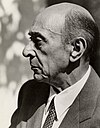
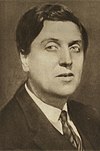
George Perle on Alban Berg
“If...Berg departs so radically from tradition, through his substitution of a symmetrical partitioning of the octave for the asymmetrical partionings of the major/minor system, he departs just as radically from the twelve-tone tradition that is represented in the music of Schoenberg and Webern, for whom the twelve-tone series was always an integral structure that could be transposed only as a unit, and for whom twelve-tone music always implied a constant and equivalent circulation of the totality of pitch classes.”
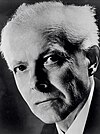
George Perle on Béla Bartók
“By the time of his Fourth String Quartet, inversional symmetry had become as fundamental a premise of Bartók's harmonic language as it is of the twelve-tone music of Schoenberg, Berg, and Webern. Neither he nor they ever realized that this connection establishes a profound affinity between them in spite of the stylistic features that so obviously distinguish his music from theirs … Nowhere does he recognize the communality of his harmonic language with that of the twelve-tone composers that is implied in their shared premise of the harmonic equivalence of inversionally symmetrical pitch-class relations.”
About George Perle
George Perle (May 6, 1915 – January 23, 2009) was a composer and music theorist.