Link Copied!
George Pólya Quotes (1887-1985)
Physicist, Mathematician




About George Pólya
George Pólya (December 13, 1887 – September 7, 1985) was a Hungarian mathematician and professor of mathematics at ETH Zürich and at Stanford University. His work on heuristics and pedagogy has had substantial and lasting influence on mathematical education, and has also been influential in artificial intelligence.
Best George Pólya Quotes
Shortest
Earliest
Explore our curated collection of the most famous and impactful George Pólya quotes.
“Good approximations often lead to better ones.”
“Simplicity is worth buying if we do not have to pay too great a loss of precision for it.”

“In plausible reasoning the principal thing is to distinguish... a more reasonable guess from a less reasonable guess.”
“Mathematics succeeds in dealing with tangible reality by being conceptual. We cannot cope with the full physical complexity; we must idealize.”

“Mathematics is the cheapest science. Unlike physics or chemistry, it does not require any expensive equipment. All one needs for mathematics is a pencil and paper.”
“Facing any part of the observable reality, we are never in possession of complete knowledge, nor in a state of complete ignorance, although usually much closer to the latter state.”

“The general or amateur student should also get a taste of demonstrative reasoning... he should acquire a standard with which he can compare alleged evidence of all sorts aimed at him in modern life.”
“I... present also examples of historic interest, examples of real mathematical beauty, and examples illustrating the parallelism of the procedures in other sciences, or in everyday life.”
“[M]athematicians and physicists think alike; they are led, and sometimes misled, by the same patterns of plausible reasoning.”

“The efficient use of plausible reasoning is a practical skill and it is learned... by imitation and practice. ...what I can offer are only examples for imitation and opportunity for practice.”

“For many of the stories told the final form resulted from a sort of informal psychological experiment. I discussed the subject with several different classes... Several passages... have been suggested by answers of my students, or... modified... by the reaction of my audience.”

“Why should the typical student be interested in those wretched triangles? ...He is to be brought to see that without the knowledge of triangles there is not trigonometry; that without trigonometry we put back the clock millennia to Standard Darkness Time and antedate the Greeks.”
“The result of the mathematician's creative work is demonstrative reasoning, a proof; but the proof is discovered by plausible reasoning, by guessing. If the learning of mathematics reflects to any degree the invention of mathematics, it must have a place for guessing, for plausible inference.”
“If we deal with our problem not knowing, or pretending not to know the general theory encompassing the concrete case before us, if we tackle the problem "with bare hands", we have a better chance to understand the scientist's attitude in general, and especially the task of the applied mathematician.”

“Everyone knows that mathematics offers an excellent opportunity to learn demonstrative reasoning, but I contend also that there is no other subject in the usual curricula of the schools that affords a comparable opportunity to learn plausible reasoning. ...let us learn proving, but also let us learn guessing.”
“Demonstrative reasoning penetrates the sciences just as far as mathematics does, but it is in itself (as mathematics is in itself) incapable of yielding essentially new knowledge about the world around us. Anything new that we learn about the world involves plausible reasoning, which is the only kind of reasoning for which we care in everyday affairs.”
“Even if without the Scott's proverbial thrift, the difficulty of solving differential equations is an incentive to using them parsimoniously. Happily here is a commodity of which a little may be made to go a long way. ...the equation of small oscillations of a pendulum also holds for other vibrational phenomena. In investigating swinging pendulums we were, albeit unwittingly, also investigating vibrating tuning forks.”
“We wish to see... the typical attitude of the scientist who uses mathematics to understand the world around us. ...In the solution of a problem ...there are typically three phases. The first phase is entirely or almost entirely a matter of physics; the third, a matter of mathematics; and the intermediate phase, a transition from physics to mathematics. The first phase is the formulation of the physical hypothesis or conjecture; the second, its translation into equations; the third, the solution of the equations. Each phase calls for a different kind of work and demands a different attitude.”
“The differential equation of the first order
...prescribes the slope at each point of the plane (or at each point of a certain region of the plane we call the field"). ...a differential equation of the first order... can be conceived intuitively as a problem about the steady flow of a river: Being given the direction of the flow at each point, find the streamlines. ...It leaves open the choice between the two possible directions in the line of a given slope. Thus... we should say specifically "direction of an unoriented straight line" and not merely "direction."”
...prescribes the slope at each point of the plane (or at each point of a certain region of the plane we call the field"). ...a differential equation of the first order... can be conceived intuitively as a problem about the steady flow of a river: Being given the direction of the flow at each point, find the streamlines. ...It leaves open the choice between the two possible directions in the line of a given slope. Thus... we should say specifically "direction of an unoriented straight line" and not merely "direction."”
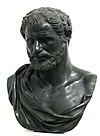
“The volume of the cone was discovered by Democritus... He did not prove it, he guessed it... not a blind guess, rather it was reasoned conjecture. As Archimedes has remarked, great credit is due to Democritus for his conjecture since this made proof much easier. Eudoxes... a pupil of Plato, subsequently gave a rigorous proof. Surely the labor or writing limited his manuscript to a few copies; none has survived. In those days editions did not run to thousands or hundreds of thousands of copies as modern books—especially, bad books—do. However, the substance of what he wrote is nevertheless available to us. ...Euclid's great achievement was the systematization of the works of his predecessors. The Elements preserve several of Eudoxes' proofs.”
“In my presentation I... follow the genetic method. The essential idea... is that the order in which knowledge has been acquired by the human race will be a good teacher for its acquisition by the individual. The sciences came in a certain order; an order determined by human interest and inherent difficulty. Mathematics and astronomy were the first sciences really worth the name; later came mechanics, optics, and so on. At each stage of its development the human race has had a certain climate of opinion, a way of looking, conceptually, at the world. The next glimmer of fresh understanding had to grow out of what was already understood. The next move forward, halting shuffle, faltering step, or stride with some confidence, was developed upon how well the [human] race could then walk. As for the human race, so for the human child. But this is not to say that to teach science we must repeat the thousand and one errors of the past, each ill-directed shuffle. It is to say that the sequence in which the major strides forward were made is a good sequence in which to teach them. The genetic method is a guide to, not a substitute for, judgement.”

“"Groping" and "muddling through" is usually described as a solution by trial and error. ...a series of trials, each of which attempts to correct the error committed by the preceding and, on the whole, the errors diminished as we proceed and the successive trials come closer and closer to the desired final result. ...we may wish a better characterization ..."successive trials" or "successive corrections" or "successive approximations." ...You use successive approximations when ...looking for a word in the dictionary ...A mathematician may apply the term ...to a highly sophisticated procedure ...to treat some very advanced problem ...that he cannot treat otherwise. The term even applies to science as a whole; the scientific theories which succeed each other, each claiming a better explanation ...may appear as successive approximations to the truth.
Therefore, the teacher should not discourage his students from using trial and error—on the contrary, he should encourage the intelligent use of the fundamental method of successive approximations. Yet he should convincingly show that for ...many ... situations, straightforward algebra is more efficient than successive approximations.”
Therefore, the teacher should not discourage his students from using trial and error—on the contrary, he should encourage the intelligent use of the fundamental method of successive approximations. Yet he should convincingly show that for ...many ... situations, straightforward algebra is more efficient than successive approximations.”

George Pólya Quotes by Topic
Find exactly what you are looking for by browsing this categorized list of George Pólya quotes by topic.
George Pólya on Mathematics education 8 quotes
“Why should the typical student be interested in those wretched triangles? ...Without trigonometry we put back the clock millennia to Standard Darkness Time and antedate the Greeks.”

George Pólya on Differential equation 2 quotes
“Even if without the Scott's proverbial thrift, the difficulty of solving differential equations is an incentive to using them parsimoniously. Happily here is a commodity of which a little may be made to go a long way. ...the equation of small oscillations of a pendulum also holds for other vibrational phenomena. In investigating swinging pendulums we were, albeit unwittingly, also investigating vibrating tuning forks.”

George Pólya on Inductive reasoning 2 quotes
“The examples of plausible reasoning collected in this book... may throw light upon a much agitated philosophical problem: the problem of induction. The crucial question is: Are there rules for induction? ...the question should be... treated... in closer touch with the practice of scientists. ...older writers, such as Euler and Laplace, clearly perceived... that the role of inductive evidence in mathematical investigation is similar to its role in physical research. ...so the door opens to investigating induction inductively.”

George Pólya on Ideas
“The best of ideas is hurt by uncritical acceptance and thrives on critical examination.”

George Pólya on Acceptance
“The best of ideas is hurt by uncritical acceptance and thrives on critical examination.”

George Pólya on Pattern
“[M]athematicians and physicists think alike; they are led, and sometimes misled, by the same patterns of plausible reasoning.”

George Pólya on History of trigonometry
“Why should the typical student be interested in those wretched triangles? ...He is to be brought to see that without the knowledge of triangles there is not trigonometry; that without trigonometry we put back the clock millennia to Standard Darkness Time and antedate the Greeks.”

George Pólya on Mathematical induction
“We could call it "proof from n to n + 1" or still simpler "passage to the next integer." Unfortunately, the accepted technical term is "mathematical induction." This name results from a random circumstance. ...Now, in many cases... the assertion is found experimentally, and so the proof appears as a mathematical complement to induction; this explains the name.”

George Pólya on Mathematical proof
“We could call it "proof from n to n + 1" or still simpler "passage to the next integer." Unfortunately, the accepted technical term is "mathematical induction." This name results from a random circumstance. ...Now, in many cases... the assertion is found experimentally, and so the proof appears as a mathematical complement to induction; this explains the name.”
George Pólya on Rules
“Pedantry and mastery are opposite attitudes toward rules. To apply a rule to the letter, rigidly, unquestioningly, in cases where it fits and in cases where it does not fit, is pedantry [...] To apply a rule with natural ease, with judgment, noticing the cases where it fits, and without ever letting the words of the rule obscure the purpose of the action or the opportunities of the situation, is mastery.”
George Pólya on Euclid’s Elements
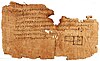
“There is a traditional story about Newton: as a young student, he began the study of geometry, as was usual in his time, with the reading of the Elements of Euclid. He read the theorems, saw that they were true, and omitted the proofs. He wondered why anybody should take pains to prove things so evident. Many years later, however, he changed his opinion and praised Euclid. The story may be authentic or not...”

George Pólya on Ellipse
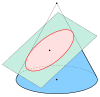
“A string, of which both extremities are fixed, passes through a heavy ring. Find the position of equilibrium. Let A and B denote the fixed endpoints of the string and X any position of the ring [on the string]. ...The ring must hang as low as possible. (In fact the ring is heavy; it "wants to come as close to the ground, or to the center of the earth, as possible.) Both parts of the inextensible string, AX and BX, are stretched, and so the ring, sliding along the string, describes and ellipse with foci A and B. Obviously, the position of equilibrium is at the lowest point M of the ellipse where the tangent is horizontal.”
What George Pólya Said About Others
Discover personal opinions George Pólya shared regarding contemporaries.
George Pólya on Galileo Galilei 2 quotes
“It was in Galileo's time that firearms were invented... What is the path of a cannonball? ...Characteristically, Galileo was engrossed with the problem; characteristically, he solved it. The outcome of his ingenuity we know today as the method of superposition.”

George Pólya on Pappus of Alexandria 2 quotes
“Many elementary textbooks of geometry contain a few remarks about analysis, synthesis, and "assuming the problem as solved." There is little doubt that this almost ineradicable tradition goes back to Pappus, although there is hardly a current textbook whose writer would show any direct acquaintance with Pappus. The circumstance alone that it is restricted to textbooks of geometry shows a current lack of understanding...”

George Pólya on Isaac Newton
“There is a traditional story about Newton: as a young student, he began the study of geometry, as was usual in his time, with the reading of the Elements of Euclid. He read the theorems, saw that they were true, and omitted the proofs. He wondered why anybody should take pains to prove things so evident. Many years later, however, he changed his opinion and praised Euclid. The story may be authentic or not ...”

George Pólya on John von Neumann
“The only student of mine I was ever intimidated by. He was so quick. There was a seminar for advanced students in Zürich that I was teaching and von Neumann was in the class. I came to a certain theorem, and I said it is not proved and it may be difficult. Von Neumann didn't say anything but after five minutes he raised his hand. When I called on him he went to the blackboard and proceeded to write down the proof. After that I was afraid of von Neumann.”
George Pólya on Diophantus
“Bachet de Méziriac remarked that any number (that is, positive integer) is either a square, or the sum of two, three, or four squares. He did not pretend to possess a proof. He found indications pointing to his statement in certain problems of Diophantus and verified it up to 325. In short, Bachet's statement was just a conjecture, found inductively. ...his main achievement was to put the question: How many squares are needed to represent all integers? Once this question is squarely put, there is not much difficulty in discovering the answer inductively.”

George Pólya on Heraclitus
“If the flow is steady, the field velocity vectors and the system of streamlines remain unaffected by the progress of time. Looking at the vector field and its streamlines we do not notice any change. Yet if we could distinguish the different particles of fluid from each other, we could observe incessant change... We have here two aspects of a steady flow, one of unchanging persistence, the other of incessant change. ...Heraclitus was called the "Dark Philosopher"; his views of human affairs were sombre and his sayings obscure. ... "You cannot look twice at the same river; for fresh waters are ever flowing in." "We look and do not look at the same rivers; we are, and we are not." What is the intended meaning of these sentences? I do not venture to find out. Yet I think that the originator of these senteces came pretty close to formulating the concept "steady flow of a fluid."”

George Pólya on Leonhard Euler
“Euler's step was daring. In strict logic, it was an outright fallacy... Yet it was justified by analogy, by the analogy of the most successful achievements of a rising science that he called... "Analysis of the Infinite." Other mathematicians, before Euler, passed from finite differences to infinitely small differences, from sums with a finite number of terms to sums with an infinity of terms, from finite products to infinite products. And so Euler passed from equations of a finite degree (algebraic equations) to equations of infinite degree, applying the rules made for the finite... This analogy... is beset with pitfalls. How did Euler avoid them? ...Euler's reasons are not demonstrative. Euler does not reexamine the grounds for his conjecture... only its consequences. ...He examines also the consequences of closely related analogous conjectures... Euler's reasons are, in fact, inductive.”

George Pólya on Aristarchus of Samos
“Aristarchus... was a contemporary of Euclid. His fame rests on his heliocentric theory... Perhaps "theory" is too strong a word, for his proofs were weak; yet it was a great idea, an idea redeveloped centuries later by Copernicus. ...an observer on Earth sees a half-moon only when ∠EMS [the angle between the Earth and Sun, from the persective of the Moon] is a right angle. ...sometimes both Sun and Moon are visible when the phase of the Moon is half-moon. So? Measure ∠MES [the angle between the Moon and Sun, from the persective of earth]... This is what Aristarchus did. ...the third angle is determined [since the sum of the three angles of any triangle is 180º], so the shape but not the size of ⃤ EMS [triangle formed by Earth-Moon-Sun] is known. Consequently, although the actual length of any side is not determinate, the ratio of any pair is. ...[Moon-Earth distance/Sun-Earth distance] ME/SE = cos α [where ∠MES = α].”

George Pólya on Johannes Kepler
“Kepler also thought of the Inverse Square Law; he thought of it first. ...Kepler regarded gravitational attraction as analogous to propagation of light... Consider now the intensity of light falling on a planet P at a distance R from the Sun. Let S be the total amount if light emitted by the Sun. ...the intensity will be the same at all points distance R from the Sun. But these points constitute a spherical sheet (with center the Sun) whose radius is R and whose surface area, therefore, is 4πR2. Consequently, intensity of radiation =frac {S}{4pi}cdotfrac {1}{R^2}i.e., the intensity is inversely proportional to the square of the distance between the planet P and the Sun. ...Kepler thought carefully about the possibility, but was dubious... to his credit; he mistrusted the idea for a very good reason. ...although during a solar eclipse the Moon blocks the Sun's radiation to part of the Earth, there is no discontinuity in the Earth's motion. If gravitational attraction were radiated as light is radiated, this too would be temporarily blocked by the Moon, so that during the eclipse it would discontinue its eliptical orbit...”

Quotes About George Pólya
Gain deeper perspective through quotes about George Pólya from others.
Donald E. Knuth on George Pólya
“If we could be any mathematician in the history of the world (besides ourselves), who would we rather be? ...we narrowed the choice down to Euler and Pólya, and finally settled on George Pólya because of the sheer enjoyment of mathematics that he has conveyed by so many examples.”
A. H. Schoenfeld on George Pólya
“For mathematics education and the world of problem solving it marked a line of demarcation between two eras, problem solving before and after Polya.”
About George Pólya
George Pólya (December 13, 1887 – September 7, 1985) was a Hungarian mathematician and professor of mathematics at ETH Zürich and at Stanford University. His work on heuristics and pedagogy has had substantial and lasting influence on mathematical education, and has also been influential in artificial intelligence.