Muller is often attributed with a version of this saying, and the quote (with attribution to Muller) appears as early as 1897 in The Churchman https://books.google.com/books?id=cpdOAQAAMAAJ&pg=RA25-PA45&lpg=RA25-PA45&dq=The+beginning+of+anxiety+is+the+end+of+faith,+and+the+beginning+of+true+faith+is+the+end+of+anxiety+%2B+the+churchman&source=bl&ots=3x_wtX82mF&sig=gGHZUKxXWa5BfvRfzeY_F8zA9dM&hl=; however, no source written by Muller can be found to confirm him as having said this.
“

"The beginning of anxiety is the end of faith, and the beginning of true faith is the end of anxiety."

— George Müller

What It Means

This is a placeholder explanation generated by the low-overhead model. It interprets ""The beginning of anxiety is the end of faith, and the beginning of true faith is the end of anxiety."" in the context of "Muller is often attributed with a version of this saying, and the quote (with attribution to Muller) appears as early as 1897 in The Churchman https://books.google.com/books?id=cpdOAQAAMAAJ&pg=RA25-PA45&lpg=RA25-PA45&dq=The+beginning+of+anxiety+is+the+end+of+faith,+and+the+beginning+of+true+faith+is+the+end+of+anxiety+%2B+the+churchman&source=bl&ots=3x_wtX82mF&sig=gGHZUKxXWa5BfvRfzeY_F8zA9dM&hl=; however, no source written by Muller can be found to confirm him as having said this." to mean that wisdom is timeless.
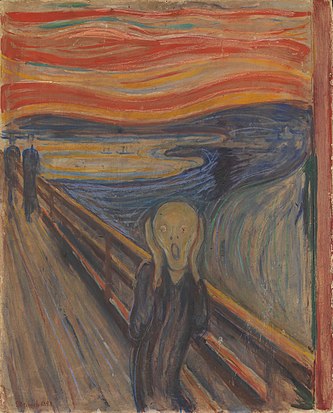
Quote Image
Source: Wikiquote: "George Müller" (Quotes) The 'What it means' explanation text was generated by Google Gemini Flash (accessed January 18, 2026). https://gemini.google.com/app
George Müller

About George Müller

George Müller (September 27 1805 – March 10 1898) was a Christian evangelist and coordinator of orphanages in Bristol, England who cared for and educated 10,024 orphans throughout his lifetime.