Sydney Smith, Sketches of Moral Philosophy (1850), Introduction
“
Bishop Berkeley destroyed this world in one volume octavo; and nothing remained after his time, but mind—which experienced a similar fate from the hand of Mr. Hume, in 1737.
— Sydney Smith
What It Means
This is a placeholder explanation generated by the low-overhead model. It interprets "Bishop Berkeley destroyed this world in one volume octavo; and nothing remained after his time, but mind—which experienced a similar fate from the hand of Mr. Hume, in 1737." in the context of "Sydney Smith, Sketches of Moral Philosophy (1850), Introduction" to mean that wisdom is timeless.

Source: Wikiquote: "George Berkeley" (Quotes about Berkeley)
The 'What it means' explanation text was generated by Google Gemini Flash (accessed January 18, 2026). https://gemini.google.com/app
Tags
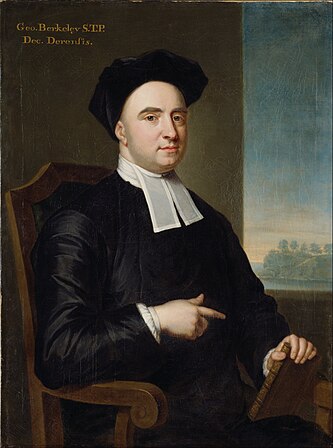
About George Berkeley
George Berkeley (12 March 1685 – 14 January 1753), also known as Bishop Berkeley, was an influential Irish philosopher whose primary philosophical achievement is the advancement of a theory he called "immaterialism" (later referred to as "subjective idealism" by others).
About George Berkeley
George Berkeley (12 March 1685 – 14 January 1753), also known as Bishop Berkeley, was an influential Irish philosopher whose primary philosophical achievement is the advancement of a theory he called "immaterialism" (later referred to as "subjective idealism" by others).
View all quotes →