Geoffrey Chaucer, "The Knight's Tale", line 1761, in The Canterbury Tales (c. 1387–1400).
“
For pitee renneth soone in gentil herte.
— Geoffrey Chaucer on Pity
What It Means
This is a placeholder explanation generated by the low-overhead model. It interprets "For pitee renneth soone in gentil herte." in the context of "Geoffrey Chaucer, "The Knight's Tale", line 1761, in The Canterbury Tales (c. 1387–1400)." to mean that wisdom is timeless.
Source: Wikiquote: "Pity" (Quotes)
The 'What it means' explanation text was generated by Google Gemini Flash (accessed January 18, 2026). https://gemini.google.com/app
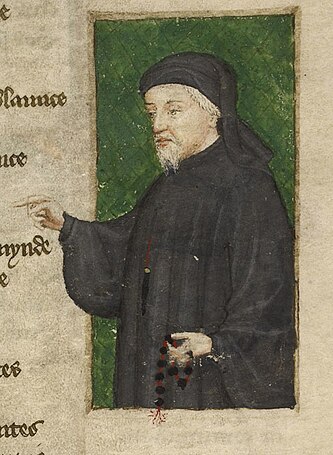
About Geoffrey Chaucer
Geoffrey Chaucer (c. 1343 – 25 October 1400) was an English poet, author, and civil servant. Chaucer is most famous as the author of The Canterbury Tales. He is sometimes credited with being the first author to demonstrate the artistic legitimacy of the vernacular English language, rather than French or Latin.
View all quotes →