Link Copied!
Gangubai Hangal Quotes (1913-2009)
Singer
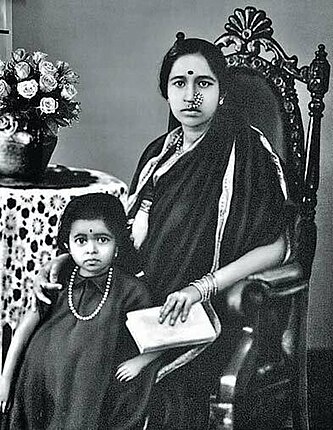
About Gangubai Hangal
Gangubai Hangal (March 5, 1913 – July 21, 2009) was an Indian singer of the khyal genre of Hindustani classical music, who was known for her deep and powerful voice. She performed all over India and for All India Radio stations until 1945. Hangal had initially performed light classical genres, including bhajan and thumri, but concentrated on khyal. Later, however, she refused to sing light classical, saying she sang only ragas. Hangal served as honorary music professor of the Karnatak University. She gave her last concert in March 2006 to mark her 75th career year. She received a number of awards, which include: Sangeet Natak Akademi Award in 1973 and Padma Vibhushan, the second highest civilian award in 2002.
Best Gangubai Hangal Quotes
Shortest
Earliest
Explore our curated collection of the most famous and impactful Gangubai Hangal quotes.
“He belonged to a respectable family and I wanted him to continue to belong there.”

“It was 12.30 in the night when I got two congratulatory telegrams - Indira Gandhi's and Jagjivan Ram's. Who has ever sent congratulatory telegrams to me? I went and woke him (Uncle) up and he came and sat with me. What did we do? We cried till dawn. Because of music...all that we had gone through...The joy was real. But we thought of the past.”
“It was a great experience. Unfortunately those days are over. Nowadays, you seldom see an artist listening to another artiste. Also, the sangeet jalsas, would go on for hours. I remember the tickets were priced at 50 paise for sitting on the ground and a rupee for a chair! All this may sound quaint today.”

“But there was a strong bond between us artistes in the old days. I remember when Siddheshwari Devi was laid in bed with paralysis, we went to meet her and asked her if she needed help. She asked me to sing Bhairavi for her. She listened with tears in her eyes.”
“He did not practise law and so whatever money I earned, I just placed before him. He invested in business--trucks, cars--but lost everything. I could not bear to see him unhappy. Often he would disappear from home for months on end. The bank people would come and harass me, ask for my property as I was unable to repay the loans. This happened several times. I had to sell everything I had. I will never forget or forgive myself for not being by his bedside before he died. I had a programme in Bombay, but I did not want to go. He insisted because we needed the money. While I was performing, he died.”

“I remember stealing fruit from our neighbour's mango trees. More than the act of stealing, I remember the neighbours being horrified that a singer's daughter should step into their compound. I would be thrown out. Incidentally, the same people invite me over to their house today and call me 'Gangubai' with great respect. There are so many incidents that I will never forget--I remember singing for the Belgaum Congress session which was attended by Gandhiji--my only paranoia throughout the programme was that I would be asked to eat my food separately.”
“In Calcutta, when the organizers saw me, they insisted that I first sing in a private sitting a night before my concert was scheduled. I couldn't understand why they couldn't wait till the next day. Nisar Husain Khan Saheb took me aside and explained that the organizers had doubts about what I, a frail girl at that time, was capable of! I sang and was greatly appreciated. In fact, I was awarded a gold medal by the Maharaja of Tripura. At the same concert, I kept remembering my mother who was no more, and just then felt a hand on my shoulder. When I turned around, I saw K. L. Saigal, who said, 'bahut surila' (very melodious). I was happy but then very upset that a strange man should touch me!”

“Peace of mind is very essential in anything that you do--particularly in music. But in my case, it was just the opposite. What new things could I learn when I was constantly disturbed and unhappy? And I tell you, this whole concept of getting lost in music and forgetting the world around you, is a myth. In my case, I can openly say that my troubles and problems were not forgotten by just holding the tanpura in my hand. When I would sit down for riyaz, I would, on the contrary, break down and cry over the daily scene. Over the question of just surviving through the next day. And it wasn't for me that I was worried, but for the entire family that I supported. I personally never thought of becoming rich, of having a new car or house. Those ambitions never entered my mind. All I knew then was the money was not enough. There were many humiliations I had to face because of this. A certain lady musician in Pune invited me over to her house one day. Her mother asked how much I charged for a concert. I told her Rs 125. She suggested that I move over to Pune and accept all her daughter's rejected programmes. They knew I was very badly off. I was insulted by this suggestion and left their house immediately. But later I thought that maybe they were trying to be helpful.”

“Guruji did not teach me more than four Ragas. He often drew an analogy between swaras and money and said that one must spend only as much as is required of both. My practice would follow this method. I was given a certain palta and would have to keep repeating it for days on end. It seemed boring and monotonous then, but later I thanked him for this rigorous training. The entire relationship with a guru was different in those days. Our respect for him was so great that there was no question of us asking him to teach us something particular, not because of our blind devotion, but because of our innate belief that he knew what was best for us. I remember getting caught by him invariably, whenever I tried something new. For instance, on radio, I sang Raga Bhinbhas, working it out on my own, quite confident that guruji would not hear me, as there was no electricity in Kundgol. But as luck would have it, he happened to be in Belgaum that evening. I was subsequently taken to task for using a komal dhaivat in Bibhas. This was followed by comprehensive training of the Raga. There are so many Ragas with which I associate a strange incident with guruji--Suha, Marwa … the list is endless.”
Quotes About Gangubai Hangal
Gain deeper perspective through quotes about Gangubai Hangal from others.
Deepa Ganesh on Gangubai Hangal 5 quotes
“Her circumstances did not deter her from pursuing with single-minded devotion to be a worthy disciple of the inimitable Sawai Gandharva. It is ironic that although she was educated only as far as the fifth standard, she was conferred honorary doctorates by four universities, received 50 awards and 24 titles and was felicitated by nine prime ministers and five presidents.”
Raj Kumar on Gangubai Hangal 2 quotes
“At the age of 16 she went to learn under the legendary Sawai Gandharva, who also taught Pandit Bhimsen Joshi and Firoze Dastur.”
Bonnie C. Wade on Gangubai Hangal
“Gangubai included in her performances such lighter genres as Marathi pad, [[w:Bhajan|bhajans, and thumris.”
C.S. Lakshmi on Gangubai Hangal
“Gangubai Hangal's primary guru in music was Sawai Gandharva. She has also acknowledged the inspiration and influence of her mother Ambabai and Zohrabai Agrewali on her musical development. Her singing embodies an extraordinary grasp of the essence of raga, keen sensitivity of swara, and an acute feeling for aesthetic design.”
A Seshan on Gangubai Hangal
“It took me back more than 40 years when I first heard her at a Sangeet Mahotsav organised by the state government in Bombay, as it was called then. The khayal in Shuddha Kalyan captured me and I remained a lifelong fan. The beauty of Shuddha Kalyan lies in the swaras of mandra saptak and in the meends relating to nishad andmadhyam, which she could exploit well with her bass voice.”
About Gangubai Hangal
Gangubai Hangal (March 5, 1913 – July 21, 2009) was an Indian singer of the khyal genre of Hindustani classical music, who was known for her deep and powerful voice. She performed all over India and for All India Radio stations until 1945. Hangal had initially performed light classical genres, including bhajan and thumri, but concentrated on khyal. Later, however, she refused to sing light classical, saying she sang only ragas. Hangal served as honorary music professor of the Karnatak University. She gave her last concert in March 2006 to mark her 75th career year. She received a number of awards, which include: Sangeet Natak Akademi Award in 1973 and Padma Vibhushan, the second highest civilian award in 2002.