I very much lament for what has happened to the groves in Madhura. The coconut trees have all been cut and in their place are to be seen rows of iron spikes with human skulls dangling at the points. In the highways which were once charming with the sounds of anklets of beautiful women, are now heard ear-piercing noises of Brahmins being dragged, bound in iron fetters.
What It Means
This is a placeholder explanation generated by the low-overhead model. It interprets "I very much lament for what has happened to the groves in Madhura. The coconut trees have all been cut and in their place are to be seen rows of iron spikes with human skulls dangling at the points. In the highways which were once charming with the sounds of anklets of beautiful women, are now heard ear-piercing noises of Brahmins being dragged, bound in iron fetters." in the context of "Gangadevi. On the condition of Madurai under the Muslim rule. Chattopadhyaya, Brajadulal (2006), Studying Early India: Archaeology, Texts and Historical Issues, Anthem Press, ISBN 978-1-84331-132-4" to mean that wisdom is timeless.
Tags
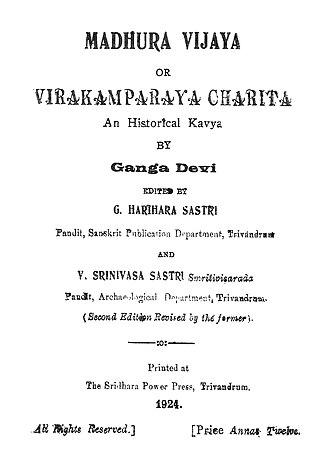
About Gangadevi