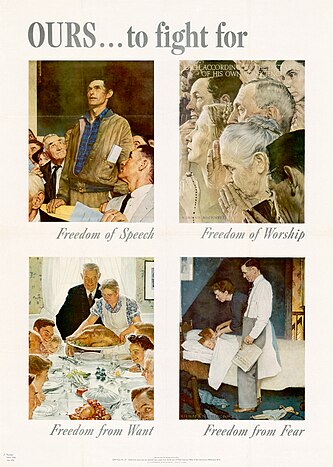
Did freedom depend upon every individual subject being represented in that House? Certainly not; for that House, constituted as it was, represented the whole kingdom. Freedom depended on a very different circumstance. He was free, because he lived in a country governed by equal laws. Where the highest and the lowest were governed by the same laws, where there was no distinction of persons, there freedom might be said to exist as purely and as perfectly as in the nature of things it could exist.
What It Means
This is a placeholder explanation generated by the low-overhead model. It interprets "Did freedom depend upon every individual subject being represented in that House? Certainly not; for that House, constituted as it was, represented the whole kingdom. Freedom depended on a very different circumstance. He was free, because he lived in a country governed by equal laws. Where the highest and the lowest were governed by the same laws, where there was no distinction of persons, there freedom might be said to exist as purely and as perfectly as in the nature of things it could exist." in the context of "Speech in the House of Commons (16 June 1784), quoted in The Parliamentary Register: Or, History of the Proceedings and Debates of the House of Commons, Vol. XV (1784), p. 194" to mean that wisdom is timeless.