August 1951, Speech delivered to YWCA, quoted in Speeches, Messages and Statements of Mohtarama Fatima Jinnah, p. 32
“
Art is much more than a hobby or a pastime. It has an eternal message from the past to the future. Every true artist should try to make efforts to convey this message both to his nation and to the humanity at large.
— Fatima Jinnah
What It Means
This is a placeholder explanation generated by the low-overhead model. It interprets "Art is much more than a hobby or a pastime. It has an eternal message from the past to the future. Every true artist should try to make efforts to convey this message both to his nation and to the humanity at large." in the context of "August 1951, Speech delivered to YWCA, quoted in Speeches, Messages and Statements of Mohtarama Fatima Jinnah, p. 32" to mean that wisdom is timeless.

Source: Wikiquote: "Fatima Jinnah" (Quotes, 1951)
The 'What it means' explanation text was generated by Google Gemini Flash (accessed January 18, 2026). https://gemini.google.com/app
About Fatima Jinnah
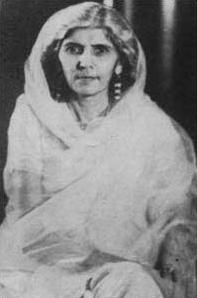
Fatima Jinnah (31 July 1893 – 9 July 1967) was a Pakistani dental surgeon, biographer, stateswoman and one of the leading founders of Pakistan. She was the younger sister of Quaid-e-Azam Muhammad Ali Jinnah, the founder of Pakistan. After the independence of Pakistan, Jinnah co-founded the Pakistan Women's Association (APWA) which played an integral role in the settlement of the women migrants in the newly formed country. She remained the closest confidant of her brother until his death. She is referred to as Māder-e Millat ("Mother of the Nation") and Khātūn-e Pākistān (Urdu: — "Lady of Pakistan"), many institutions and public spaces have been named in her honour.
View all quotes →