Freeman Dyson, The Scientist As Rebel (2006)
“
Rutherford's discovery was the beginning of the science that came to be called nuclear physics. ...The projectiles that he used to explore the nucleus were particles produced in the disintegration of radium... discovered by Marie Curie in 1898. The particles are helium nuclei that are emitted at high speed when radium atoms decay...The twenty years between 1909 and 1929 were the era of tabletop nuclear physics. ...Small and simple experiments were sufficient to establish the basic laws of nuclear physics.
— Freeman Dyson
What It Means
This is a placeholder explanation generated by the low-overhead model. It interprets "Rutherford's discovery was the beginning of the science that came to be called nuclear physics. ...The projectiles that he used to explore the nucleus were particles produced in the disintegration of radium... discovered by Marie Curie in 1898. The particles are helium nuclei that are emitted at high speed when radium atoms decay...The twenty years between 1909 and 1929 were the era of tabletop nuclear physics. ...Small and simple experiments were sufficient to establish the basic laws of nuclear physics." in the context of "Freeman Dyson, The Scientist As Rebel (2006)" to mean that wisdom is timeless.
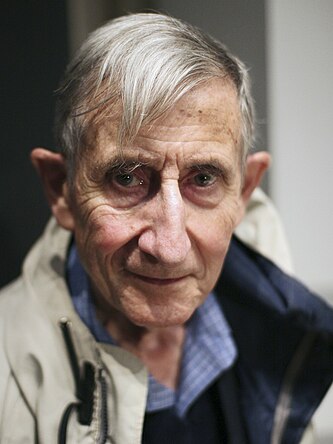
Source: Wikiquote: "Ernest Rutherford" (Quotes about Rutherford)
The 'What it means' explanation text was generated by Google Gemini Flash (accessed January 18, 2026). https://gemini.google.com/app
Tags

About Ernest Rutherford
Ernest Rutherford, 1st Baron Rutherford of Nelson, OM PC FRS (30 August 1871 – 19 October 1937) was a New Zealand physicist who was a pioneering researcher in both atomic and nuclear physics. He has been described as "the father of nuclear physics", and "the greatest experimentalist since Michael Faraday". In 1908, he was awarded the Nobel Prize in Chemistry "for his investigations into the disintegration of the elements, and the chemistry of radioactive substances." He was the first Oceanian Nobel laureate, and the first to perform the awarded work in Canada.
View all quotes →