Hardly anyone can now be found to advocate the doctrine of periods of creation by which the Almighty was supposed to have repeatedly destroyed his work to do it over again for better or worse, in the face of geological facts and the theory of descent. The believer in a final cause must admit that such a proceeding is little worthy of a creative Almighty. It is most highly becoming to him once by supernatural interference with the world's mechanism to call the simplest germ of life into being, and let further organic creation proceed from that. If this is conceded, it is permissible to ask if it is not still more worthy of the creative Almighty to avoid even that single intervention by means of established laws, and to endow matter from the beginning with the power of originating life under suitable conditions. There is no reason for denying this view, but with its acceptance the possibility of a mechanical origin of life is conceded, and we have only to consider whether the matter which can thus mechanically compose itself into a living condition always existed, or whether, as Leibnitz thought, it was created by God.
What It Means
This is a placeholder explanation generated by the low-overhead model. It interprets "Hardly anyone can now be found to advocate the doctrine of periods of creation by which the Almighty was supposed to have repeatedly destroyed his work to do it over again for better or worse, in the face of geological facts and the theory of descent. The believer in a final cause must admit that such a proceeding is little worthy of a creative Almighty. It is most highly becoming to him once by supernatural interference with the world's mechanism to call the simplest germ of life into being, and let further organic creation proceed from that. If this is conceded, it is permissible to ask if it is not still more worthy of the creative Almighty to avoid even that single intervention by means of established laws, and to endow matter from the beginning with the power of originating life under suitable conditions. There is no reason for denying this view, but with its acceptance the possibility of a mechanical origin of life is conceded, and we have only to consider whether the matter which can thus mechanically compose itself into a living condition always existed, or whether, as Leibnitz thought, it was created by God." in the context of "(February 1882), "The Seven World-Problems", Popular Science Monthly 20 pages: 433–447 (quote from p. 436; essay translated from the German of an address delivered in the Academy of Scienoos at Berlin, in honor of the birthday of Leibnitz, July 8, 1880)" to mean that wisdom is timeless.
Tags
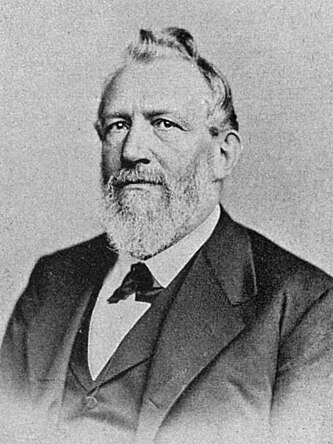
About Emil du Bois-Reymond