[O]f late years there hath been used in divers dioceses of this realm a certain public exercise, or, as they call it, prophesying, by certain persons pretending a more purity, by the manner of the doing thereof evil effect hath ensued in some places, to our grief, among the unlearned sort, easy to be carried with novelties.
Therefore, for certain good causes moving us, we do will and command you, forthwith upon the receipt hereof, to make express order throughout all your diocese, that all such prophecies be forborne; and none other exercise be suffered to be publicly used than preaching by persons learned, discreet, conformable and sound in religion, heard and allowed by you without partiality, and reading homilies in such sort as is set forth by public authority, by the injunction and order of the Book of Common Prayer.
What It Means
This is a placeholder explanation generated by the low-overhead model. It interprets "[O]f late years there hath been used in divers dioceses of this realm a certain public exercise, or, as they call it, prophesying, by certain persons pretending a more purity, by the manner of the doing thereof evil effect hath ensued in some places, to our grief, among the unlearned sort, easy to be carried with novelties.
Therefore, for certain good causes moving us, we do will and command you, forthwith upon the receipt hereof, to make express order throughout all your diocese, that all such prophecies be forborne; and none other exercise be suffered to be publicly used than preaching by persons learned, discreet, conformable and sound in religion, heard and allowed by you without partiality, and reading homilies in such sort as is set forth by public authority, by the injunction and order of the Book of Common Prayer." in the context of "Letter to the Bishop of Worcester, John Whitgift (April 1577), quoted in John Strype, The Life and Acts of John Whitgift, D.D. The Third and Last Lord Archbishop of Canterbury in the Reign of Queen Elizabeth. Vol. I (1822), p. 164" to mean that wisdom is timeless.

Tags
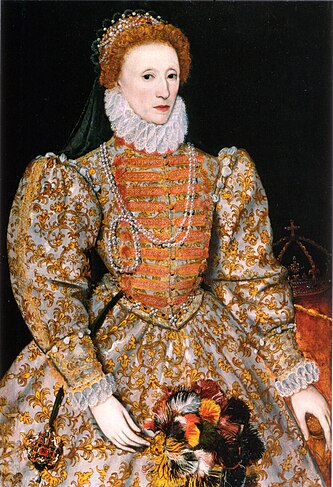
About Elizabeth I of England