Professor Fisher's The Purchasing Power of Money is dedicated to Simon Newcomb, from whom vid Professor Kemmerer the PT = MV formula ultimately derives. Newcomb was not a professional economist but a mathematician (Professor of Mathematics in the U.S. Navy and at Johns Hopkins). His Principles of Political Economy, published in 1886, is one of those original works which a fresh scientific mind, not perverted by having read too much of the orthodox stuff, is able to produce from time to time in a half -formed subject like economics.
What It Means
This is a placeholder explanation generated by the low-overhead model. It interprets "Professor Fisher's The Purchasing Power of Money is dedicated to Simon Newcomb, from whom vid Professor Kemmerer the PT = MV formula ultimately derives. Newcomb was not a professional economist but a mathematician (Professor of Mathematics in the U.S. Navy and at Johns Hopkins). His Principles of Political Economy, published in 1886, is one of those original works which a fresh scientific mind, not perverted by having read too much of the orthodox stuff, is able to produce from time to time in a half -formed subject like economics." in the context of "John Maynard Keynes (1930). A Treatise on Money. Vol. 1, p. 233" to mean that wisdom is timeless.
Tags
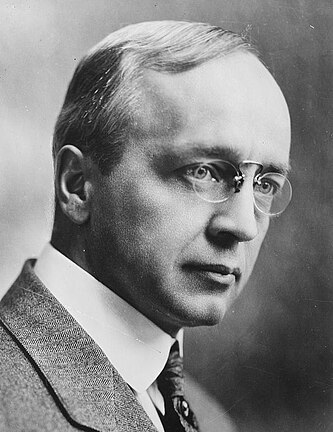
About Edwin W. Kemmerer