Link Copied!
Edward Wood, 1st Earl of Halifax Quotes (1881-1959)
Politician, King
About Edward Wood, 1st Earl of Halifax
Edward Frederick Lindley Wood, 1st Earl of Halifax (16 April 1881 – 23 December 1959), known as The Lord Irwin from 1925 until 1934 and as The Viscount Halifax from 1934 until 1944, was a British Conservative politician. He is usually considered as one of the architects of appeasement before World War II. During the period, he held several ministerial posts in the cabinet, including Foreign Secretary at the time of the Munich crisis in 1938. He later was dismissed by Prime Minister Winston Churchill in 1940 when he expressed support for a negotiated settlement with Nazi Germany, although he was then appointed British Ambassador to the United States. He succeeded Lord Reading as Viceroy of India in April 1926, a post he held until 1931. In this role he held negotiations on constitutional reforms to the British Raj with the Indian National Congress under Mohandas Gandhi.
Best Edward Wood, 1st Earl of Halifax Quotes
Shortest
Earliest
Explore our curated collection of the most famous and impactful Edward Wood, 1st Earl of Halifax quotes.
“Common sense and not bravado would dictate the British Government's policy.”
“The threat of military force is holding the world to ransom, and our immediate task is...to resist aggression.”

“If only we could find out for certain where Hitler and Mussolini are meeting tomorrow, and get one well-placed bomb, then the world might really take on a different appearance.”

“Nothing was more likely to aggravate the difficulties of the present situation than any suggestions that our ultimate objective was to unite France, Italy and ourselves against Germany.”
“[W]e had to face the fact that it was not so much now a question of imposing a complete defeat on Germany but of safeguarding the independence of our own Empire and if possible that of France.”
“[W]e should be prepared to say that we were prepared to fight to the death for our independence, but that, provided this could be secured, there were certain concessions that we were prepared to make to Italy.”
“[I]f we got to the point of discussing the terms of a general settlement and found that we could obtain terms which did not postulate the destruction of our independence, we should be foolish if we did not accept them.”
“Nationalism and Racialism is a powerful force but I can't feel that it's either unnatural or immoral! I cannot myself doubt that these fellows are genuine haters of Communism, etc.! And I daresay if we were in their position we might feel the same!”

“I am authorized on behalf of His Majesty's Government to state clearly that in their judgment it is implicit in the declaration of 1917 that the natural issue of India's constitutional progress, as there contemplated, is the attainment of Dominion status.”
“What is also now fully and universally accepted in this country, but what may not even yet be as well understood elsewhere, is that, in the event of further aggression, we are resolved to use at once the whole of our strength in fulfilment of our pledges to resist it.”
“[I]f he [
“At this moment the doctrine of force bars the way to settlement and fills the world with envy, hatred, malice, and all uncharitableness. But if the doctrine of force were once abandoned, so that the fear of war that stalks the world was lifted, all outstanding questions would become easier to solve.”

“[It is] a question of personal appeal and conviction, rather than any argument. The cards I fancy are sympathy, understanding of his hopes, suspicions and disappointments, but above all, striving to convey to him, through what one says, a real echo of the sincerity that pervaded your doings in London.”

“[O]ne of the principal lessons of these events is that the diplomacy of any nation can only be commensurate with its strength, and that if we desire this country to exercise its full influence in world affairs, the first thing that we have to do is to ensure that it is in all ways fully and rapidly equipped to do so.”

“The racial doctrine, as interpreted in the Nazi creed, may be, and in my view is, sheer primitive nonsense; and we are no more prepared to admit German superiority of race than we are concerned to assert our own. ... when this doctrine is invoked in justification of the oppression of other races it becomes a crime against humanity.”
“[

“Instead of deluding public opinion with a notion that a sufficient application of force will provide a remedy, a wiser course would be to set about taking such steps as may be the means of recovering that consent without which society in Ireland cannot exist...[an offer should be made to the Irish] conceived on the most generous lines.”
“In a time of crisis, with grave questions demanding urgent answer at every moment, no body of men would dare claim to be judged infallible. There was indeed no clear way, but almost always a hideous choice of evils. I can only know, for myself, that my mind will be at rest for having taken no decision inconsistent with what on all the facts I felt right.”
“My message to you to-day...is to be so proud of the race to which you belong that you will be as jealous of its honour as you are of its safety, and that you will fight for both with equal determination. The struggle will be arduous, it may be long, and it will certainly demand of our nation that it should withhold nothing that may contribute to our strength.”

“[The Hoare-Laval proposals] were not so frightfully different from those put forward by the Committee of Five [of the League of Nations]. But the latter were of respectable parentage: and the Paris ones were too much like the off-the-stage arrangements of nineteenth-century diplomacy.”
“Hitler was on the whole quiet and restrained, except now and again when he got excited; over Russia or the Press. I can quite see why he is a popular speaker; very much alive, eyes, which I was surprised were blue, moving about all the time, points in the argument reinforced by sharp gestures of the hands. And the play of emotion—sardonic humour, scorn, something almost wistful—is rapid.”
“[W]e are all alike determined to throw all our weight on the side of securing world peace through respect for law based on just settlements. We have no use for a world society in which law would be expected to be the obedient handmaid of lawless force; and we are all resolved to preserve British rights and liberties against attack, from whatever quarter within or without the State these may come.”

“[A] great mistake would be made abroad if it was ever thought that our domestic controversies upon the day-to-day conduct of foreign policy would in the least degree affect the primary instinct of our people to stand solidly together in any real emergency. Both our history and our character had given us a sense of community which, while enabling us to face facts and make peaceful changes, protected us from being revolutionary.”
Quotes About Edward Wood, 1st Earl of Halifax
Gain deeper perspective through quotes about Edward Wood, 1st Earl of Halifax from others.
Stanley Baldwin on Edward Wood, 1st Earl of Halifax

Lord Beaverbrook on Edward Wood, 1st Earl of Halifax
“The Viceroy [Halifax] is an earnest and an honest fellow—not quite stupid, but inexperienced in worldly affairs. He is a typical example of a "safeguarded" member of the Conservative party. He was brought up with a silver spoon in his mouth, and he has led a sheltered life. Bad speeches by him are praised as masterpieces of oratory; good speeches are looked upon as unprecedented in history. The Viceroy was continually spoken of during his House of Commons career as of Prime Ministerial timber. But he has never had to face the realities of the world. Honourable and trustworthy, his word can be relied upon, and his promises are always performed.”
Rab Butler on Edward Wood, 1st Earl of Halifax 3 quotes
“I do not doubt that his viceroyalty was the greatest episode in a varied and distinguished career, and that the comprehending and enlightened policy he pursued, culminating in his Pact with Gandhi, was both realistic and right.”
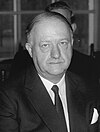
Henry Channon on Edward Wood, 1st Earl of Halifax
“I reflected on Halifax's extraordinary character; his high principles, his engaging charm and grand manner – his power to frighten people into fits – me sometimes – his snobbishness – his eel-like qualities and, above all, his sublime treachery which is never deliberate, and, always to him, a necessity dictated by a situation. Means are nothing to him, only ends. He is insinuating, but unlovable.”
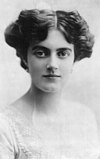
Clementine Churchill on Edward Wood, 1st Earl of Halifax
“Edward [Halifax] seemed to suggest that Winston was a handicap to the Conservative Party. At last I turned on him. "I don't know what you are getting at," I said rather hotly. "If the country had depended on you we might have lost the war." Edward was furious and demanded an apology. Later he talked to Winston, saying I ought to apologize. Winston replied he hoped I'd do nothing of the sort. You see, Charles, Edward Halifax has been spoilt. Baldwin was largely responsible.”
Winston Churchill on Edward Wood, 1st Earl of Halifax

Maurice Cowling on Edward Wood, 1st Earl of Halifax
“To history, until yesterday, Halifax was the arch-appeaser. This, it is now recognised, was a mistake. His rôle, however, was complicated. In these pages he is not the man who stopped the rot, but the embodiment of Conservative wisdom who decided that Hitler must be obstructed because Labour could not otherwise be resisted.”

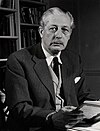
Harold Macmillan on Edward Wood, 1st Earl of Halifax 2 quotes
“In the course of the great Viceroy's interview, he was told by Hitler that the proper way to deal with unrest in India was to shoot first Gandhi and then the leaders of the Congress. Halifax's sweet and Christian nature must have recoiled from this sort of barbarism; but he was too courteous to show his disgust. Unhappily, in the course of this long discussion, he did not reject with sufficient force Hitler's new thesis. This was that changes of territory and shifts of power in a changing world could come about only by one of two methods—either by war or by what he called the "higher reason"... Halifax should have rejected this argument with vigour. On the contrary, he referred to possible modifications which might come in due course over Danzig, Czechoslovakia, and Austria. All that England was interested in was to see that these changes should come about by peaceful evolution. This doctrine of peaceful evolution seemed dangerously near that of the higher reason. The Halifax visit did no good, and a great deal of potential harm.”
Benito Mussolini on Edward Wood, 1st Earl of Halifax
“These men are not made of the same stuff as the Francis Drakes and the other magnificent adventurers who created the empire. These, after all, are the tired sons of a long line of rich men, and they will lose their empire.”

David Reynolds on Edward Wood, 1st Earl of Halifax 2 quotes
“Chamberlain entered 10 Downing Street determined to reshape British foreign policy in order to confront the mounting threats to European peace. In January 1938 he managed to move Sir Robert Vansittart, the fiercely anti-Hitler permanent undersecretary at the Foreign Office, into a high-sounding but innocuous post as the government’s chief diplomatic advisor. Chamberlain replaced him with the more pliant Sir Alexander Cadogan. The following month, Chamberlain’s highly strung foreign secretary, Anthony Eden, resigned in irritation at the prime minister’s personal diplomacy. His successor was Lord Halifax, a tall, lugubrious Tory peer, whose basic instinct—whether as Viceroy of India dealing with Gandhi or as foreign secretary facing the dictators— was to seek a peaceful compromise. Chamberlain would later discover that Halifax had a will of his own, but initially they formed an effective team. “I give thanks for a steady unruffled Foreign Secretary who never causes me any worry,” the prime minister wrote privately that spring. After securing a rapprochement with Italy in April 1938, Chamberlain hoped to move on to an agreement with Germany, trading territorial concessions in Europe and colonial Africa for firm restrictions on the growth of German military power. This was all part of what he and his colleagues called the “appeasement” or pacification of Europe. And after the war scare of May 1938, it was clear that the Sudeten problem had to be resolved before further progress could be made. Accordingly the British government emerged from France’s shadow as would-be mediator.”
Arthur Salter on Edward Wood, 1st Earl of Halifax
“Lord Halifax in his personal qualities more closely resembles Sir Edward Grey than any of his predecessors as Foreign Secretary. Like him he is impressive in presence and manner; universally respected, even reverenced; and he has a deep and sincere ethical and religious foundation for his character. Like him, too, he is quite obviously in politics under the impulse of a sense of duty and not of personal ambition; he would sooner live the life of a country gentleman. In India he showed an insight into the aspirations of another race and constructive qualities of a rare order; and in his relations with Mr. Gandhi he was able to find in a similarity of religious temper a bridge for the wide gulf between different civilisations and creeds... Those who hesitate about his suitability for the office of Prime Minister at a time like the present do so because they doubt whether his personal force is sufficient, whether he has a tough enough fibre in his will. The general force of his personality is less than that of Grey, and while he shares all the same personal qualities they are most of them on a somewhat lesser scale; and for a particular objective he has a less concentrated strength than Mr. Chamberlain. Partly, however, for this very reason he is less compromised by his association with Mr. Chamberlain's earlier policy and less handicapped in any attempt to secure the co-operation of the Left.”
A. J. P. Taylor on Edward Wood, 1st Earl of Halifax
“The photographs in this book suggest that if Halifax had not been a great nobleman, he would have made an excellent butler. As indeed he did. Halifax was the Jeeves of the British Empire. Though he often opened the door on ill-tidings, he remained himself unruffled. He never doubted his own superior wisdom.”

Viscount Templewood on Edward Wood, 1st Earl of Halifax 3 quotes
“Irwin was a friend of many years' standing whose serene career I had always admired. His striking personality, easy and distinguished manners, human and humane outlook on life, had, since his Oxford days, marked him out for great positions. Essentially a peacemaker, it was his mission as Viceroy to humanise the Government of India after Reading's chapter of rigid ceremony and cautious legalism. It was typical of him that almost his first word to his military secretary had been "we are in India to keep our tempers."”
About Edward Wood, 1st Earl of Halifax
Edward Frederick Lindley Wood, 1st Earl of Halifax (16 April 1881 – 23 December 1959), known as The Lord Irwin from 1925 until 1934 and as The Viscount Halifax from 1934 until 1944, was a British Conservative politician. He is usually considered as one of the architects of appeasement before World War II. During the period, he held several ministerial posts in the cabinet, including Foreign Secretary at the time of the Munich crisis in 1938. He later was dismissed by Prime Minister Winston Churchill in 1940 when he expressed support for a negotiated settlement with Nazi Germany, although he was then appointed British Ambassador to the United States. He succeeded Lord Reading as Viceroy of India in April 1926, a post he held until 1931. In this role he held negotiations on constitutional reforms to the British Raj with the Indian National Congress under Mohandas Gandhi.