Link Copied!
Edward Hyde, 1st Earl of Clarendon Quotes (1609-1674)
Queen
About Edward Hyde, 1st Earl of Clarendon
Edward Hyde, 1st Earl of Clarendon (18 February 1609 – 9 December 1674) was an English historian, statesman and grandfather of two queens regnant, Mary II and Anne.
Edward Hyde, 1st Earl of Clarendon Quotes
Shortest
Earliest
Explore our curated collection of the most famous and impactful Edward Hyde, 1st Earl of Clarendon quotes.
“In a word, he had a head to contrive, and a tongue to persuade, and a hand to execute, any mischieve, and his death appeared to be a great deliverance to the nation.”

“He many times cast himself upon the ground, with a desperate and obstinate resolution to rest there till the morning, that he might shift with less torment, what hazard soever he run.”
Quotes About Edward Hyde, 1st Earl of Clarendon
Gain deeper perspective through quotes about Edward Hyde, 1st Earl of Clarendon from others.
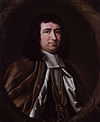
Gilbert Burnet on Edward Hyde, 1st Earl of Clarendon 3 quotes
“[H]e spake well, his style had no flaw in it, but had a just mixture of wit and sense, only he spoke too copiously; he had a great pleasantness in his spirit, which carried him sometimes too far into raillery, in which he sometimes shewed more wit than discretion.”
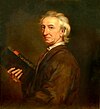
Charles II on Edward Hyde, 1st Earl of Clarendon
“The truth is, his behaviour and humour was growne so insupportable to my self, and to all the world else, that I could not longer endure it, and it was impossible for me to live with it and do those things with the Parliament that must be done, or the Government will be lost.”
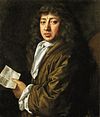
John Evelyn on Edward Hyde, 1st Earl of Clarendon
Charles Firth on Edward Hyde, 1st Earl of Clarendon 2 quotes
“King and minister held fundamentally different views as to religious policy. Charles II desired to make toleration for Catholics and Nonconformists an integral part of the restoration settlement, partly because it seemed essential to the peace of the nation, and partly because he was a Catholic at heart. In the Church as in the State, Clarendon's one aim was to re-establish the state of things which existed before the war began. The Church was to be restored unconditionally as well as the monarchy. This policy the minister successfully carried out. In a few months, almost before the King realised what was happening, the bishops were in possession of their old power, and the Catholics and Nonconformists were under their feet again... In political as in religious matters Clarendon was more conservative than his master, and this conservatism had been increased by the fourteen years he had passed out of England... He never realised the new conditions the Rebellion had created, or the new forces which had grown up during the Interregnum. And, above all, he failed to appreciate the change which had taken place in the position of the House of Commons.”
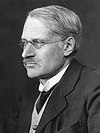
Arthur James Grant on Edward Hyde, 1st Earl of Clarendon
“If we turn to historians of the more ordinary type, the most notable name is that of Clarendon. His work suggests a comparison with Thucydides, in that he was himself a prominent actor in the events that he describes; and there are, especially in his character-sketches, passages that will bear comparison with the great Athenian master. As with Thucydides, too, banishment from his native country gave him an opportunity for calm and detached contemplation of the events through which he had lived. But there the comparison ends. The inner spirit of the two men is entirely different. Neither his double exile nor advancing years brought philosophic calm or intellectual fairness to Clarendon. He writes now as a partisan of the monarchy, now of the Church, now of his own administration, and the later books are mainly autobiographical. But none the less Clarendon's work is epoch-making in the development of English historical writing. Here the nation's story is told by a man of practical knowledge, in language well suited to the subject, and in a tone of honest conviction. For a century and a half it fixed the ideas of Englishmen with regard to the prominent actors in the great Puritan revolution. Its prestige was destroyed, as by a sledge-hammer, by the publication of Carlyle's Cromwell; but the book remains one of the foremost of English historical classics.”


About Edward Hyde, 1st Earl of Clarendon
Edward Hyde, 1st Earl of Clarendon (18 February 1609 – 9 December 1674) was an English historian, statesman and grandfather of two queens regnant, Mary II and Anne.