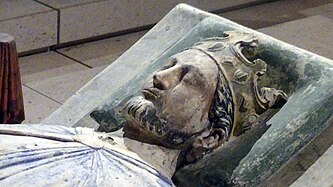
The king of England, though inferior in dignity, surpassed his rival [Philip II of France] in wealth and military renown; and if heroism be confined to brutal and ferocious valour, Richard Plantagenet will stand high among the heroes of the age. The memory of Cœur de Lion, of the lion-hearted prince, was long dear and glorious to his English subjects; and, at the distance of sixty years, it was celebrated in proverbial sayings by the grandsons of the Turks and Saracens, against whom he had fought.
What It Means
This is a placeholder explanation generated by the low-overhead model. It interprets "The king of England, though inferior in dignity, surpassed his rival [Philip II of France] in wealth and military renown; and if heroism be confined to brutal and ferocious valour, Richard Plantagenet will stand high among the heroes of the age. The memory of Cœur de Lion, of the lion-hearted prince, was long dear and glorious to his English subjects; and, at the distance of sixty years, it was celebrated in proverbial sayings by the grandsons of the Turks and Saracens, against whom he had fought." in the context of "Edward Gibbon, The History of the Decline and Fall of the Roman Empire, Volume the Sixth (1788), p. 104" to mean that wisdom is timeless.
Tags

About Edward Gibbon