Link Copied!
Edward Bulwer-Lytton Quotes (1803-1873)
Politician, Playwright, Novelist

































About Edward Bulwer-Lytton
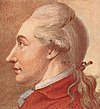
Edward George Earl Bulwer-Lytton, 1st Baron Lytton (25 May 1803 – 18 January 1873) was an English novelist, playwright, and politician.
Best Edward Bulwer-Lytton Quotes
Shortest
Earliest
Explore our curated collection of the most famous and impactful Edward Bulwer-Lytton quotes.
“Rank is a great beautifier.”

“He never errs who sacrifices self.”



“Fate laughs at probabilities.”


“Man is arrogant in proportion to his ignorance.”

“Repent!—that is the idlest word in our language.”

“Real philosophy seeks rather to solve than to deny.”

“Take away the sword—
States can be saved without it!”
States can be saved without it!”


Edward Bulwer-Lytton Quotes by Topic
Find exactly what you are looking for by browsing this categorized list of Edward Bulwer-Lytton quotes by topic.
Edward Bulwer-Lytton on Books 8 quotes
View all 8 quotes on Books →Edward Bulwer-Lytton on Truth 3 quotes
View all 3 quotes on Truth →Edward Bulwer-Lytton on Failure 2 quotes
View all 2 quotes on Failure →Edward Bulwer-Lytton on Cowardice 2 quotes
View all 2 quotes on Cowardice →Edward Bulwer-Lytton on Hornbook 2 quotes
View all 2 quotes on Hornbook →Edward Bulwer-Lytton on Pens 2 quotes
View all 2 quotes on Pens →Edward Bulwer-Lytton on Love 2 quotes
View all 2 quotes on Love →Edward Bulwer-Lytton on Poetry about love 2 quotes
View all 2 quotes on Poetry about love →Edward Bulwer-Lytton on Solitude 2 quotes
“I am as one who is left alone at a banquet, the lights dead and the flowers faded.”

Edward Bulwer-Lytton on Authors 2 quotes
“He who writes prose builds his temple to Fame in rubble; he who writes verses builds it in granite.”
Edward Bulwer-Lytton on Will (philosophy) 2 quotes
“What men want is not talent, it is purpose—in other words, not the power to achieve, but the will to labour.”

What Edward Bulwer-Lytton Said About Others
Discover personal opinions Edward Bulwer-Lytton shared regarding contemporaries.
Edward Bulwer-Lytton on Samuel Laman Blanchard 8 quotes
“For the author there is nothing but his pen, till that and life are worn to the stump: and then, with good fortune, perhaps on his death-bed he receives a pension—and equals, it may be, for a few months, the income of a retired butler!”

Edward Bulwer-Lytton on Thomas Babington Macaulay 2 quotes
“During these visits to Cambridge, I became acquainted with Macaulay. I remember well walking with him, Praed, Ord and some others of the set, along the College Gardens, listening with wonder to that full and opulent converse, startled by knowledge so various, memory so prodigious. That walk left me in a fever of emulation. I shut myself up for many days in intense study, striving to grasp at an equal knowledge: the trophies of Miltiades would not suffer me to sleep.”

Edward Bulwer-Lytton on Samuel Richardson 2 quotes
“While Richardson has been thus influential over the greatest authors of prose fiction on the Continent, he has been no less potent over the very feeblest of such writers as we in England read but do not boast of. Certainly few of our fashionable novelists have ever read Richardson, but nine-tenths of our fashionable novelists are exclusively erotic. Take the love-story away from their plots, and, insipid though the love-story be, nothing of a plot would remain. Now, those nine-tenths of our fashionable novelists would never have been erotic if Richardson, whom they have never read, had not written.”
Edward Bulwer-Lytton on Benjamin Disraeli
Edward Bulwer-Lytton on Pearl S. Buck
“We should so provide for old age that it may have no urgent wants of this world to absorb it from meditation on the next.”

Edward Bulwer-Lytton on Thucydides
“Nor did Lord Chatham neglect to exercise an influence over the direction of William's graver studies. The Earl prudently, indeed, left to professional teachers the legitimate routine in the classic authors, but he made it his particular desire that Thucydides, the eternal manual of statesmen, should be the first Greek book which his son read after coming to college.”

Edward Bulwer-Lytton on Edward Smith-Stanley, 14th Earl of Derby
“One after one the lords of time advance,— Here Stanley meets,—how Stanley scorns, the glance! The brilliant chief, irregularly great, Frank, haughty, rash,—the Rupert of Debate! Nor gout, nor toil, his freshness can destroy. And Time still leaves all Eton in the boy;— First in the class, and keenest in the ring, He saps like Gladstone, and he fights like Spring! Ev'n at the feast, his pluck pervades the board. And dauntless game-cocks symbolize their lord.”
Edward Bulwer-Lytton on Women
“Of all cant in this most canting country, no species is at once more paltry and more dangerous than that which has been made the instrument of decrying female accomplishment. All that execrable twaddle about feminine retirement, and feminine ignorance, which we are doomed so often to hear, has done more towards making women scolds, and flirts, and scandal mongers, than people are well aware of. ... The soul of a woman is as fine an emanation from the Great Fountain of Spirit as that of a man.”

Edward Bulwer-Lytton on Walter Scott
“The blow is struck—the lyre is shattered—the music is hushed at length. The greatest—the most various—the most commanding genius of modern times has left us to seek for that successor to his renown which, in all probability, a remote generation alone will furnish forth. It is true that we have been long prepared for the event—it does not fall upon us suddenly—leaf after leaf was stripped from that noble tree before it was felled to the earth at last;—our sympathy in his decay has softened us to the sorrow for his death.”
Quotes About Edward Bulwer-Lytton
Gain deeper perspective through quotes about Edward Bulwer-Lytton from others.
G. K. Chesterton on Edward Bulwer-Lytton 2 quotes
“You could not have the Victorian Age without him. And this was not due to wholly superficial things like his dandyism, his dark, sinister good looks and a great deal of the mere polished melodrama that he wrote. There was something in his all-round interests; in the variety of things he tried; in his half-aristocratic swagger as poet and politician, that made him in some ways a real touchstone of the time.”

Lord Curzon on Edward Bulwer-Lytton
“Men crowded to the House of Commons to hear the latest performance of "the orator of the century." Epigrams, antithesis, alliteration—all the conscious tricks of the trade—were packed into his ornate harangues, which no one now remembers.”
Benjamin Disraeli on Edward Bulwer-Lytton
John Stuart Mill on Edward Bulwer-Lytton
“To complete the tale of my writings at this period, I may add that in 1833, at the request of Bulwer, who was just then completing his England and the English (a work, at that time, greatly in advance of the public mind), I wrote for him a critical account of Bentham's philosophy, a small part of which he incorporated in his text, and printed the rest (with an honourable acknowledgment), as an appendix In this, along with the favourable, a part also of the unfavourable side of my estimation of Bentham's doctrines, considered as a complete philosophy, was for the first time put into print.”

John Ruskin on Edward Bulwer-Lytton

Leslie Stephen on Edward Bulwer-Lytton 2 quotes
“Lytton is one of the authors upon whose merits the critics have never agreed with the public. He won immense popularity in the face of generally hostile criticism, and even his success failed to obtain a reversal of the judgment. Some of his qualities, however, are incontestable. No English author has displayed more industry, energy, versatility, or less disposition to lapse into slovenliness. His last works are among his best; and though he often tried the experiment of publishing anonymously (as in The Caxtons and The Coming Race), his success showed that his popularity did not depend upon his previous fame.”

About Edward Bulwer-Lytton
Edward George Earl Bulwer-Lytton, 1st Baron Lytton (25 May 1803 – 18 January 1873) was an English novelist, playwright, and politician.