Link Copied!
Diane Ackerman Quotes (1948-)
Author, Poet



About Diane Ackerman
Diane Ackerman (born October 7, 1948) is an American author, poet, and naturalist most famous for her work A Natural History of the Senses. She has taught at various universities, including Columbia and Cornell, and her essays regularly appear in distinguished popular and literary journals.
Best Diane Ackerman Quotes
Shortest
Earliest
Explore our curated collection of the most famous and impactful Diane Ackerman quotes.
“My muse is male, has the silvery complexion of the moon, and never speaks to me directly.”

“But, as sages have long said, the sexiest part of the body and the best aphrodisiac in the world is the imagination.”

“Consciousness, the great poem of matter, seems so unlikely, so impossible, and yet here we are with our loneliness and our giant dreams.”

“Out-of-body experiences aim to shed the senses, but they cannot. One may see from a new perspective, but it’s still an experience of vision.”


“What I’m really wondering is why notices were posted and invitations sent out at all: If it’s a psychics’ convention, shouldn’t everyone just know where and when to meet?”


“So much of our life passes in a comfortable blur. Living on the senses requires an easily triggered sense of marvel, a little extra energy, and most people are lazy about life. Life is something that happens to them while they wait for death.”
“Look in the mirror. The face that pins you with its double gaze reveals a chastening secret: You are looking into a predator’s eyes. Most predators have eyes set right on the front of their heads, so they can use binocular vision to sight and track their prey.”

“... you don't have to be larger than life to come to the aid of somebody in trouble. All you need to be able to be compassionate, put your own troubles on hold while someone else's are taking the forefront, and, maybe the toughest part, you have to be wholly nonjudgemental.”
“We hallucinate sounds more often than sights. There are auditory mirages, which vanish without trace; auditory illusions that turn out to be something other than they seemed; and, of course, voices that speak to saints, seers, and psychotics, telling them how to act and what to believe.”
“... extinction is happening very fast, because we've been destroying habitats — and polluting things. And there may come a time when we want to bring back animals, or we could use the technology just to the enrich the gene pool of animals that are very close to extinction.”

“We think of it as a sort of traffic accident of the heart. It is an emotion that scares us more than cruelty, more than violence, more than hatred. We allow ourselves to be foiled by the vagueness of the word. After all, love requires the utmost vulnerability. We equip someone with freshly sharpened knives; strip naked; then invite him to stand close. What could be scarier?”

““When I set a glass prism on a windowsill and allow the sun to flood through it, a spectrum of colors dances on the floor. What we call "white" is a rainbow of colored rays packed into a small space. The prism sets them free. Love is the white light of emotion.”https://www.goodreads.com/quotes/tag/rainbow”

“Not everything we feel is felt powerfully enough to send a message to the brain; the rest of the sensations just wash over us, telling us nothing. Much is lost in translation, or is censored, and in any case our nerves don’t all fire at once. Some of them remain silent while others respond. This makes our version of the world somewhat simplistic, given how complex the world is. The body’s quest isn’t for truth, it’s for survival.”

“In the Bible, God instructs Moses to burn incense sweet and to His liking. Does God have nostrils? How can a god prefer one smell of this earth to another? The rudiments of decay complete a cycle necessary for growth and deliverance. Carrion smells offensive to us, but delicious to those animals who rely on it for food. What they excrete will make the soil rich and the crops abundant. There is no need for divine election. Perception is itself a form of grace.”

“But we rarely taste the real thing. The vanilla flavoring we buy in the spice section of grocery stores, the vanilla we find in most of our ice creams, cakes, yogurts, and other foods, as well as in shampoos and perfumes, is an artificial flavor created in laboratories and mixed with alcohol and other ingredients. Marshall McLuhan once warned us that we were drifting so far away from the real taste of life that we had begun to prefer artificiality, and were becoming content with eating the menu descriptions rather than the food.”
Diane Ackerman Quotes by Topic
Find exactly what you are looking for by browsing this categorized list of Diane Ackerman quotes by topic.
Diane Ackerman on Revolution
Diane Ackerman on Neuron
“Artificial intelligence is growing up fast, as are robots whose facial expressions can elicit empathy and make your mirror neurons quiver.”

Diane Ackerman on Bamboo
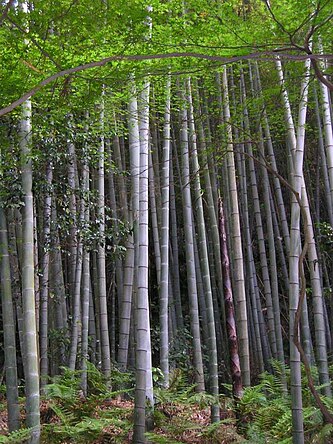
“For better or worse, zoos are how most people come to know big or exotic animals. Few will ever see wild penguins sledding downhill to see on their bellies, giant pandas holding bamboo lollipops in China or tree porcupines in the Canadian Rockies, balled up like giant pine cones.”

Diane Ackerman on Memory
“Nothing is more memorable than a smell. One scent can be unexpected, momentary and fleeting, yet conjure up a childhood summer beside a lake in the mountains; another, a moonlit beach; a third, a family dinner of pot roast and sweet potatoes during a myrtle-mad August in a Midwestern town. Smells detonate softly in our memory like poignant land mines hidden under the weedy mass of years. Hit a tripwire of smell and memories explode all at once. A complex vision leaps out of the undergrowth.”
Misattributed Quotes
Quotes mistakenly credited to Diane Ackerman
“There are well-dressed foolish ideas just as there are well-dressed fools.”
About Diane Ackerman
Diane Ackerman (born October 7, 1948) is an American author, poet, and naturalist most famous for her work A Natural History of the Senses. She has taught at various universities, including Columbia and Cornell, and her essays regularly appear in distinguished popular and literary journals.