Democritus, quoted by Cicero, Academic Questions, Book II, Chapter X. C. D. Yonge's translation. Credited to Democritus by Lactantius, Institutiones, Book III, Chapter XXVIII.
“
Nature * * * has buried truth deep in the bottom of the sea.
— Democritus on Truth
What It Means
This is a placeholder explanation generated by the low-overhead model. It interprets "Nature * * * has buried truth deep in the bottom of the sea." in the context of "Democritus, quoted by Cicero, Academic Questions, Book II, Chapter X. C. D. Yonge's translation. Credited to Democritus by Lactantius, Institutiones, Book III, Chapter XXVIII." to mean that wisdom is timeless.
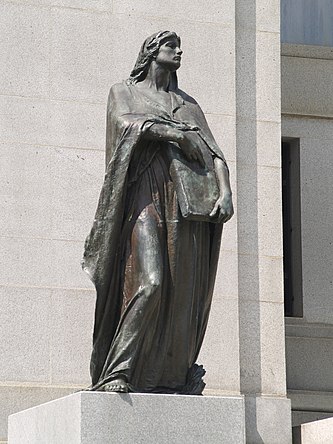
Source: Wikiquote: "Truth" (Hoyt's New Cyclopedia Of Practical Quotations: Quotes reported in Hoyt's New Cyclopedia Of Practical Quotations (1922), p. 818-22.)
The 'What it means' explanation text was generated by Google Gemini Flash (accessed January 18, 2026). https://gemini.google.com/app
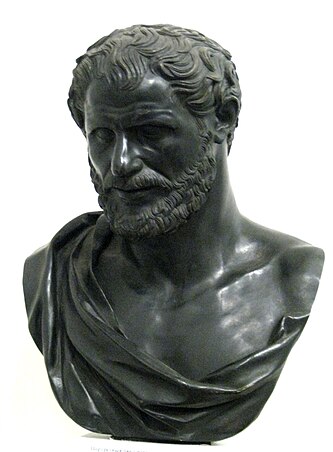
About Democritus
Democritus (c. 460 BC – c. 370 BC) was a pre-Socratic Greek philosopher. He is popularly known as "the laughing philosopher" for advocating a cheerful outlook, and for his rhetorical use of irony and ridicule. A pupil of Leucippus, he was an influential pre-Socratic philosopher who formulated an atomic theory of the universe. Of his voluminous writings, only a few fragments of his ethical theory remain, with descriptions by other writers of his atomic theory.
View all quotes →