Link Copied!
David Ricardo Quotes (1772-1823)



About David Ricardo
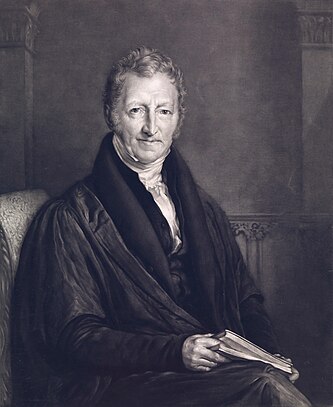
David Ricardo (19 April 1772 – 11 September 1823) was an English political economist, often credited with systematizing economics, and was one of the most influential of the classical economists. He was also a member of Parliament, businessman, financier and speculator.
Best David Ricardo Quotes
Shortest
Earliest
Explore our curated collection of the most famous and impactful David Ricardo quotes.
“Every transaction in commerce is an independent transaction.”
“Sufficiently rich to satisfy all my desires and the reasonable desires of all those about me.”
“Utility then is not the measure of exchangeable value, although it is absolutely essential to it.”
“The price of corn will naturally rise with the difficulty of producing the last portions of it,...”
“The variation in the value of money, however great, makes no difference in the rate of profits;...”
“The farmer and manufacturer can no more live without profit than the labourer without wages.”
“There can be no greater error then in supposing that capital is increased by non-consumption.”
“The wheat bought by a farmer to sow is comparatively a fixed capital to the wheat purchased by a baker to make into loaves.”

“" for price is everywhere regulated by the return obtained by this last portion of capital, for which no rent whatever is paid.”
“A BOUNTY on the exportation of corn tends to lower its price to the foreign consumer, but it has no permanent effect on its price in the home market.”

“Neither machines, nor the commodities made by them, rise in real value, but all commodities made by machines fall, and fall in proportion to their durability.”
“Possessing utility, commodities derive their exchangeable value from two sources: from their scarcity, and from the quantity of labour required to obtain them.”
“Rent is that portion of the produce of the earth which is paid to the landlord for the use of the original and indestructible powers of the soil.”
“But it is clear that the price of labour has no necessary connection with the price of food, since it depends entirely on the supply of labourers compared with the demand.”
“Whenever the current of money is forcibly stopped, and when money is prevented from settling at its just level, there are no limits to the possible variations of the exchange.”

“To alter the money value of commodities, by altering the value of money, and yet to raise the same money amount by taxes, is then undoubtedly to increase the burthens of society.”
“Whether a bank lent one million, ten million, or a hundred millions, they would not permanently alter the market rate of interest; they would alter only the value of the money they issued.”
“If I discover a manure which will enable me to make a piece of land produce 20 per cent more corn, I may withdraw at least a portion of my capital from the most unproductive part of my farm.”
“I have already expressed my opinion on this subject in treating of rent, and have now only further to add, that rent is a creation of value, as I understand that word, but not a creation of wealth.”

David Ricardo Quotes by Topic
Find exactly what you are looking for by browsing this categorized list of David Ricardo quotes by topic.
David Ricardo on Utility 2 quotes
“Utility then is not the measure of exchangeable value, although it is absolutely essential to it.”
David Ricardo on Capital 2 quotes
“Population regulates itself by the funds which are to employ it, and therefore always increases or diminishes with the increase or the diminution of capital. Every reduction of capital is therefore necessarily followed by a less effective demand for corn, by a fall in price, and by diminished cultivation.”
David Ricardo on Political economy
“The opinions that the price of commodities depends solely on the proportion of supply and demand, or demand to supply, has become almost an axiom in political economy, and has been the source of much error in that science.”

David Ricardo on Inflation
“A merchant trading with capital has been injured by the depreciation of money, as his capital has not been equal to the same extent of business as before the depreciation; but there are few merchants in this situation:—their capitals, as well as that of tradesmen, are invested in goods, ships, &c. they are rather debtors than creditors to the rest of the community... the prices of their commodities will undergo the same variations as the prices of all others, their comparative value will... be the same... The depreciation of the circulating medium has been more injurious to monied men... It may be laid down as a principle of universal application, that every man is injured or benefited by the variation of the value of the circulating medium in proportion as his property consists of money, or as the fixed demands on him in money exceed those fixed demands which he may have on others. Thus the farmer is injured by any increase in the value of money... whilst he has a fixed money rent, and fixed money taxes to pay. His produce... will sell for less, whilst his taxes and rent continue the same. ...He, more than any other class of the community, is benefited by the depreciation of money, and injured by the increase of its value.”
What David Ricardo Said About Others
Discover personal opinions David Ricardo shared regarding contemporaries.
David Ricardo on Thomas Robert Malthus
“Population regulates itself by the funds which are to employ it, and therefore always increases or diminishes with the increase or the diminution of capital. Every reduction of capital is therefore necessarily followed by a less effective demand for corn, by a fall in price, and by a diminished cultivation.”
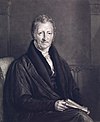
Quotes About David Ricardo
Gain deeper perspective through quotes about David Ricardo from others.
Ha-Joon Chang on David Ricardo
“Ricardo's theory is absolutely right—within its narrow confines. His theory correctly says that, accepting their current levels of technology as given, it is better for countries to specialize in things that they are relatively better at. One cannot argue with that. His theory fails when a country wants to acquire more advanced technologies so that it can do more difficult things that few others can do—that is, when it wants to develop its economy. It takes time and experience to absorb new technologies, so technologically backward producers need a period of protection from international competition during this period of learning. Such protection is costly, because the country is giving up the chance to import better and cheaper products. However, it is a price that has to be paid if it wants to develop advanced industries. Ricardo's theory is, thus seen, for those who accept the status quo but not for those who want to change it.”

John Kenneth Galbraith on David Ricardo
“It is David Ricardo's unique position in history that he was an innovating force in both capitalist and socialist thought.”

Robert Kuttner on David Ricardo

Alessandro Roncaglia on David Ricardo
“Close on a century after the event, this interpretative error re-evokes the error Marshall made in relation to the theory of Ricardo, and of the classical economists in general. Marshall, as we well know, held that they were aware of only one of the two blades of the scissors determining price –the supply side, but not the demand side. In this case, too, classical analysis was rendered comparable to the analysis in terms of demand and supply equilibrium by introducing the assumption of constant returns. Such an assumption, however, cannot be held to represent a general constitutive element of classical analysis: classical economists had quite different ideas on returns to scale, and moreover conceived them in the context of a dynamic analysis. Let us recall, for example, Smith’s ideas about the relationship connecting division of labour (and hence productivity) to the size of the market, or the role played by decreasing returns in agriculture in the analyses of Malthus, West, Torrens, Ricardo and a host of others. Sraffa, who in his critical edition of Ricardo’s Works and Correspondence had, among other things, also disputed Marshall’s interpretation, foresaw quite clearly that the same error would once again crop up in connection with his own analysis. Indeed, he appeared ready to accept the inevitable, though up to a point.”
Ludwig von Mises on David Ricardo
“Marx's economic teachings are essentially a garbled rehash of the theories of Adam Smith and, first of all, of Ricardo.”
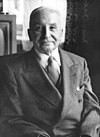
Joan Robinson on David Ricardo 2 quotes
“Ricardo existed at a particular point when English history was going round a corner so sharply that the progressive and the reactionary positions changed places in a generation. He was just at the corner where the capitalists were about to supersede the old landed aristocracy as the effective ruling class. Ricardo was on the progressive side. His chief pre-occupation was to show that landlords were parasites on society. In doing so he was to some extent the champion of the capitalists. They were part of the productive forces as against the parasites. He was pro-capitalist as against the landlords more than he was pro-worker as against capitalists (with the Iron Law of Wages, it was just too bad for the workers, whatever happened).”
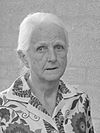
Eric Roll on David Ricardo
“David Ricardo is without doubt the greatest representative of classical political economy. He carried his work begun by Smith to the farthest point possible without choosing one or the other of the roads which led out of the contradiction inherent in it.”
Paul A. Samuelson on David Ricardo 2 quotes
“Adam Smith had a powerful influence on the history of ideas, ideas of the educated non-economist public and most particularly of governmental policy-makers and their voter constituencies. David Ricardo’s great influence was more narrowly focused on contemporaneous and subsequent economists. Macaulay’s general schoolboy knew The Wealth of Nations but not Ricardo’s Principles of Political Economy. So to speak, Smith paid for his popularity with the lay public by being regarded among professional economists as ‘old hat’ and a bit prosaically eclectic. Ricardo, by contrast, wrote so badly as to provide that quantum of obscurity sufficient to evoke academic attention and overestimation. Karl Marx, it may be said, shared in the Ricardian tradition in more ways than is conventionally recognized. As I reflect back upon what seems to have been a systematic undervaluation of Adam Smith in professional circles of six decades ago, I discern that a major responsibility for this lies with two scholars. It was David Ricardo himself who believed that Adam Smith’s basic system was flawed at its core. Indeed, it was this critical view of Smith that caused Ricardo to write his Principles. The economists’ world, blinded by Ricardo’s reputation for brilliance and unable to recognize in his murky exposition the many non sequiturs contained there, accepted Ricardo’s indictment at its face value. The second authority influential in playing down Smith’s worth was my old master, Joseph Schumpeter. Long before the Harvard days of his greatest reputation, the young Schumpeter’s brilliant German work, Economic Doctrine and Method (1914), had patronized Smith with faint praise. Never did Schumpeter really alter this evaluation, as his posthumous classic of 1954 makes clear. Schumpeter seems to put ahead of Smith as a theorist such predecessors as Cantillon, Hume and Turgot; and subsequent to him, Schumpeter would surely have regarded as Smith’s superiors such diverse scholars as A.A.Cournot, Léon Walras, and (I vaguely remember from Schumpeter’s 1935 Harvard lectures) Alfred Marshall. Whereas Ricardo regarded Smith as having defected from a proper labour theory of value, in Schumpeter’s eyes Smith’s crime was that of mediocrity, lack of originality, and excessive imitativeness. (When my colleague Robert L.Bishop prepared a definitive debunking of Ricardo’s critique of Smith, he informed me that Schumpeter paradoxically proved to be one of the few scholars who correctly recognized Ricardo’s lack of cogency and who defended Smith for his full due.)”
Jean-Baptiste Say on David Ricardo
“It is, perhaps, a well founded objection to Mr. Ricardo, that he sometimes reasons upon abstract principles to which he gives too great a generalization.”
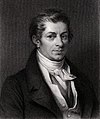
About David Ricardo
David Ricardo (19 April 1772 – 11 September 1823) was an English political economist, often credited with systematizing economics, and was one of the most influential of the classical economists. He was also a member of Parliament, businessman, financier and speculator.