Pt. I, l. 360-363.
“
Wealth, howsoever got, in England makes
Lords of mechanics, gentlemen of rakes;
Antiquity and birth are needless here;
'Tis impudence and money makes a peer.
— Daniel Defoe
What It Means
This is a placeholder explanation generated by the low-overhead model. It interprets "Wealth, howsoever got, in England makes
Lords of mechanics, gentlemen of rakes;
Antiquity and birth are needless here;
'Tis impudence and money makes a peer." in the context of "Pt. I, l. 360-363." to mean that wisdom is timeless.
Source: Wikiquote: "Daniel Defoe" (Quotes: W. Guerney Benham, A Book of Quotations, Proverbs and Household Words (1914), pp. 106–107, The True-Born Englishman (1701): Henry Morley, ed., The Earlier Life and the Chief Earlier Works of Daniel Defoe (London: George Routledge and Sons, 1889), pp. 175-218)
The 'What it means' explanation text was generated by Google Gemini Flash (accessed January 18, 2026). https://gemini.google.com/app
Tags
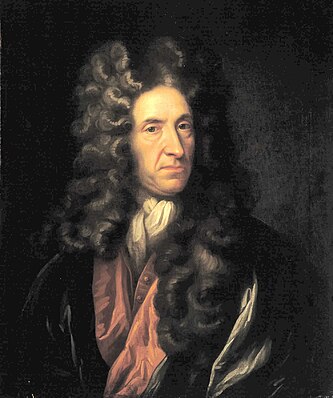
About Daniel Defoe
Daniel Defoe (13 September 1660 - 24 April 1731), was an English writer, journalist and spy, who gained enduring fame for his novel Robinson Crusoe.
About Daniel Defoe
Daniel Defoe (13 September 1660 - 24 April 1731), was an English writer, journalist and spy, who gained enduring fame for his novel Robinson Crusoe.
View all quotes →