Ch.1 Exploring Edom and Moab
“
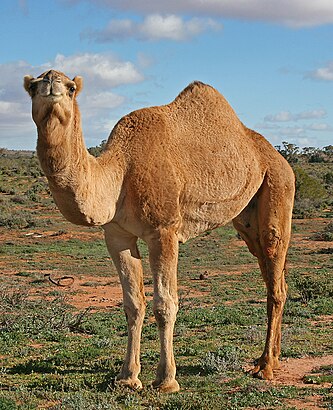
It has been said that the Bedouin Arab is a parasite that lives on the camel, and this to a great extent is true. It is the camel that carries him about; it is the camel's hair that supplies him with both his clothes and his tent; the camel's dung is the fuel of the desert; it is the camel's meat that supplies food for his banquets; the camel's milk is his beverage; and I could go on enumerating the basic gifts of the camel to his Arab master.
— Cyrus H. Gordon
What It Means
This is a placeholder explanation generated by the low-overhead model. It interprets "It has been said that the Bedouin Arab is a parasite that lives on the camel, and this to a great extent is true. It is the camel that carries him about; it is the camel's hair that supplies him with both his clothes and his tent; the camel's dung is the fuel of the desert; it is the camel's meat that supplies food for his banquets; the camel's milk is his beverage; and I could go on enumerating the basic gifts of the camel to his Arab master." in the context of "Ch.1 Exploring Edom and Moab" to mean that wisdom is timeless.
Source: Wikiquote: "Cyrus H. Gordon" (Quotes, Adventures in the Nearest East (1957))
The 'What it means' explanation text was generated by Google Gemini Flash (accessed January 18, 2026). https://gemini.google.com/app
Tags
About Cyrus H. Gordon
Cyrus Herzl Gordon (June 29, 1908 – March 30, 2001), was an American author, teacher, linguist, field archaeologist, cryptanalyst and scholar of Near Eastern cultures and ancient languages. He challenged traditional theories about Greek and Hebrew cultures by claiming that these were derived from a common second millenium East Mediterranean foundation.
View all quotes →