Link Copied!
Christopher Isherwood Quotes (1904-1986)
Writer, King

About Christopher Isherwood
Christopher William Bradshaw Isherwood (26 August 1904 – 4 January 1986) was a British-American writer.
Best Christopher Isherwood Quotes
Shortest
Earliest
Explore our curated collection of the most famous and impactful Christopher Isherwood quotes.

“The paternalist is a sentimentalist at heart, and the sentimentalist is always potentially cruel.”
“I'll bet Shakespeare compromised himself a lot; anybody who's in the entertainment industry does to some extent.”

“I often feel that worse than the most fiendish Nazis were those Germans who went along with the persecution of the Jews not because they really disliked them but because it was the thing.”

“I feel it's so easy to condemn this country [the United States]; but they don't understand that this is where the mistakes are being made — and made first, so that we're going to get the answers first.”

“It seems to me that the real clue to your sex orientation lies in your romantic feelings rather than in your sexual feelings. If you are really gay, you are able to fall in love with a man, not just enjoy having sex with him.”
“I'm horrified to find, as I look at these diaries of twenty-five years ago or more, that I don't remember who the people were. "Bill and Tony were constantly in and out. We went to La Jolla" — or something. I haven't the bluest idea who they were!”
“'You know, sometimes I wonder what all this is for. Why not just peacefully end it?'
'We all think that. But we don't do it.'
'Surely you're not fool enough to imagine there's anything afterwards?'
'Perhaps. No, I suppose not. I don't think it makes much difference.'”
'We all think that. But we don't do it.'
'Surely you're not fool enough to imagine there's anything afterwards?'
'Perhaps. No, I suppose not. I don't think it makes much difference.'”
“Christopher, like many other writers, was shockingly ignorant of the objective world, except where it touched his own experience. When he had to hide his ignorance beneath a veneer, he simply consulted someone who could supply him with the information he needed.”
“The Nazis hated culture itself, because it is essentially international and therefore subversive of nationalism. What they called Nazi culture was a local, perverted, nationalistic cult, by which a few major artists and many minor ones were honored for their Germanness, not their talent.”

“The Memorial was published on February 17, 1932. . . . I remember how one reviewer remarked that he had at first thought the novel contained a disproportionally large number of homosexual characters but had decided, on further reflection, that there were a lot more homosexuals about, nowadays.”
“I believe the Gita to be one of the major religious documents of the world. If its teachings did not seem to me to agree with those of the other gospels and scriptures, then my own system of values would be thrown into confusion, and I should feel completely bewildered. The Gita is not simply a sermon, but a philosophical treatise.”
“At one campus where I was lecturing, I asked a friend, "How many of my colleagues know I'm gay?" He answered, "All of them." I wasn't surprised. But, just the same, it was kind of spooky, because not one of them had ever given me the faintest sign that he or she knew. If I had spoken about it myself, most of them would have felt it was in bad taste.”
“'Why should you do a job anyway? What's the incentive?'
'The incentive is to fight anarchy. That's all Man lives for. Reclaiming life from its natural muddle. Making patterns.'
'Patterns for what?'
'For the sake of patterns. To create meaning. What else is there?'
'And what about the things that won't fit into your patterns?'
'Discard them.'”
'The incentive is to fight anarchy. That's all Man lives for. Reclaiming life from its natural muddle. Making patterns.'
'Patterns for what?'
'For the sake of patterns. To create meaning. What else is there?'
'And what about the things that won't fit into your patterns?'
'Discard them.'”
“The result of the rebuilding was a maze of crooked stairways, claustrophobic passages, abrupt dangerous ramps and Alice in Wonderland doors. Most of the smaller rooms were overcrowded, under-ventilated, separated only by plywood partitions and lit by naked bulbs hanging from wires. Everything was provisional, and liable to electrocute you, fall on your head, or come apart in your hand.”
“California is a tragic country — like Palestine, like every Promised Land. Its short history is a fever-chart of migrations — the land rush, the gold rush, the oil rush, the movie rush, the Okie fruit-picking rush, the wartime rush to the aircraft factories — followed, in each instance, by counter-migrations of the disappointed and unsuccessful, moving sorrowfully homeward.”

“If I fear anything, I fear the atmosphere of the war, the power which it gives to all the things I hate — the newspapers, the politicians, the puritans, the scoutmasters, the middle-aged merciless spinsters. I fear the way I might behave, if I were exposed to this atmosphere. I shrink from the duty of opposition. I am afraid I should be reduced to a chattering enraged monkey, screaming back hate at their hate.”

“The images which remained in the memory are not in themselves terrible or rigorous: they are of boot-lockers, wooden desks, lists on boards, name-tags in clothes — yes, the name pre-eminently; the name which in a sense makes you nameless, less individual rather than more so: Bradshaw-Isherwood, C.W. in its place on some alphabetical list; the cold daily, hourly reminder that you are not the unique, the loved, the household’s darling, but just one among many. I suppose that this loss of identity is really much of the painfulness which lies at the bottom of what is called Homesickness; it is not Home that one cries for but one’s home-self.”
“'All these people,' Bergmann continued, 'will be dead. All of them. . . . No, there is one—' He pointed to a fat, inoffensive man sitting alone in a distant corner. 'He will survive. He is the kind that will do anything, anything to be allowed to live. He will invite the conquerors to his home, force his wife to cook for them and serve the dinner on his bended knees. He will denounce his mother. He will offer his sister to a common soldier. He will act as a spy in prisons. He will spit on the Sacrament. He will hold down his daughter while they rape her. And, as a reward for this, he will be given a job as boot-black in a public lavatory, and he will lick the dirt from people's shoes with his tongue...'”
“'Let me tell you something,' he began, as he dropped my manuscript casually into the waste-paper-basket. 'The Film is a symphony. Each movement is written in a certain key. There is a note which has to be chosen and struck immediately. It is characteristic of the whole. It commands the attention.'
He started to describe the opening sequence. It was astounding. Everything came to life. The trees began to tremble in the evening breeze, the music was heard, the roundabouts were set in motion. And the people talked. Bergmann improvised their conversation, partly in German, partly in ridiculous English; and it was vivid and real. It was all so simple, so effective, so obvious. Why hadn't I thought of it myself?”
He started to describe the opening sequence. It was astounding. Everything came to life. The trees began to tremble in the evening breeze, the music was heard, the roundabouts were set in motion. And the people talked. Bergmann improvised their conversation, partly in German, partly in ridiculous English; and it was vivid and real. It was all so simple, so effective, so obvious. Why hadn't I thought of it myself?”
“There is one question which we seldom ask each other directly: it is too brutal. And yet it is the only question worth asking our fellow-travellers. What makes you go on living? Why don't you kill yourself? Why is all this bearable? What makes you bear it?
Could I answer that question about myself? No. Yes. Perhaps . . . I supposed, vaguely, that it was a kind of balance, a complex of tensions. You did whatever was next on the list. A meal to be eaten. Chapter eleven to be written. The telephone rings. You go off somewhere in a taxi. There is one's job. There are amusements. There are people. There are books. There are things to be bought in shops. There is always something new. There has to be. Otherwise, the balance would be upset, the tension would break.”
Could I answer that question about myself? No. Yes. Perhaps . . . I supposed, vaguely, that it was a kind of balance, a complex of tensions. You did whatever was next on the list. A meal to be eaten. Chapter eleven to be written. The telephone rings. You go off somewhere in a taxi. There is one's job. There are amusements. There are people. There are books. There are things to be bought in shops. There is always something new. There has to be. Otherwise, the balance would be upset, the tension would break.”

“According to Christopher’s diary:
The more I think about myself, the more I’m persuaded that, as a person, I really don’t exist. That is one of the reasons why I can’t believe in any orthodox religion: I cannot believe in my own soul. No, I am a chemical compound, conditioned by environment and education. My "character" is simply a repertoire of acquired tricks, my conversation a repertoire of adaptations and echoes, my "feelings" are dictated by purely physical, external stimuli.
'''Christopher did well to call himself woolly-minded. All he has actually stated here is that he can’t believe in his own individuality as something absolute and eternal; the word "soul" is introduced, quite improperly, as a synonym for "person."”
“'The whole beauty of the Film is that it has a certain fixed speed. The way you see it is mechanically conditioned. I mean, take a painting - you can just glance at it, or you can stare at the left hand top corner for half an hour. Same thing with a book. The author can't stop you from skimming it, or staring at the last chapter and reading backwards. The point is, you choose your approach. When you go into a cinema it's different. There's the film, and you have to look at it as the director wants you to look at it. He makes his points, one after another, and he allows you a certain number of seconds or minutes to grasp each one. If you miss anything he won't repeat himself, and he won't stop to explain. He can't. He's started something and he has to go through with it.'”
Christopher Isherwood Quotes by Topic
Find exactly what you are looking for by browsing this categorized list of Christopher Isherwood quotes by topic.
Christopher Isherwood on Berlin
“It was Berlin itself he was hungry to meet; the Berlin Wystan had promised him. To Christopher, Berlin meant Boys.”

Christopher Isherwood on Bhagavad Gita
“I believe the Gita to be one of the major religious documents of the world. If its teachings did not seem to me to agree with those of the other gospels and scriptures, then my own system of values would be thrown into confusion, and I should feel completely bewildered. The Gita is not simply a sermon, but a philosophical treatise.”

Christopher Isherwood on Hollywood
“[May 17, 1939] Next day, we took a taxi into Hollywood. I was amazed at the size of the city, and at its lack of shape. There seemed no reason why it should ever stop. Miles and miles of little houses, wooden or stucco, under a technicolor sky. Miles of little gardens, crowded with blossoms and flowering bushes; the architecture is dominated by the vegetation. A city without privacy, where neighbors share each other's lawns and look into each other's bedrooms. The whole place like a world's fair, quite new and already partly in ruins. The only permanent buildings are the schools and churches. On the hill, giant letters spell "Hollywoodland", but this is only another advertisement. It is silly to say that Hollywood, or any other city, is "unreal". But what the arriving traveler first sees are merely advertisements for a city which doesn’t exist.”

Christopher Isherwood on Mexico
“It is a land of violence. Thunder and avalanches in the mountains, huge floods and storms on the plains. Volcanoes exploding. The earth shaking and splitting. The woods full of savage beasts and poisonous insects and deadly snakes. Knives are whipped out at a word. Whole families are murdered without any reason. Riots are sudden and bloody and often meaningless. Cars and trucks are driven into each other or over cliffs with an indifference which is half suicidal. Such an energy in destruction. Such an apathy when something has to be mended or built. So much honour in despair. So much weary fatalism toward poverty and disease. The shrug of the shoulders and the faint smile of cynicism. No good. Too late. It's gone. Finished. Broken. They're all dead. Ignore it. Use the other door. Sleep in another room. Throw it in the gutter. Tie the ends together with string. Put up a memorial cross. What is cooking in there, with such ominous sounds, nobody now alive will ever know. A new race and a new culture, certainly. Perhaps an entirely different kind of language. But whatever it may be, it is cooking. And it will go on doing so, mysteriously, noisily, furiously, through all the bad times that are coming.”

What Christopher Isherwood Said About Others
Discover personal opinions Christopher Isherwood shared regarding contemporaries.
Christopher Isherwood on Ramakrishna 2 quotes
“Throughout his life Ramakrishna continued to use words and similes which struck his more sensitive hearers as shockingly crude. But even those who were shocked had to admit that in Ramakrishna's mouth, the words lost much of their offensiveness; for he used them with such innocence.”

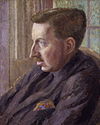
Christopher Isherwood on E. M. Forster 2 quotes
“His light blue eyes behind his spectacles were like those of a baby who remembers his previous incarnation and is more amused than dismayed to find himself reborn in new surroundings. He had a baby's vulnerability, which is also the invulnerability of a creature whom one dare not harm.”
Christopher Isherwood on Ray Bradbury
“I think Ray Bradbury's The Martian Chronicles is one of the most extraordinary works of fantasy ever written in the English language.”

Christopher Isherwood on Virginia Woolf
“Her genius was intensely feminine and personal—private almost. To read one of her books was (if you liked it) to receive a letter from her, addressed specially to you.”

Christopher Isherwood on Laura Huxley
“When a book is amusing and charming and quite easy to understand we are apt to dismiss it as a lightweight. Don't make this mistake about Laura Huxley. She offers you nothing less than a new life.”
Christopher Isherwood on Robert Graves
“Robert Graves stands impressively, cantankerously, comically, nobly apart from his contemporaries. You can't even classify him as the leader of his own school. He hasn't one. Indeed, it may be said that he draws his greatest strength from wrestling single-handed with the brutish mob.”

Quotes About Christopher Isherwood
Gain deeper perspective through quotes about Christopher Isherwood from others.
E. M. Forster on Christopher Isherwood
“Novelists too — they practise the friendly unpatronising tone ; Christopher Isherwood’s Mr. Norris changes Trains is an example of this. Isherwood — who is extremely intelligent — always writes as if the reader were equally intelligent. He is an example of democratic good manners. He trusts his public”
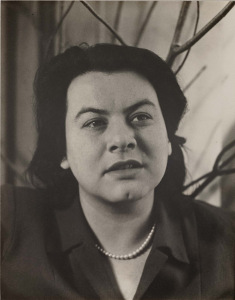
Muriel Rukeyser on Christopher Isherwood
“Barriers dissolve, too, when confronted by the Eastern poems: the poems of the sacred books, in Yeats' translation of the Upanishads, or Isherwood's of the Bhagavad-Gita, and such work as E. Powys Mathers' Black Marigolds and Robert Payne's The White Pony, a rich anthology of Chinese poetry.”
Willard Spiegelman on Christopher Isherwood
“Christopher’s kind are homosexuals, but more importantly, minorities of any sort, either tortured obscenely by the Nazis or rejected more hypocritically by social convention and snobbism. In his matter-of-fact treatment of his sexual preferences and affairs ("To Christopher, Berlin meant Boys," he announces at the start), Isherwood has made an important contribution to the literature of minority liberation. … Our age, like the Thirties, is given to strident political and artistic positions; while it would be wrong to condemn the more active spokesmen of minority rights, it is all the more significant that the tone (that most ineffable of all literary qualities) of Isherwood’s autobiography is neither truculent nor confessional, but the still, honest voice of a man looking back on the events of a tumultuous time. He shows how all minorities can be persecuted, by laws (the notorious paragraph 175 of the German penal code which made homosexual acts illegal), in social condescension (even from sympathetic parties, like Christopher’s mother), and most grotesquely, in self-hatred. The book’s central episode (the midpoint of the book brings us to the mid-point of the decade) deals with Isherwood’s inability to get his German boyfriend out of Germany; at the last moment, victory is snatched away when Heinz is refused entry by a British immigration official at Harwich in 1934. Christopher and Auden have gone to the pier, and after Heinz is turned back, Auden chillingly notes of the official: "As soon as I saw the bright-eyed little rat, I knew we were done for. He understood the whole situation at a glance — because he’s one of us." Christopher and His Kind is a proclamation of the rights of "us," all of us, against the demands of "the others," whether fascists, aristocrats, war-makers, or the heterosexual hegemony, to live according to our natures.”
About Christopher Isherwood
Christopher William Bradshaw Isherwood (26 August 1904 – 4 January 1986) was a British-American writer.