Chris Argyris Quotes (1923-2013)

About Chris Argyris

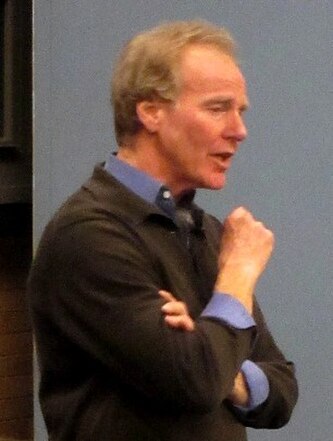
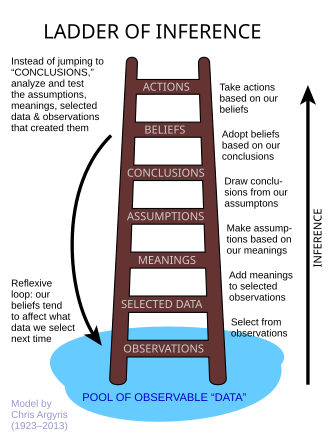
Chris Argyris (born July 16, 1923 – 16 November 2013) was an American business theorist, Professor Emeritus at Harvard Business School, known as co-founder of Organization Development, and for his seminal work on learning organizations.

Best Chris Argyris Quotes

Shortest
Earliest

Explore our curated collection of the most famous and impactful Chris Argyris quotes.

“Managers who are skilled communicators may also be good at covering up real problems.”
“Success in the marketplace increasingly depends on learning, yet most people don't know how to learn.”
Chris Argyris
“But today's dilemmas are even harder to deal with: autonomy vs. control; innovation vs. no surprises; participation and ownership vs. meeting deadlines; and job security vs. excess employees through job design”
Chris Argyris
“Once employees base their motivation on extrinsic factors they are much less likely to take chances, question established policies and practices, or explore the territory that lies beyond the company vision as defined by management.”
Chris Argyris
“Human beings hold two types of theories of action. There is the one that they espouse, which is usually expressed in the form of stated beliefs and values. Then there is the theory that they actually use; this can only be inferred from observing their actions, that is, their actual behavior.”

Chris Argyris Quotes by Topic

Find exactly what you are looking for by browsing this categorized list of Chris Argyris quotes by topic.

Chris Argyris on Organizational memory
“Organizations do not literally remember.”
Chris Argyris

Chris Argyris on Organizational learning

“Human beings hold two types of theories of action. There is the one that they espouse, which is usually expressed in the form of stated beliefs and values. Then there is the theory that they actually use; this can only be inferred from observing their actions, that is, their actual behavior.”

Chris Argyris on Knowledge management

“Most people define learning too narrowly as mere “problem-solving”, so they focus on identifying and correcting errors in the external environment. Solving problems is important. But if learning is to persist, managers and employees must also look inward. The need to reflect critically on their own behaviour, identify the ways they often inadvertently contribute to the organisation’s problems, and then change how they act.”
Chris Argyris

Chris Argyris on Learning organization

“Learning can be defined as occurring under two conditions. First, learning occurs when an organisation achieves what it intended; that is, there is a match between its design for action and the actual outcome. Second, learning occurs when a mismatch between intention and outcome is identified and corrected; that is, a mismatch is turned into a match.... Single-loop learning occurs when matches are created, or when mismatches are corrected by changing actions. Double-loop learning occurs when mismatches are corrected by first examining and altering the governing variables and then the actions.”
Chris Argyris

Quotes About Chris Argyris

Gain deeper perspective through quotes about Chris Argyris from others.

Chris Argyris, Harvard University: James McKeen Cattell Fellow Award on Chris Argyris

“Argyris is best known for his theory, in collaboration with the late philosophy scholar Donald Schön, on the two types of learning — single-loop and double-loop. This theory refers to the way people respond to changes in their environment. Single-loop learning is the repeated attempt at the same problem by an organization or individual, without varying the method or questioning the goal. Double-loop learning goes beyond that, modifying the goal in light of the experience.Argyris’s work raises profound questions about how organizations run, and casts doubt on what is widely accepted as good practice. But he offers management a profound exploration of the fundamental principles of organizational behavior and human interaction in the workplace.”

About Chris Argyris

Chris Argyris (born July 16, 1923 – 16 November 2013) was an American business theorist, Professor Emeritus at Harvard Business School, known as co-founder of Organization Development, and for his seminal work on learning organizations.