Link Copied!
Charles James Fox Quotes (1749-1806)
Politician, King


About Charles James Fox
Charles James Fox (24 January 1749 – 13 September 1806) was a British Whig politician most noted for his support of the American and French Revolutions.
Best Charles James Fox Quotes
Shortest
Earliest
Explore our curated collection of the most famous and impactful Charles James Fox quotes.
“The worst of revolutions is a restoration.”
“Religion was best understood when least talked of.”

“Our Sovereign's Health, the Majesty of the People.”

“Bonaparte's wish is Peace, nay that he is afraid of war to the last degree.”
“It is intolerable that it should be in the power of one blockhead to do so much mischief.”

“There is not a power in Europe, no not even Bonaparte's that is so unlimited [as the British monarchy].”


“Toleration in religion was one of the great rights of man, and a man ought never to be deprived of what was his natural right.”

“[Napoleon has now] surpassed...Alexander & Caesar, not to mention the great advantage he has over them in the Cause he fights in.”

“Upon the liberty of the press and freedom of discussion, the basis of the constitution was known to rest. Take away these, and the whole fabric most fall.”

“Kings, Sir, govern by means of popular assemblies, only because they cannot do without them; to suppose a king fond of that mode of governing, is to suppose a chimera.”
“To suppose a man wicked or immoral, merely on account of any difference of religious opinion, was as false as it was absurd; yet this was the original principle of persecution.”

“...a greater evil than the restoration of the Bourbons to the world in general, and England in particular, can hardly happen.”

“Where could be found finer sentiments of liberty, than in the works of Demosthenes and Cicero? Where should we meet with bolder assertions of the rights of mankind, and the dignity of human nature, than in the historians Tacitus and Thucydides?”

“[I] charged Mr. Pitt with having come into office upon unconstitutional grounds, and upon such principles as were disgraceful to himself, disgusting to the country, and such as must necessarily deprive him and his coadjutors of the confidence of that House.”
“In his opinion, the best security for the due maintenance of the constitution, was in the strict and incessant vigilance of the people over parliament itself. Meetings of the people, therefore, for the discussion of public objects, were not merely legal, but laudable.”

“[H]e was indebted to his right honourable friend [ Edmund Burke] for the greatest share of the political knowledge he possessed,—his political education had been formed under him,—his instructions had invariably governed his principles.”
“Peace is the wish of the French of Italy Spain Germany and all the world, and Great Britain alone the cause of preventing its accomplishment, and this not for any point of honour or even interest, but merely lest there should be an example in the modern world of a great powerful Republic.”

“Any thing that proves that it is not in the power of Kings and Princes by their great armies to have every thing their own way is of such good example that without any good will to the French one can not help being delighted by it, and you know I have a natural partiality to what some people call rebels.”

“Those principles which brought about the glorious revolution, which seated his majesty's illustrious family upon the throne, and which have preserved the liberty of this constitution, have ever been the inviolable rule of my political conduct.”

“...for the truth is, I am gone something further in hate to the English Government than perhaps you and the rest of my friends are, and certainly further than can with prudence be avowed. The triumph of the French Government over the English does in fact afford me a degree of pleasure which it is very difficult to disguise.”

“I admire the British constitution, because it gives scope to the people to exercise the right of political discussion; not merely with the permission of a magistrate, or under the control of an executive force, but on all occasions to state, in bold and plain words, the grievances which they feel, and the redress which they desire.”
Charles James Fox Quotes by Topic
Find exactly what you are looking for by browsing this categorized list of Charles James Fox quotes by topic.
Charles James Fox on Aeneid
“My chief objection (I mean that to the character of Aeneas) is, of course, not so much felt in the three first books; but, afterwards, he is always either insipid or odious, sometimes excites interest against him, and never for him.”
What Charles James Fox Said About Others
Discover personal opinions Charles James Fox shared regarding contemporaries.
Charles James Fox on Edward Thurlow, 1st Baron Thurlow
Charles James Fox on Robert Clive
Charles James Fox on William Pitt the Younger
“Impossible, impossible; one feels as if there was something missing in the world—a chasm, a blank that cannot be supplied.”

Charles James Fox on Virgil
“[The] pathetic is Virgil's great excellence in the Æneid, and...in that way he surpasses all other poets of every age and nation, except, perhaps (and only perhaps), Shakspeare. It is on that account that I rank him so very high; for surely to excel in that style which speaks to the heart is the greatest of all excellence.”

Charles James Fox on Charles II of England
“After the fall of Clarendon...the King entered into that career of government, which, that he was able to pursue it to its end, is a disgrace to the history of our country. If any thing can add to our disgust at the meanness with which he solicited a dependence upon Lewis the Fourteenth, it is the hypocritical pretence upon which he was continually pressing that monarch.”

Charles James Fox on Augustus FitzRoy, 3rd Duke of Grafton
“Though I wrote this letter merely with a view of acquainting you with the state of this bill, I cannot let this opportunity go by, of assuring you how very happy I feel to be of opinion on public affairs, with a person, with whom I have always wished to agree; and with whom I should act with more pleasure, in any possible situation, than with any one I have been acquainted with.”
Charles James Fox on William Petty, 2nd Earl of Shelburne
“In regard to what you say about any intimate connexion between Lansdowne and me, I agree almost entirely with you, except perhaps that I do not give him the credit for sincerity in any system which you seem to do. I never can have a good opinion of him, and still less a great one. However, we are upon terms of the greatest civility, and it must be confessed that his conduct for these last three years has had an openness and consistency, which entitles him to every outward mark of respect, from those who think as we do.”
Quotes About Charles James Fox
Gain deeper perspective through quotes about Charles James Fox from others.
The on Charles James Fox
“I will only mention one other circumstance as tending to show the fallacy of Mr. Bright's opinion. He quotes Charles James Fox as a great authority for peace. I happen to know, from the only living authority from whom that information could be derived—I happen to know that Charles James Fox, the great Minister who resisted the revolutionary war so long, told his colleagues each and severally, on his deathbed, that the great war in which they were then engaged could not be brought to a conclusion; he enjoined them to prosecute it with vigour, and I, among others, look back with gratitude to the results of that great contest.”
H. H. Asquith on Charles James Fox
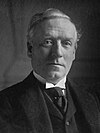
“Charles James Fox, who, though through some of the perverse fortunes and accidents of political life, only held high office twice in his life, and in each case for a very brief time, was acknowledged by all good judges to be second to none among the Parliamentary speakers in what we are accustomed, and rightly, to describe as the Golden Age of British eloquence.”
James Boswell on Charles James Fox
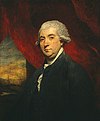
“[On 11 June 1784] I asked him [Samuel Johnson] if it was true as reported, that he had said lately, ‘I am for the King against Fox; but I am for Fox against Pitt.’ JOHNSON: ‘Yes, Sir; the King is my master; but I do not know Pitt; and Fox is my friend.’ ‘Fox, (added he,) is a most extraordinary man; here is a man (describing him in strong terms of objection in some respects according as he apprehended, but which exalted his abilities the more) who has divided the Kingdom with Caesar; so that it was a doubt whether the nation should be ruled by the sceptre of George the Third, or the tongue of Fox.’”
John Bright on Charles James Fox
“Come down 50 years nearer to our own time, and you find a statesman, not long in office, but still held in the affections of all persons of liberal principles in this country, and in his time representing fully the sentiments of the Liberal party—Charles James Fox (Cheers.) Mr. Fox, referring to the policy of the Government of his time, which was one of constant interference in the affairs of Europe, and by which the country was continually involved in the calamities of war, said that although he would not assert or maintain the principle, that under no circumstances could England have any cause of interference with the affairs of the continent of Europe, yet he would prefer the positive policy of non-interference and of perfect isolation rather than the constant intermeddling to which our recent policy had subjected us, and which brought so much trouble and suffering upon the country.”

Alan Bullock on Charles James Fox
“It was left...above all to Charles James Fox himself to defend the liberties of the subject, freedom of the press and of public meeting against the encroachments of a panicky Government. Fox was almost certainly wrong in his estimate of the danger from France, especially after Napoleon's coup d'état, and Whig opposition to the war had a tendency to degenerate into factiousness, but his defence of liberty was a vindication both of his own courage and of the liberal tradition.”
John Cannon on Charles James Fox 2 quotes
“Pitt's reputation would have been less decisive had not it contrasted so pointedly with the public image of his main rival. Indeed, it is not easy to explain why a man, so attractive in his private circle, should have been so distrusted by the public at large. It would be too simple to see Fox as the victim of unrelenting propaganda. Paragraph after paragraph, it is true, dwelt on his debts, his gambling, his love affairs, and reminded readers that his father had once been called "the public defaulter of unaccounted millions". The accusation of "Cromwell" was particularly effective. It was reported to be the "received notion among the inferiors" in Yorkshire that Fox was "attempting to dethrone the King and make himself an Oliver Cromwell". In Lancashire the name of Fox was said to be "most universally execrated", and in Gloucestershire "the Good Women and the Mob" exclaimed against him and the India bill "with an honest vehemence that will not permit them to discriminate between the Minister and the Man". But he was hounded in this way because he was peculiarly vulnerable, and because the public was prepared to believe the worst of him.”
Richard Cobden on Charles James Fox
“It is impossible to read the speeches of Fox, at this time, without feeling one's heart yearn with admiration and gratitude for the bold and resolute manner in which he opposed the war, never yielding and never repining, under the most discouraging defeats; and, although deserted by many of his friends in the house, taunted with having only a score of followers left, and obliged to admit that he could not walk the streets without being insulted, by hearing the charge made against him of carrying on an improper correspondence with the enemy in France, yet bearing it all with uncomplaining manliness and dignity. The annals of Parliament do not record a nobler struggle in a nobler cause.”

Michael Foot on Charles James Fox
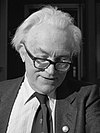
“Charles Fox...[had] the combination of gifts which made him the most attractive Englishman who ever gave his mind to parliamentary politics. Somehow the influence which persuaded Edward Gibbon to say, “Let him do what he will; I must love the dog,” has been transmitted down to us, and somehow, too, the cause of English liberty which he made peculiarly his own embodies the glow of his personality... Fox himself felt the democratic potency of those contests and gave emphasis to it in his own words: “It is the energy, the boldness of a man's mind, which prompts him to speak, not in private but in large and popular assemblies, that constitutes, that creates in a state, the spirit of freedom.” He drew strength and courage from the vast London crowds who swayed before him, and it was there he learned his hatred of censorship, repression, informers; his trust in the people.”
King George III on Charles James Fox
Edward Gibbon on Charles James Fox
“In his tour of Switzerland (September 1788) Mr. Fox gave me two days of free and private society. He seemed to feel, and even to envy, the happiness of my situation; while I admired the powers of a superior man, as they are blended in his attractive character with the softness and simplicity of a child. Perhaps no human being was ever more perfectly exempt from the taint of malevolence, vanity, or falsehood.”

William Ewart Gladstone on Charles James Fox
“I heard him [Robert Peel] express a low opinion of Fox. So far as Fox's private character is concerned, Peel may have been right; but, as a public man, Fox had certainly a remarkable power of grasping general principles.”


About Charles James Fox
Charles James Fox (24 January 1749 – 13 September 1806) was a British Whig politician most noted for his support of the American and French Revolutions.