About thirty years ago there was much talk that geologists ought only to observe and not theorise; and I well remember some one saying that at this rate a man might as well go into a gravel-pit and count the pebbles and describe the colours. How odd it is that anyone should not see that all observation must be for or against some view if it is to be of any service!
What It Means
This is a placeholder explanation generated by the low-overhead model. It interprets "About thirty years ago there was much talk that geologists ought only to observe and not theorise; and I well remember some one saying that at this rate a man might as well go into a gravel-pit and count the pebbles and describe the colours. How odd it is that anyone should not see that all observation must be for or against some view if it is to be of any service!" in the context of "Charles Darwin, Letter to Henry Fawcett (Sept. 18, 1861) in Life of Henry Fawcett (1885) pp. 100-101, and in More Letters of Charles Darwin: a Record of his Work in a Series of hitherto Unpublished Letters (1903) Vol. 1, p. 195, ed., Sir Francis Darwin, Albert Charles Seward." to mean that wisdom is timeless.
Tags
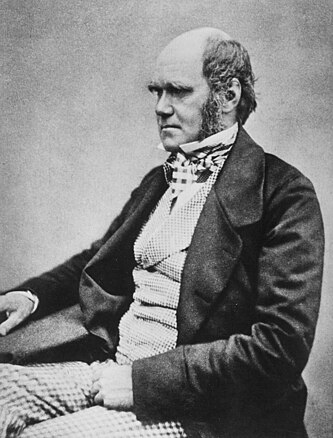
About Charles Darwin