Response to a story in the European Magazine which had accused him of harshly criticizing Joseph Haydn (14 September 1785), as quoted in Haydn, A Documentary Study (1981) by Howard Chandler Robbins Landon, p. 88
“
According to my principles, every master has his true and certain value. Praise and criticism cannot change any of that. Only the work itself praises and criticizes the master, and therefore I leave to everyone his own value.
— Carl Philipp Emanuel Bach
What It Means
This is a placeholder explanation generated by the low-overhead model. It interprets "According to my principles, every master has his true and certain value. Praise and criticism cannot change any of that. Only the work itself praises and criticizes the master, and therefore I leave to everyone his own value." in the context of "Response to a story in the European Magazine which had accused him of harshly criticizing Joseph Haydn (14 September 1785), as quoted in Haydn, A Documentary Study (1981) by Howard Chandler Robbins Landon, p. 88" to mean that wisdom is timeless.

Source: Wikiquote: "Carl Philipp Emanuel Bach" (Quotes)
The 'What it means' explanation text was generated by Google Gemini Flash (accessed January 18, 2026). https://gemini.google.com/app
Tags
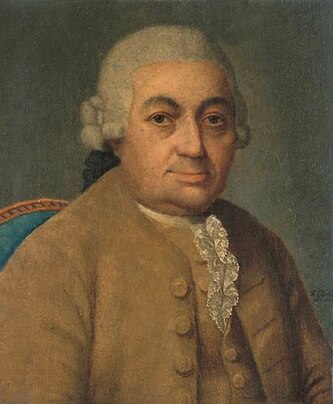
About Carl Philipp Emanuel Bach
Carl Philipp Emanuel Bach (8 March 1714 – 14 December 1788) was a German musician and composer, the son of Johann Sebastian Bach.
About Carl Philipp Emanuel Bach
Carl Philipp Emanuel Bach (8 March 1714 – 14 December 1788) was a German musician and composer, the son of Johann Sebastian Bach.
View all quotes →